MAM
Ozone, Dentsu Impact launch latest campaign ‘Hum Sab Sambhal Lenge’


Mumbai: Ozone, in partnership with Dentsu Impact has launched its latest campaign called ‘Hum Sab Sambhal Lenge.’ While most German kitchen hardware brands want us to dream of kitchens like five-star lobbies, through this campaign, Ozone takes a more pragmatic and honest look at what a real Indian kitchen is.
Conceptualised and executed by Dentsu Impact, a dentsuMB Company and the creative agency from the house of dentsu Creative India, the series of five quirky and honest films are individual stories of people in the kitchen in a microformat. They remind us of how our kitchens are a different ball game altogether from the dreamy advertisements we are fed.
The films beautifully capture these slices of life, emphasising that the brand understands the consumer efficiently. They showcase kitchens witnessing pots and pans flying in moments of passion and where the in-house brat pulls out the drawer to play the harmonium. With this, the brand underlines the stringent testing that the products undergo, which gives it the confidence to promise that no matter what happens ‘Hum Sab Sambhaal Lenge.’

“Our products are designed for long-lasting use. They are durable, and elegant and are tested stringently to work in demanding kitchens. Much like the conditions the films capture,” commented Ozone Overseas president Abhishek Aggarwal. “We usher in world-class quality and support to a market that today is ready and is discerning. We want them to know that we understand them like no other.”
“The expression ‘Hum Sab Sambhal Lenge’ gives confidence to the TG that no matter what kind of pressure they put on the kitchen hardware, Ozone will handle all of it since it understands Indian kitchen and usage,” said Dentsu Impact executive VP Ujjwal Anand, adding that, “In a market that is driven by a retailer’s recommendation and push, ‘Hum Sab Sambhaal Lenge’ is equivalent to ‘Arre sir! Main baitha hoon yahan’ ‘Main keh raha hoon na sir’ ‘Aankh band kar ke le jao’. The articulation gives the assurance to the consumers of the quality and at the same time helps retailers with a whole new pitch.”
“Unlike German kitchens, a plank most of the leading players use, the Indian kitchen with large extended families is accessed by everyone – kids, grandparents, maids and cooks. From Chintu the brat to Pinki the angry teen. Also, everyone has their own style of operating the kitchen, which entails quite a bit of careless and rough usage. In many families, kitchens never stop functioning,” remarked Dentsu Impact executive creative director Mayank Khattar. “Imagine then the load on it; and to depict that, we carefully picked up a family setting with each of its members accessing the kitchen in their signature way and for their own needs. The films are all about these people subjecting the kitchen to any treatment they deem fit.”




Brands
Boeing appoints Barun as head of FP&A for global engineering function
Seasoned finance leader to steer budgets and strategy across global centres
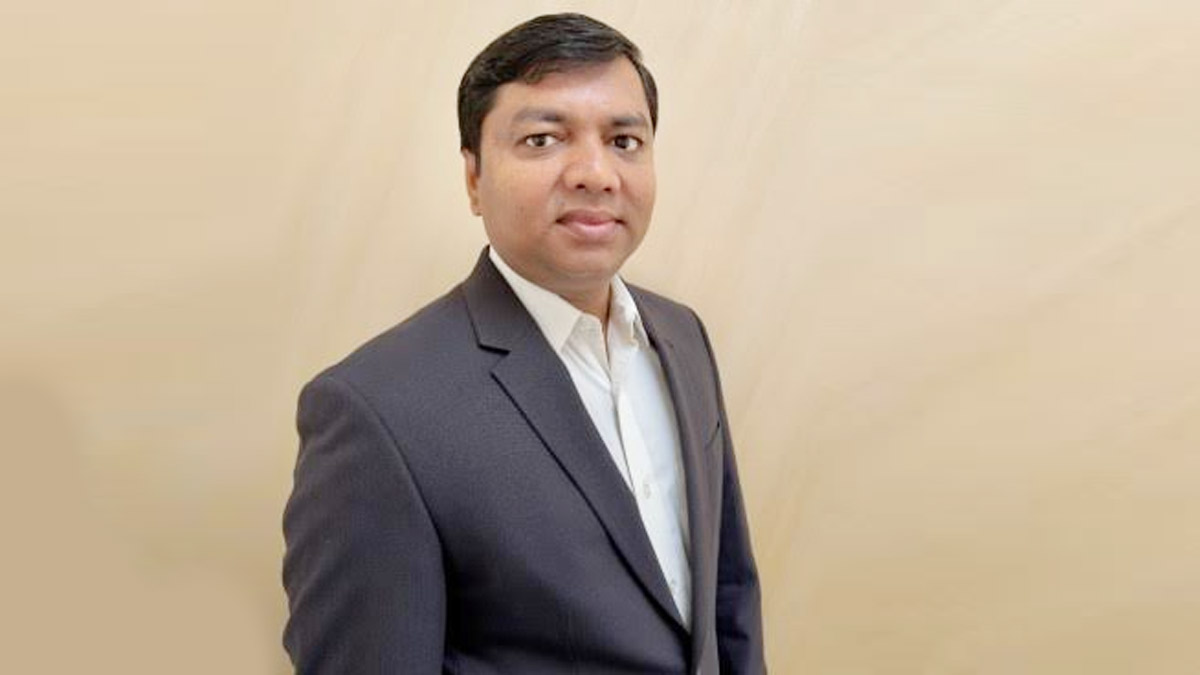
BENGALURU: Boeing’s finance cockpit has a new pilot, and he is no stranger to turbulence or transformation. Boeing has appointed Barun as head of FP&A for global engineering, placing him at the centre of financial strategy for its worldwide engineering and technology operations.
Based in Bengaluru, Barun steps into a role that is as expansive as it is critical. He will serve as the primary finance lead for Boeing’s Engineering and Technology Centers globally, working closely with executive leadership to shape financial decisions, manage complex budgets, and design scalable finance processes that support the company’s growing engineering footprint.
In a note announcing his move Barun said, “I’m excited to share that I’ve joined Boeing Global Engineering. This opportunity is incredibly meaningful to me not just from a professional standpoint, but also for what Boeing represents globally.” He added that he looks forward to contributing to an organisation that continues to shape the future of aerospace and innovation.
Barun’s mandate spans strategic financial leadership, operational oversight, and stakeholder engagement. From directing large-scale budgets and schedules to influencing long-term organisational goals, the role blends financial discipline with business foresight. He will also lead cross-functional teams and partner with finance colleagues worldwide to support engineering programmes across geographies, including India.
The appointment caps a long stint at Juniper Networks, where Barun spent over a decade, most recently as finance senior manager. There, he led FP&A for global product business units and G&A functions, driving budgeting, forecasting, and long-range planning. He also played a key role in enterprise-wide transformation, including spearheading an Oracle to SAP ERP migration and building advanced analytics capabilities using tools such as Tableau and SAP Analytics Cloud.
His earlier career includes finance leadership roles at Sony India Software Centre, Cognizant Technology Solutions, and Mphasis, where he focused on financial planning, governance frameworks, and operational efficiency across global delivery centres.
A chartered accountant from the Institute of Chartered Accountants of India, Barun brings nearly two decades of experience across financial planning, digital transformation, and analytics-led decision making.
His appointment comes at a time when global engineering operations are becoming increasingly complex and distributed, requiring sharper financial oversight and agile planning. With Barun at the helm of FP&A for engineering, Boeing appears to be tightening its financial playbook as it looks to scale innovation with discipline.






