Digital
Overview of current industry trends and predictions for the future of entrepreneurship

Mumbai: India is touted as one of the fastest-growing economies in the world. The country is steering itself towards growth, according to the statistical data of the Indian startup ecosystem report 2021, India featured more than 5,694 active investors and 38k startups. These numbers are expected to rise in 2024 as analysts believe that in 2024, India will proudly boast 1 lakh startups.
India will soon witness a great dawn as these entrepreneurial ventures will not only boost the Indian economy but will also lead to job creation, leveraging our position in the global pulpit.
Talking about the present entrepreneurship landscape in India, let’s unveil the current industry trends and predict the future trajectory of entrepreneurship.

Current Industry Trends:
Embracing the digital revolution-
The digital boon has created enormous opportunities for businesses to operate seamlessly, both online and offline. This flexibility in work has enabled, E-Commerce to remote work solutions, fostering entrepreneurs to efficiently use technology to streamline their processes, and to increase their visibility in the global market.
Adapting Sustainability in Business-
Working in harmony with nature has become a norm in the industry. Businessman and investor Elon Musk emphasises, “The long-term sustainable growth is only possible with a sustainable energy economy.”
Environmental consciousness is being prioritised by entrepreneurs now, then ever before. Thereby, creating a positive change by addressing social and ecological challenges that lead to financial sustainability and scalability. Microfinance, renewable energy, education, health and sanitation are some of the sustainable solutions that the current businesses are following.
Business Collaborations-
Entrepreneurs realise the importance of collaboration, as it has become vital for sustaining in the highly competitive market.
According to the EY India’s report, our country has witnessed a rise in business collaborations specifically in the domain of e-commerce, fintech, health tech and Edtech sectors. These collaborative partnerships have enabled entrepreneurs to build networking, foster innovation, resource sharing and enhance customer value.
Future Predictions:
Utilisation of AI & ML for Automation and Scalability-
The use of AI, machine learning and automation will become prevalent in the future. AI will empower entrepreneurs by streamlining operations and providing data-driven insights to analyse customer behaviour for enhanced customer experience. With its intelligent automation, AI will minimise manual tasks, thereby reducing cost and increasing efficiency by tenfold.
Focus on Personalisation-
In the future, companies focussing on personalised experiences will become increasingly popular. Therefore, entrepreneurs who will adapt to this change and tailor their products and services according to individual preferences will be able to build strong connections with their potential customers. This in turn will drive sales and brand loyalty.
Global Leadership Ambitions-
India is becoming a hub for startups owing to the supportive regulatory environment and access to capital, Indian startups have great potential to compete with the established players of the global market.
Since our country is a home to 1 billion population, therefore Indian entrepreneurs understand the diverse preferences of such a wide range of customers. It gives them a creative edge to provide impeccable services in various sectors, ranging from software services to renewable energy.
Mukesh Ambani, Chairman of Reliance industry proudly asserts, “The world is taking notice of India’s entrepreneurial prowess, and our startups are poised to become global leaders.”
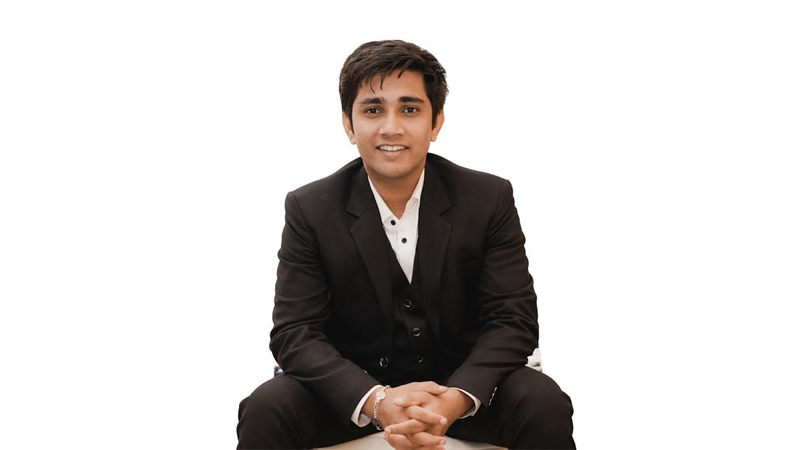
Rising Star Communications founder and CEO Durvesh Yadav has authored this article.



Digital
Ethical AI must benefit society, not dominate it, says WFEB chief Sanjay Pradhan at IAA event
At Mumbai event, ethics expert urges businesses and governments to shape AI responsibly
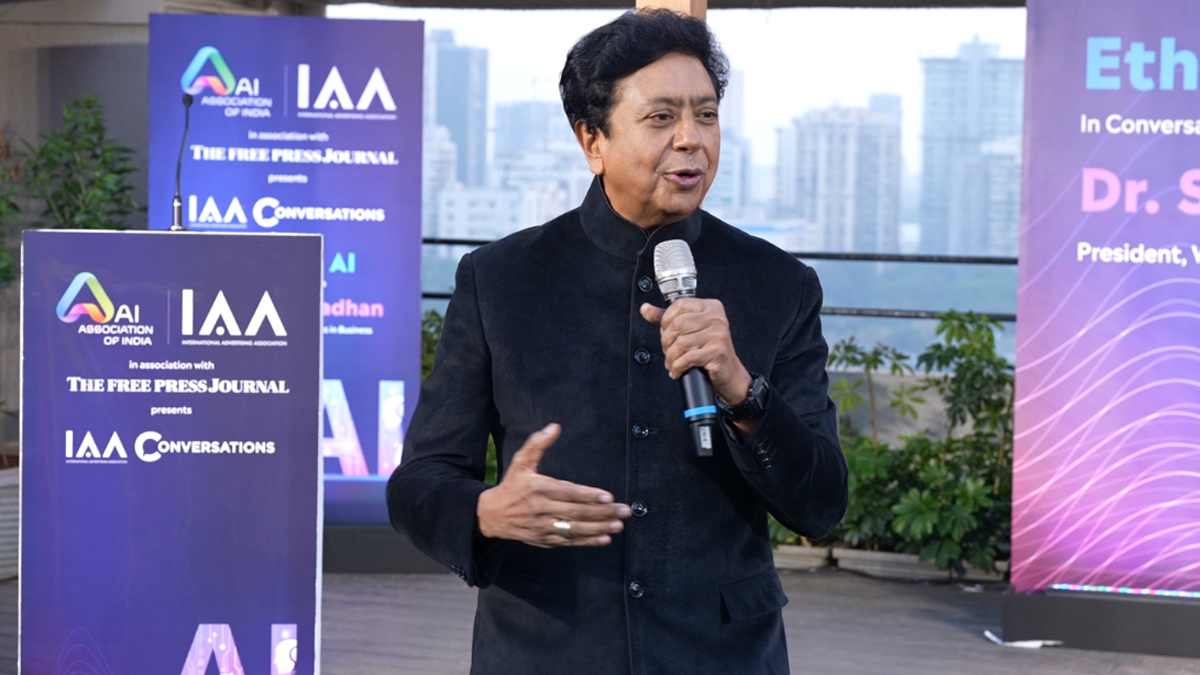
MUMBAI: Artificial intelligence may be racing ahead at lightning speed, but its direction must still be guided by human conscience. That was the central message delivered by Sanjay Pradhan, president of the World Forum for Ethics in Business (WFEB), during the latest edition of IAA Conversations held in Mumbai.
The session was organised by the International Advertising Association (IAA) and the Artificial Intelligence Association of India (AIAI) in association with The Free Press Journal at the Free Press House on 7 March. Addressing a packed audience, Pradhan called for stronger ethical leadership to ensure AI remains a tool that benefits humanity rather than one that governs it.
“Artificial intelligence has rapidly become one of the most powerful technologies humanity has created,” Pradhan said. “It is unlocking breakthroughs in medicine, science and creativity at a pace unimaginable just a few years ago.”
But he warned that the same technology carries serious risks. AI, he noted, can amplify disinformation faster than facts can travel, compromise privacy, deepen discrimination and disrupt millions of livelihoods. Referencing concerns raised by AI pioneers such as Geoffrey Hinton, often called the godfather of AI, Pradhan stressed that the real challenge is not whether AI will shape the world, but whether humans will shape it with ethics and wisdom.
Structuring his talk around four guiding questions, why, what, how and who, Pradhan introduced the audience to WFEB’s emerging AI Ethics Partnership, a global platform aimed at advancing responsible artificial intelligence. He outlined four priority concerns that demand urgent attention: disinformation, bias and discrimination, data privacy and job security.
To make the idea of ethical AI easier to grasp, Pradhan offered a simple metaphor. Ethical AI, he said, is like a three layered cake. The outer layer represents the visible value ethical AI creates for businesses and society. The middle layer is organisational culture that moves ethics from written codes to everyday practice. The innermost layer, however, is the most crucial, the conscience of individual leaders.
Drawing from Indian philosophical thought through WFEB co-founder Ravi Shankar, Pradhan noted that while artificial intelligence can reproduce stored knowledge, true intelligence is boundless and rooted in conscience, creativity and compassion. Practices such as breathwork and meditation, he suggested, can help leaders develop the calm clarity needed for ethical decision making.
The event also featured a discussion with Maninder Adityaraj Singh, chief of staff and head of innovation at Rediffusion Brand Solutions Pvt Ltd, and Yash Johri, lawyer, Supreme Court of India.
Opening the session, IAA India chapter president Abhishek Karnani, highlighted the need for industries to understand and engage with AI responsibly.
“AI has to be befriended and understood,” added Rediffusion managing director and AIAI national convenor Sandeep Goyal. “Its ethical use will determine whether it becomes a friend or a foe.”
As AI continues to reshape industries and societies, Pradhan ended with a simple but powerful call to action. Businesses, governments and individuals must work together to ensure that the algorithms shaping the future reflect human values rather than just cold logic.