Ad Campaigns
Not Just for Laughs: Tracing Humour In Indian Advertising


NEW DELHI: One of the Navarasa, hasya (humour) has been an integral part of Indian performance and creative arts since 500 CE. From its presence in the scriptures to medieval performing arts of the nakkal, bhands, bahurupi, bhagatiya, etc in the form of small skits heavy on slapstick comedy, humour has always been a source of entertainment for Indians. At one point in time, Indian movies, be they melodramas or potboilers, were incomplete without the comic relief – an actor whose role was to break the tension with his jokes and shenanigans, without disrupting the narrative.Even the classic action blockbuster Sholay had the characters of Jailer and Soorma Bhopali. Admittedly, it took some time for us to adapt to more subtle and satirical forms of comedy. Take Bollywood for instance – from Mehmood, Asrani and Keshto Mukherjee in the 70s and 80s, to Johnny Lever, Shakti Kapoor and Govinda who ruled the roost in the 90s – there isn’t much difference in their brand of zany, in-your-face humour.
There were filmmakers like Hrishikesh Mukherjee, Basu Chatterjee and writers like Premchand who were experimenting with more subtle forms of comedy, but the attachment of humour with a performance created a blanket view for most of the audience. Certain programmes in the earliest days of television in India were also humorous in nature; ZabaanSambhalKe, Tu Tu Main Main, Ye Jo Hai Zindagi, and Office Office being some examples. Almost all of them relied on a slice-of-life but very heavy-handed humour that aimed to elicit loudguffaws ratherthan leave a pleasant smile on viewers’ faces. A similar flow could very well be traced in the Indian advertising too, of which humour has been a great part.
How Humour Found Its Way In Indian Advertising

"Indian ads have been using humour in various forms for more than five decades. The early ads used to be in cartoon form in newspapers. Then it went to TV and now in digital formats,” Brand Building founder and brand strategist Ambi Parameswaran shares. According to him, humour is just another emotional appeal that connects well with the consumers and has done a good job in increasing the brand propensity among the masses.
Here’s a look at how the element of humour has evolved in Indian advertisements.
The Early Pun-tastic Days
If we look at the early print ads of the 1940s and 1950s, humour was largely missing from all brand communications. Those were the days of long-form, simple, informative copies aimed at hard-selling the products; be it for Rexona, Lux, or Tata Benz.
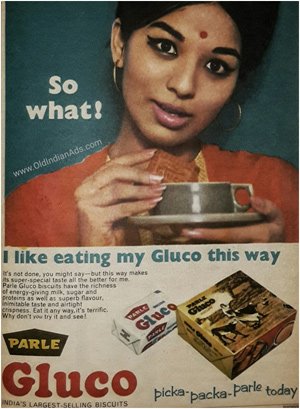
It was in the mid-1960s that brands like Amul and Parle started experimenting with quirkier messaging, thereby introducing humour to Indian advertising. With the use of puns, these brands sought to catch the reader's eye in an instant and also tickle their funny bone.However, the underlying messaging remained the same, indicating the what and why of the product.

Brands like Binaca Talc and political parties like Shiv Sena also made some bold moves with their tongue-in-cheek way of stating things. Both the ads came out in 1967.


The 70s were much braver and incisive with their comedy; Amul took jibes at major social and political matters, while Surf’s Lata Ji tried to claim her territory back from the new entrant Nirma, which offered a similar product experience at a cheaper price.
This was probably the turning point in Indian advertising as brands started getting in more deeply into the humour space. Vicks (Vicks Ki Goli Lo, KhichKhich Door Karo), Luna (Chal Meri Luna La), and LijjatPapad (KurramKurram) were some of the other iconic ads of those days.
The Jibes of the ‘90s & ‘00s
The following two decades saw a great influx of creativity in Indian ad-making. As the economy liberalised, creating greater competition in the market, brands were forced to fight for attention and loyalty. As a result, a great number of print and video ads were churned out during this period.
This era also witnessed a finer form of humour, with personification and exaggeration, taking centre stage. However, most ads still focussed on getting a loud laugh from the viewers. The impact of sitcoms and serials with family values also reflected in the new slice-of-life form of advertising, which had already begun in the 80s but only got refined.
Pepsi (Oye Bubbly), Cadbury (Duniya Dairy Milk Ki Bann Jaye Re), Mentos (Daddu) ads were some of the top commercials to experiment with personification in that era.
As the larger-than-life personalities of the film world made their way to television sets, hyperbole became a key element in many ads, primary examples being the Fevikwik (Chutki Mein Chipkaye), Happydent White (Smile Please), and Center Fresh Fruit (KaisiJeebhLaplapayee) commercials.
Enter The Internet
MICA co-chairperson fellow program in management Prof Varsha Jain states that from 2007 onward, with the advent of the internet and its penetration, humour in advertising took on a new form and direction. As the consumer became smarter, more alert, and better connected with the global world, the ads started becoming more creative, the slapstick humour turned into subtle satire, and more brands started taking into cognizance social and political matters.
Fevikwik (TodoNahi Jodo) is one of the finest examples. Released in 2015, the ad took a beautiful take on the Indo-Pakistan relationship. The Mauka Mauka ads for the World Cup were also very tasteful in their humour.
More recently, there are a number of brands which have had a stunning journey on the funny and quirky side of the scripts. Be it food-delivery platform Swiggy or fantasy sportsapp Dream 11, their ads are always a big hit with netizens.
Brands like Zomato and Durex are making the best use of social media, their moment marketing initiatives always relying on great puns and anecdotes. In the age of internet virality, humour helps businesses make a positive impression on audiences, which can boost revenue and brand awareness.
Why Humour
As per Varsha Jain, humour serves great cognitive benefit for a brand as the ads are more viewable and memorable. That’s why most ads in the early days of advertising were created in a way to start word-of-mouth discussions around the products. This has only transferred to online modes with social media now, but the objective still remains to get people talking.
However, this might not be the only reason making brands stick to funny campaigns with catchy slogans. Another prime reason to play with humour is that the genre allows space for better storytelling in little time, says The Script Room co-founder Ayyappan Raj.
Humour as a genre doesn’t demand much of a scale, therefore offering logistical benefits too. “You can crack a joke in a conversation between two people in a lift, you don’t need to go to Ladakh and do drone shots,” quips Raj.
The Recipe to Strike The Right Chords with Humour
Speaking to Indiantelevision.com on Ad Break, iconic adman Bharat Dabholkar had pointed out that to make humour work, one has to ensure that they stay away from religion, communalism, and sexism; otherwise, pretty much everything can be made to look funny.
Hyper collective founder and global CCO KV Sridhar (Pops) points out that ads with high cultural relevance, quirky, un-dramatised humour and relatable anecdotes for the viewers will always strike the right chords. One perfect example is the ongoing Dream 11’s #ApnaGame campaign.
He adds, “You cannot be offensive or crude in your humour. There is no need to dramatise a joke. If you see today, the donkey campaign (for UpGrad) and the CRED campaigns, they do not work for me at all.”





NATIONAL: Amazon Ads has laid out a sharply tech-led vision for the advertising industry in 2026, arguing that artificial intelligence, streaming TV and creator partnerships will combine to turn brand building into a more precise, performance-driven business.
At the heart of the shift, the company says, is the fusion of AI with Amazon’s vast trove of shopping, browsing and streaming signals, allowing advertisers to move beyond blunt reach metrics to campaigns designed around real customer behaviour.
“The future of advertising is not about reaching more people, but the right people with messages that resonate,” said Amazon Ads India head and vice president Girish Prabhu. “By combining AI with deep customer insights, we help brands move from broadcasting campaigns to having meaningful conversations wherever audiences spend their time.”
One of the biggest changes, according to Amazon Ads, will be the collapse of the wall between media planning and creative development. Retail media, powered by first-party data, is increasingly shaping everything from brand discovery to final purchase, pushing marketers to design campaigns around audience insight rather than internal instinct.
AI is also moving from a support tool to a creative engine. Agentic AI, which automates and accelerates production, is expected to make high-quality creative accessible even to small businesses, compressing weeks of work into hours and giving challengers the ability to compete with larger brands on speed and scale.
Behind the scenes, AI-driven analytics will take on a bigger role in campaign optimisation, identifying patterns, spotting opportunities and recommending actions that would previously have required teams of analysts.
Streaming TV is another big battleground. With India’s video streaming audience now above 600 million and connected TV users at 129.2 million in 2025, advertisers are set to treat streaming not just as a branding channel but as a performance engine, measured increasingly by sales, sign-ups and bookings rather than just reach.
Finally, Amazon Ads sees creators and contextual advertising reshaping how brands tell stories. Creators will act less like influencers and more like long-term partners, while scene-aware ads on streaming platforms will allow brands to insert hyper-relevant offers into the flow of what viewers are watching.
Taken together, Amazon Ads argues, these shifts mark a move towards advertising that is both more human and more measurable, where AI handles the complexity, and creativity does the persuading.






