Brands
Nitin Bhandari appointed VP & general manager, India & south Asia beverages at PepsiCo

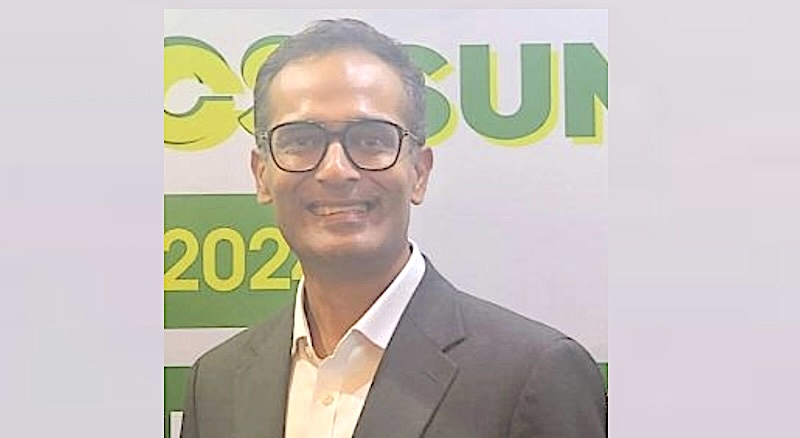
MUMBAI: Nitin Bhandari has taken on the role of vice-president & general manager, India & south Asia beverages at PepsiCo. Based in Gurugram, Haryana, Bhandari will oversee the company’s beverages business in the region, focusing on unlocking growth opportunities and delivering value to consumers, communities, and stakeholders.
He replaces George Kovoor senior vice-president & GM India beverage who has chosen to retire come 31 March 2025.
In his 19-year tenure at PepsiCo, Bhandari has held diverse leadership roles across India, Southeast Asia, and the Pacific. Most recently, he served as VP & chief growth officer for PepsiCo India, spearheading transformative strategies for its foods and beverages business in India, Bangladesh, Sri Lanka, and Nepal. Prior to this, he was general manager for the Philippines, Malaysia, and Singapore, managing both beverages and foods.

Bhandari’s career highlights include launching e-commerce initiatives in Asia, turning around PepsiCo’s Thailand foods business, and leading the marketing strategy for iconic brands like Mountain Dew in India. His achievements have earned him accolades such as the PepsiCo Chairman’s Award in 2015.
All that experience will be put to the test in the coming summer as Reliance Industries which has resuscitated the Campa-Cola brand and has proved a price warrior renews its assault on the Indian soft drink market, possibly with a few new variants as well as deepening its distribution. At the same time, the Jubilant Bhartia group is pumping in Rs 12,500 crore in Coca-Cola Co’s main Indian bottler Hindustan Coca-Cola Beverages and acquiring a 40 per cent stake.
An alumnus of the Indian Institute of Management (IIM), Indore, Bhandari expressed gratitude to PepsiCo leaders Eugene Willemsen and Jagrut Kotecha for this opportunity and acknowledged George Kovoor’s contributions in building a strong foundation for the business over the past three years.







Brands
Samsung certifies 1,000 Maharashtra students in AI and coding
The South Korean electronics giant marks its first large-scale skilling push in the state, with women making up nearly half the national programme’s enrolment
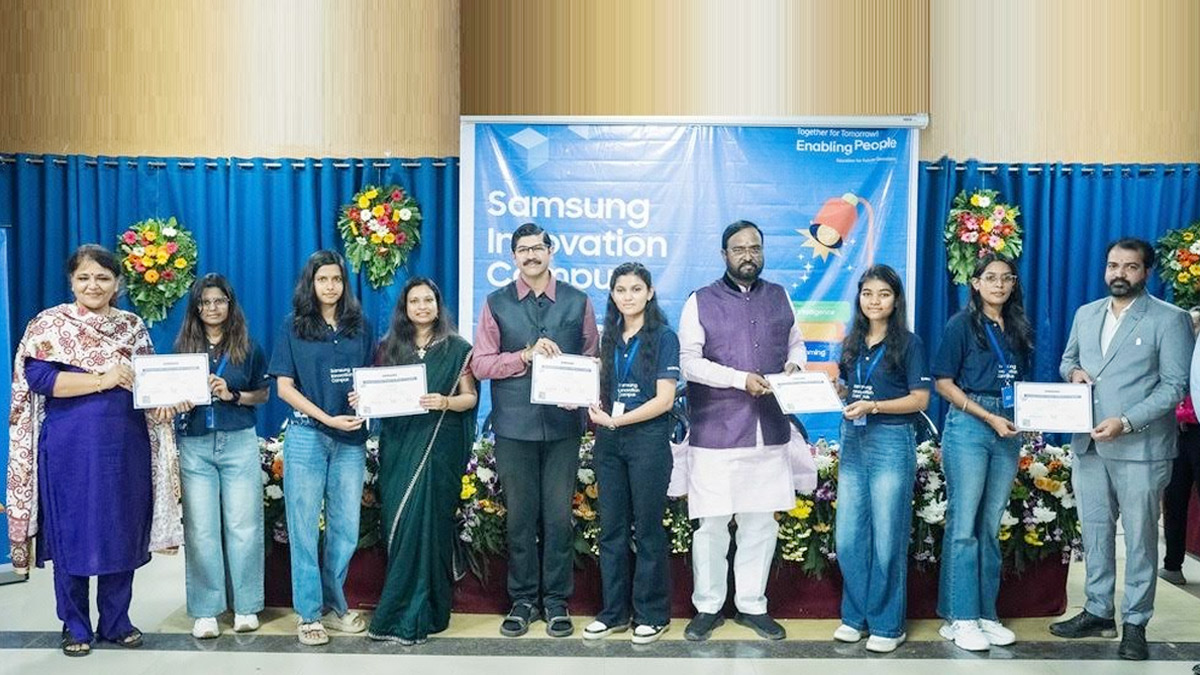
PUNE: Samsung has put 1,000 students in Maharashtra through a certified training programme in artificial intelligence and coding, the largest such drive the South Korean electronics company has run in the state and a signal that corporate India’s skilling ambitions are moving well beyond the boardroom brochure.
The certifications were awarded under Samsung Innovation Campus (SIC), the company’s flagship corporate social responsibility programme, which launched in India in 2022 with the stated aim of democratising access to future-technology education. The 1,000 graduates were drawn from four institutions: 127 from Savitribai Phule Pune University, 373 from Pimpri Chinchwad University, 250 from D.Y. Patil University’s Ramrao Adik Institute of Technology and 250 from Anjuman-I-Islam’s Kalsekar Technical Campus. All completed training in either AI or coding and programming, the two disciplines Samsung has identified as the critical pillars of the digital economy.
The programme does not stop at technical training. Soft-skills development and career-readiness modules are baked into the curriculum, a deliberate attempt to close the gap between what universities teach and what employers actually want.
“India’s digital growth story will ultimately be shaped by the quality of its talent pipeline,” said Shubham Mukherjee, head of CSR and corporate communications at Samsung Southwest Asia. “As technologies like AI move from the periphery to the core of industries, skilling must evolve from basic training to building real-world capability. This milestone in Maharashtra reflects how industry and academia can come together to create a future-ready workforce that is both globally competitive and locally relevant.”
The Maharashtra drive sits within a rapidly scaling national effort. Samsung Innovation Campus trained 20,000 young people across India in 2025, hitting its stated target for the year. Women account for 48 per cent of national enrolments, a figure the company cites as evidence of its push for an inclusive technology ecosystem. The programme is implemented in partnership with the Electronics Sector Skills Council of India and the Telecom Sector Skill Council.
Samsung, which is marking 30 years in India this year, runs SIC alongside two other initiatives, Samsung Solve for Tomorrow and Samsung DOST, as part of a broader effort to build what it calls a generation of innovators with both the technical depth and the problem-solving mindset to thrive in a fast-moving digital world.
A thousand certified students is a tidy headline. Whether they find jobs that match their new skills is the harder question, and the one that will ultimately determine whether corporate skilling programmes like this one are genuine pipelines or well-photographed gestures.






