MAM
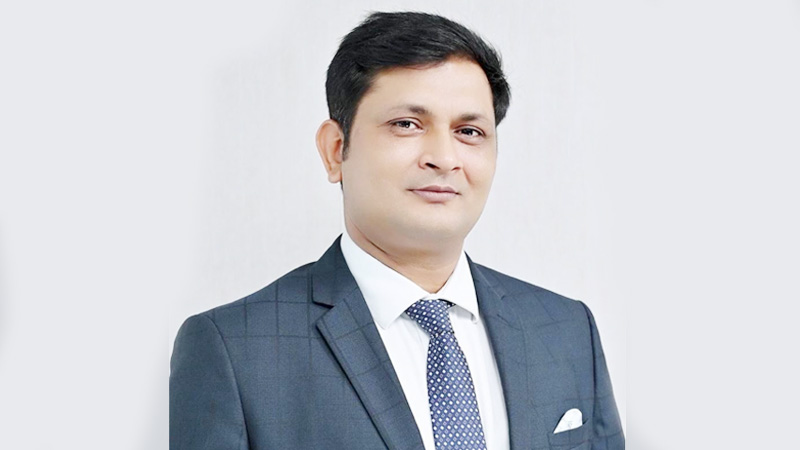
Niranjan Jayaram appointed head of CRM, Wunderman

NEW DELHI: Direct marketing major Wunderman India has appointed Niranjan Jayaram as the head of customer relationship management (CRM) and loyalty management.
Jayaram will lead the database marketing team to develop and execute data-driven marketing strategies.
“Globally, Wunderman is looking at strengthening their competencies in the area of database management and analytics. In India, we see Jayaram and his team performing a large role in achieving this objective,” said Wunderman general manager Ajay Sood.

Jayaram has earlier worked with Result McCann and OgilvyOne Worldwide, contributing to the various programmes executed for clients like General Motors, Microsoft, Bank of America, ABN AMRO Bank, Ponds Institute, Lakme Levers, and OKS Speciality Lubricants.
“He comes with a rich experience of having designed and developed the back-end logistics and support systems for the Hero Honda Passport Programme, which today has grown into one of the main relationship programmes in the automotive space. Jayaram is a strong advocate of quality management and has already started contributing by providing wonderful insights on customer information systems,” Sood said.
The development follows recent acquisition of new business by Wunderman. The new accounts include the direct communication business of enterprise software company Oracle India and cellular service provider Airtel. Besides these wins, managed by the Delhi office, Wunderman’s Chennai office won the British Council account and the Mumbai office bagged the WNS BPO account for CRM activities recently.


MAM
Jaideep Singh Building an IP First Media Empire with Offbeet
Offbeet Founder on turning USPL into lifestyle IP, going global with 101India and AI-powered storytelling.
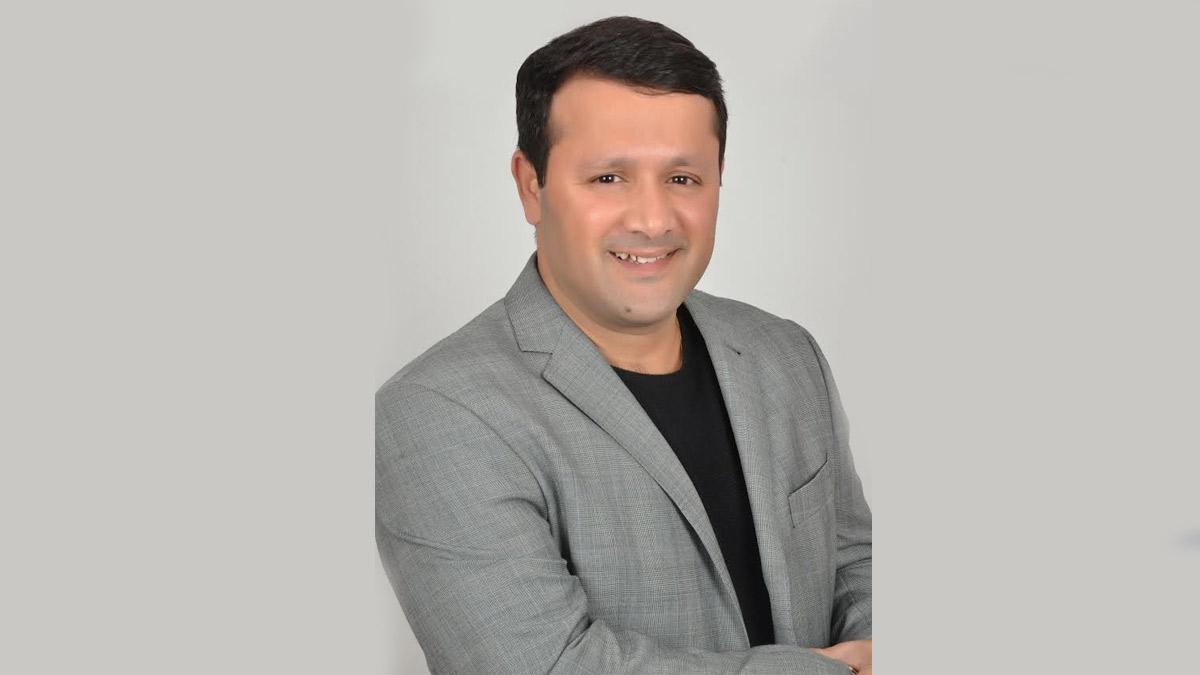
MUMBAI: Jaideep Singh, Founder of Offbeet Media Group, is building a bold, IP-first media company that spans sports, digital storytelling, and entertainment. With verticals ranging from the United States Premier League (USPL) to the youth-focused 101India, Offbeet is redefining how media houses operate by prioritizing original intellectual property over traditional agency models while maintaining a cohesive identity across diverse audiences.
In this insightful conversation, Singh discusses maintaining brand cohesion, pivoting toward IP ownership, convincing legacy brands to invest in long-form partnerships, leveraging cricket as a year-round lifestyle IP, and integrating AI to enhance emotional storytelling. More as he speaks to Indian Television Dot Com.
On maintaining a cohesive brand identity across USPL Sports to 101India, Offbeet achieves this.
Offbeet Media Group was designed to be a media IP-first company. Our consumer-facing brands, USPL and 101india operate as standalone universes and content, each serving different set of audiences and communities. At the core, our target group spans 18 to 44 year-olds, with 101india being more youth-focused, telling unique stories of India to both Indian and global audiences. Meanwhile, the United States Premier league is a thriving new league, approved by the ICC, and has now announced its fourth season.
On pivoting to IP ownership over the traditional agency model, Offbeet makes this shift.
As I mentioned earlier, this has always been our strategy, so it’s not a pivot, but a deliberate design. While we have been aggressively building our agency business across government and corporate sectors, our vision is to build a diversified media company with insight-driven content at its core, serving both B2C and B2B audiences. This approach is both our strength and the engine driving our growth.
On shifting legacy brands from 30-second spots to long-term IP partnerships, Offbeet convinces them.
Well, this aspect is often driven by people in the driving seats on the brands end. However, with increasing media clutter, it is becoming easier to help brand custodians appreciate that long-form IP ultimately builds communities and fosters deeper emotional connections with their target audience. Having said that, I believe that there needs to be a healthy mix of IP-led initiatives and traditional 30-second formats. In today’s media landscape, one needs to find the right balance. Brands who innovate with a healthy mix are the ones which break the clutter and stand out.
On making 101India’s hyper-local stories resonate globally, Offbeet follows this strategy.
We are a country of 1.45 billion people and therefore, 1.45 billion stories. 101india aims at finding the most unique or untold stories and spotlight them. Our strategy is simple: identify these unique stories, present them in formats that are friendly to the digital community and spark conversations, where possible. Because no matter which strata or community you represent, everyone loves a good story! From dacoits of Chambal to androgynous fashion, and everything in between, these stories, when told sharply and authentically, have the power to resonate universall.
On turning USPL into a year-round lifestyle IP, Offbeet leverages cricket.
The USPL was our bold first-mover step into the world’s largest sports market. And with it now entering into its fourth season, after delivering 3 successful editions with global broadcasting, it continues to support the growth of cricket in the USA. The brand is now well-positioned to take its next big leap. Plans for this are already in motion, and we will be making some exciting new announcements soon. Our aim is to be innovative and clutter-breaking, attracting a larger audience base in the U.S. market. We are also entering into some interesting associations across cricket stadiums and the sports tech space, which will be announced soon.
On translating content across Music, Studios, and Creator ecosystems amid platform fatigue, Offbeet succeeds.
We haven’t yet fully approached our IPs with the intent of making them transcend across our media brand ecosystem. While there have been tactical cross-promotions, a truly integrated IP that spans all our media brands is still in the works. That said, our first theatrical venture, Vadakkan, leveraged USPL and 101india for promotions, with Offbeet Music owning the music rights for the franchise. This marks our first step in that direction. The bigger, more integrated play is yet to come.
On using AI to cut costs while deepening emotional impact of IPs, Offbeet integrates it.
We are approaching this as a process of integrating a mix of tools into our workflows across departments – creative, writing, production, post-production, and casting. We believe in a hybrid approach where human touch and creativity remain at the forefront, while technology and AI act as enablers to drive efficiency, speed, and clearer visualisation. This ultimately helps the final output stand out and capture the attention of the audiences it is meant for.
On scaling as a 360-degree media house, Offbeet’s North Star metric for successful IPs in 2026 is this.
It largely depends on the kind of IP we are talking about. At a macro level, as we move into an increasingly technology-first world, media IPs need to have seamless adaptability across digital, social, and AI-driven landscapes as a baseline. We also need to evolve towards building media IPs as brands in themselves, designed from inception to enable successful extensions into consumer and technology products. This is an area that the Indian media and entertainment industry is yet to fully exploit, while the Western market has already set strong benchmarks.






