Brands
New concepts and marketing tools lend teeth to IRS 2005

MUMBAI: More than Readership! That is what Media research Users Council (MRUC) in association with Hansa Research are looking to do with Indian Readership Survey (IRS) 2005. The two parties held a forum for the marketing media and advertising
community this morning. The aim was to familiarize the industry with improvements made to the IRS.
Two new tools have been added. The first is IRS Local Area Potential (Ilap). This is packaged to the clients specifications and provides demographic, penetration of product and service in potential areas like distribution, test marketing, below the line activity, growth etc with insights at micro area level for the products and service. MRUC states that till now all syndicated studies have been providing data at a city level. The marketer could only do analysis at a city level and not do any planning at the micro level. Last year IRS introduced the concept of sub-metro reporting wherein broad areas of big Metros were broken down to two to four parts. Ilap takes this concept forward.
Functions of Ilap: Ilap breaks cities into various smaller areas and enables the user to analyse these areas within the city. For instance Mumbai can be broken into 45-50 areas. Bangalore can be broken down into 15-20 areas. The number of areas depends on the size of the city. One can compare Juhu to Linking Road. A comparison can be made based on affluence , ownership and usage of products, media consumption. One can also compare brand shares for large brands across categories like personal care, consumer
durables, telecom, food and beverages. MRUC states that Ilap will be useful for people opening a new restaurant, multiplex, bank branch, super market. As far as marketing activity is concerned it is helpful in test marketing, below the line activity in terms of sampling and conducting outdoor campaigns.
The other new service that IRS 2005 has introduced is Household Premiums Index (HPI). This has come about as over the years advertisers and media planners have felt the need for an effective classification variable that allows for grouping of households by affluence levels. Though monthly income household (MIH) or SEC
have often been used as surrogates these variables do not always reflect the affluence or prosperity of a household. Hansa research developed HPI and this is an attempt to provide the marketing and advertising fraternity with a tool that facilitates a more efficient classification of households. Based on [prosperity. HPI enables the user to develop better strategies for targeting, profiling and market sizing.
Hansa research claims that HPI is a more systematic, standardized approach and tries to do away with research bias in formulating a premiumness index. The basic concept revolves around the philosophy “Less penetrated a product category, more premium is it with respect to another highly penetrated category.” Consequently the ownership of such premium categories entitles a household to be a part of a higher premium stratum. The premiumness scored accrued out of ownership/ purchase of a category is defined as the inverse of the penetration of that category. The summative score of a basket of categories gives the total premiumness score of a household. This raw score is indexed to a scale of 0 to 1000 to develop the HPI.
Hansa Research adds that HFI offers scope of better targeting and provides an option to study markets and target groups in a much more innovative manner. It also breaks the conventional wisdom that SEC is the most effective way of segmenting and classifying
audiences. HPI scores reveal that prosperity is not always directly correlated to SEC. This apparent from the fact that the top one per percentile of all households is exclusively constituted by SEC A1.

Hansa Research claims to be the fastest growing market research agency in India. It deals in customized and syndicated research. It clients come from a cross section of industries including media. MRUC is a non profit organisation. It is a regulatory body that conceptualises, facilitates and ratifies the findings of media research. It states that its aim is to ensure timely, credible, relevant and economical media research.

Brands
Kotak Mahindra Prime names Suraj Rajappan as managing director and chief executive
The car-finance arm of Kotak Mahindra Bank lines up a new chief and raises its borrowing limit
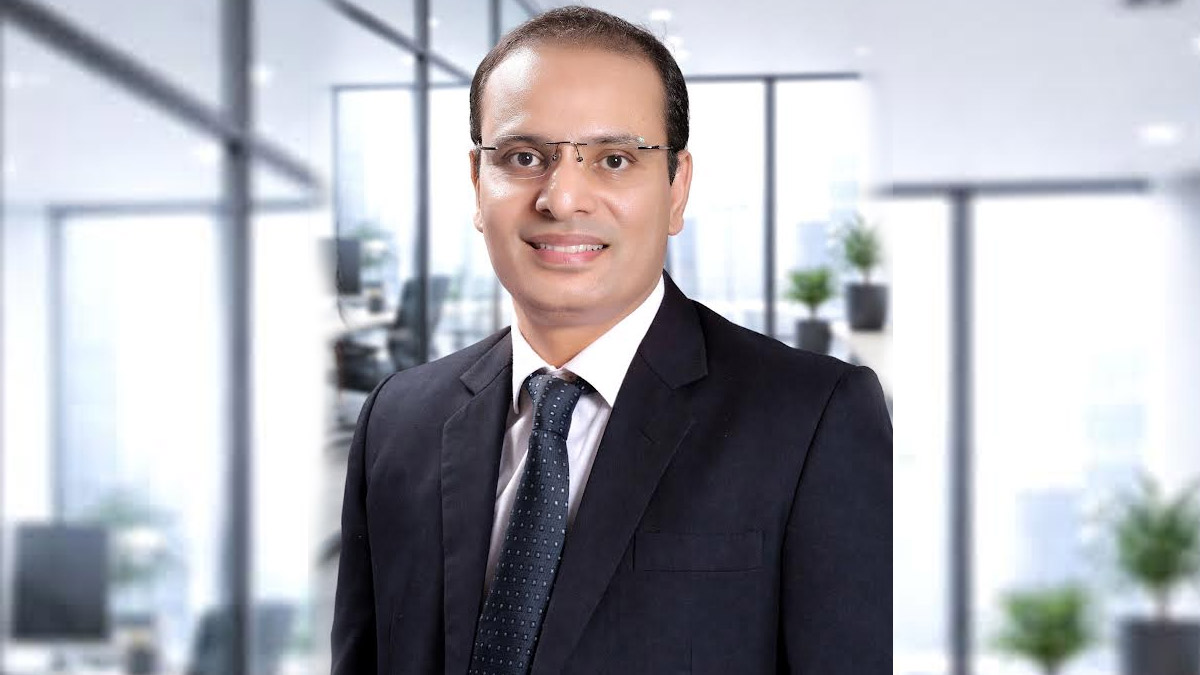
MUMBAI: Suraj Rajappan is getting the keys. Kotak Mahindra Prime Limited (KMPL), India’s veteran car-finance outfit, has named him managing director and chief executive, effective June 1st, 2026—the same day his predecessor drives off into retirement.
The board approved the appointment at its meeting on March 18th. Rajappan, currently a whole-time director at the company, has spent his entire 24-year career at KMPL, working across functions before rising to the top job. The three-year term remains subject to shareholder approval, and the company confirmed he faces no bar from SEBI or any other authority from holding the post.
He takes over from Shahrukh Todiwala, who superannuates on May 31st after more than three decades with the Kotak Group. Ashok Vaswani, managing director and chief executive of parent Kotak Mahindra Bank, was generous in his send-off. Todiwala, he said, “leaves behind a legacy marked by prudent growth, strong risk discipline, and a focus on customer-centricity.” Of his successor, Vaswani was equally bullish: Rajappan’s “deep industry experience and execution capabilities position KMPL well for its next phase of growth.”
The board also loosened the purse strings, raising the company’s overall outstanding debt limit from Rs 43,000 crore to Rs 48,000 crore. The expanded ceiling covers bank loans, debentures, commercial paper, treasury operations, credit facilities and external commercial borrowings.
KMPL has operated as a car-finance company since 1996, branching into two-wheeler loans in 2018 and loans against property in 2021. With fresh leadership, a bigger borrowing arsenal and an ambitious lender for a parent, Rajappan’s first task is clear: step on the accelerator.









