MAM
Mudra launches TVCs on Livon

MUMBAI: Mudra Communications which earlier this year celebrated its 25th anniversary has launched two television commercials (TVCs) for hair care brand Livon.
Livon had earlier been positioned as a “detangler” of hair, post a hair wash.Its earlier TVC’s addressed the the typical housewife. Its primary benefit statement was “prevent hair loss caused by breakage due to tangling of hair after a hair wash.” As a result of the brand statement Livon became generic to the category in face of stiff competition from similar products.
Research has always shown hair loss to be the primary problem of hair. However a lot of hair loss can be attributed to hair falling off after being weakened during brushing tangled hair. A greater dimension for Livon to address thus came to light.

The first TVC is called Radhikaaa… Ordeal and there is a deliberate effort to address the younger audience – the college going teenage girls, who are lot more conscious about their hair, appearance well being. The TVC sees Radhika – who is the young college going protagonist of the film facing embarrassment on daily basis, as her every act of carelessness is easily caught by her family members as there is always a “Radhika ka baal”, around as an evidence of her act of carelessness. However, once she uses Livon, the problem is solved.
Mudra adds that the TVC puts forth the message that hair loss – specifically due to combing on wet hair leads not only to the visible immediate breakage, but also to the weakening of strands and thereby to ‘invisible’ regular hair fall.
The second TVC is called The Clump Story.The concept for the TVC revolved around the word emotion. The ad adopts a sensitive approach that triggered the audience to look at hair loss as loss of something close and personal. Only then, can the target audience would be able to think about caring about those ‘few’ hair strands that are lost on a daily basis.
The TG for this commercial was primarily housewives (25+) but in a way it was not age specific but mindset specific says Mudra. Its aimed to shake the “taken for granted approach” – the general apathy towards the hair lost due to breakage while combing the wet- tangled hair.





MAM
India’s employability gap persists despite strong hiring intent
Only 1 in 5 institutions achieve 76 to 100 per cent placements within six months of graduation.
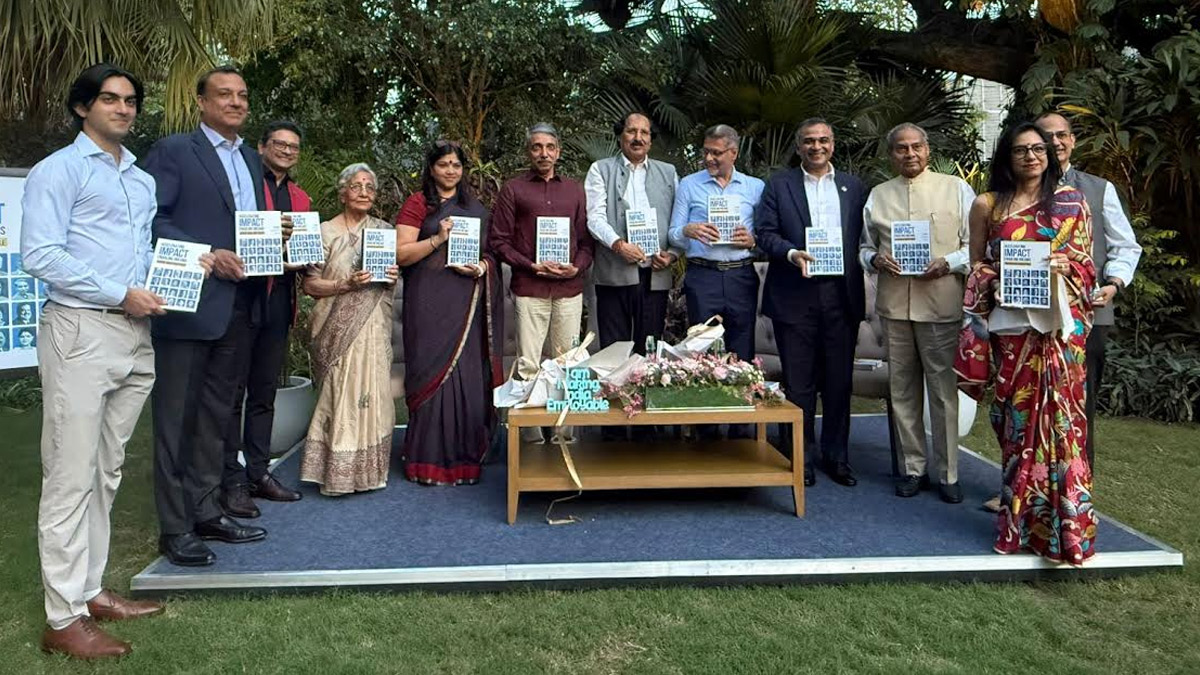
MUMBAI: India’s young workforce is ready in numbers, but the real question is whether they are ready for work and senior leaders from industry, academia and policy gathered in Delhi to find practical answers. A closed-door roundtable hosted by Vaishali Nigam Sinha, co-founder of Renew, brought together key voices to discuss actionable solutions for bridging the persistent employability gap. The session highlighted that while job opportunities are expanding, the alignment between education and industry needs remains a critical challenge.
According to Teamlease EdTech’s Career Outlook Report HY1 2026, 73 per cent of employers plan to hire freshers in the first half of 2026, signalling steady recovery in entry-level hiring. However, employers are shifting focus from mere qualifications to demonstrable capability, placing greater value on internships, live projects and proof-of-work.
Teamlease Edtech, founder and CEO Shantanu Rooj emphasised the need for better alignment, “India’s employability challenge is no longer about access alone, but about alignment between education and work. Employers are increasingly relying on demonstrable capability such as internships, projects, and applied learning as indicators of readiness.”
Vaishali Nigam Sinha stressed the importance of execution over intent, “India has both the talent and the opportunity. What is needed now is alignment. We have to move from intent to execution by embedding employability into the system itself.”
Other prominent speakers included Dr Chenraj Roychand, Chancellor of Jain (Deemed-to-be) University, who called for universities to evolve from degree providers to ecosystem enablers, Prof M. Jagadesh Kumar, Chairman of the Board of Governors at IIM Calcutta, who highlighted the need for flexibility and multidisciplinary learning, and Dr T.N. Singh, Director of IIT Patna, who advocated deeper industry engagement through research and experiential learning.
The discussion also drew insights from the book Accelerating Impact. Enabling Dreams – Making India Employable by Shantanu Rooj and co-authors, which features contributions from leaders like Kiran Mazumdar-Shaw, Dr Krishnaswamy Kasturirangan and Gurudev Sri Sri Ravi Shankar.
During the event, Teamlease Edtech Foundation launched Project SEED, a national initiative aimed at bridging the education-employability gap for underserved youth. The project focuses on early intervention at the school level to guide students towards informed career choices and work-integrated pathways.
With only 16.67 per cent (1 in 5) of institutions achieving 76–100 per cent placements within six months of graduation, the conversation made one thing clear, India’s demographic dividend will deliver real value only when education and employability walk hand in hand. The gathering served as a timely reminder that the future of India’s workforce depends not just on creating more jobs, but on preparing young people far better to seize them.






