MAM
MRSI Wednesday Webinar: The science and art of human behaviour in marketing

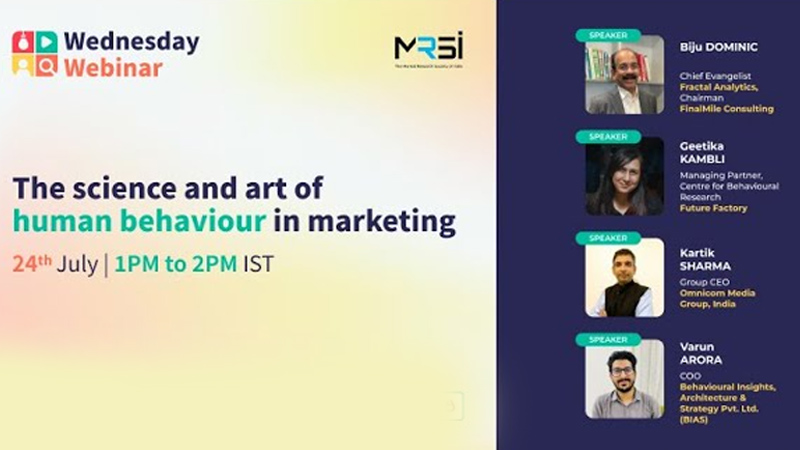
Mumbai: The Market Research Society of India (MRSI) held its fourth Wednesday Webinar of the seventh season on 24th July 2024, on the topic ‘The Science And Art Of Human Behaviour In Marketing’. The session was hosted by Mukul Gautam, VP & chief of capacity building, Purple Audacity; Amitabh Mishra, head-insights and analytics – India, Dr Reddy’s Laboratories; Sunder Muthuraman, CEO – SL Ventures and Sivakumar Somanathan, Consumer Behaviour Consultant, Curious Cat Consulting including speakers Geetika Kambli, Managing Partner, Centre for Behavioural Research, Future Factory; Varun Arora, COO & Member of BMB (BIAS Management Board), Behavioural Insights, Architecture & Strategy Pvt. Ltd. (BIAS); Biju Dominic, Chief Evangelist Fractal Analytics, Chairman FinalMile Consulting and Kartik Sharma, Group CEO, Omnicom Media Group India. The session delves into the dynamic world of Behavioral Economics (BE) and its profound impact on consumer decision-making.
Speaking on why marketing needs a new science of human behaviour, FinalMile Consulting chief evangelist of fractal analytics and chairman Biju Dominic said, “Back in the 90s and 2000s, I have been part of brilliant launches with brands like Rexona deodorant, Nestlé milk, Morgan Stanley Mutual Fund, and Sundaram Mutual Fund in India. During these days, I realised that anything that has to do with human behaviour would have a huge failure rate. Traditional models centred around the concept of a conscious and rational have proven insufficient. This has led to a staggering 75-90% failure rate in various fields. While behavioural economics has introduced valuable insights into human irrationality and mental shortcuts, it falls short of providing a comprehensive framework. To truly understand and influence human behaviour, a new science is essential and neuroscience brings in a huge amount of new learning about human behaviour.”
Dominic added, “In the last 17 years, I have realised that a 30-second commercial is not the best persuasion tool for solving human behaviour problems. Today by implementing innovative strategies such as painted railway tracks and highway lines, we have achieved significant reductions in fatalities caused by train accidents and road accidents. This success has fueled our exploration of a new frontier, combining neuroscience, artificial intelligence, and design to develop micro-stimuli for the smartphone era, marking an exciting new chapter in the field of behaviour change.”

Speaking on behaviour science solutions and systems, Behavioural Insights, Architecture & Strategy Pvt. Ltd. (BIAS) COO & member of BMB (BIAS Management Board) Arun Arora said, “There are five aspects of behaviour: sub-optimal, negative deviant, absent, positive deviant, and as intended. Science is a systematic process involving hypothesis formulation, tool development, experimentation, and validation. Unlike traditional methods which rely on what people are saying at an explicit level and conscious techniques. We at BIAS, have started developing tools which tap into and understand implicit biases and the subconscious part of the brain. To illustrate this, we developed a dating app, which explores relationship dynamics and Gen Z preferences through behavioural analysis. This approach highlights the need for tools that extract implicit data, revealing insights beyond explicit statements and enabling deeper understanding through revealed choice experiments and trade-off analysis, surpassing the limitations of traditional focus groups.”
Citing a Steve Jobs’s quote from a conference, Centre for Behavioural Research, Future Factory managing partner Geetika Kambli added “When you’re trying to create a change in billion dollars worth of product that hasn’t existed before, You’re tempted to look at the potential of technology or the brilliant ideas that are buzzing your head about different features you can put into the product. And that’s why innovation or new products fail.”
Speaking on humanising technology by design, Kambli stated, “We have always focused on figuring out how to give the best insights when you’re trying to do something different. Our project for a FinTech company aimed to understand how a product would be adopted in a community with minimal tech exposure. Interestingly, while trust is fundamental to both money and technology, its nature differs significantly between urban and rural contexts. In urban areas, trust in financial products often hinges on security measures and user experience. However, for rural communities, trust is deeply rooted in interpersonal relationships. This project highlighted the critical role of behavioural sciences in bridging the gap between product design and user behaviour.”
Discussing behavioural science use cases in media decisions, Omnicom Media Group India Group CEO Kartik Sharma shared, “Behavioral science in advertising and media has been used for a very long time, earlier broadly called psychology. Today, new research techniques and new branches of behavioural science allow marketers to work with newer frameworks and experiments.” He shares five use cases that work in media decisions: ego depletion, social proof, halo effect, framing and media context.”
Sharma further added, “New approaches are essential to evaluate the effectiveness of creative media deployment, and establishing a robust framework for this is crucial. Encouragingly, there is a growing convergence between behavioural science and other research methodologies. Our recent global attention research across three markets found that the role of context is important. The type of programming significantly influences attention levels, which in turn impact purchase decisions. This highlights the unequal weight of different media channels and placements. Attention varies across channels and contexts, emphasizing the importance of considering these factors when planning media strategies.”
The MRSI webinar gave a deep understanding of the factors that influence consumer choices, offering you a strategic edge in a competitive landscape.





MAM
Beacon Group appoints Dr Rajesh Patel as Group CEO
36-year healthcare veteran to lead Beacon Diagnostics, Vector Biotek, Biogeny.
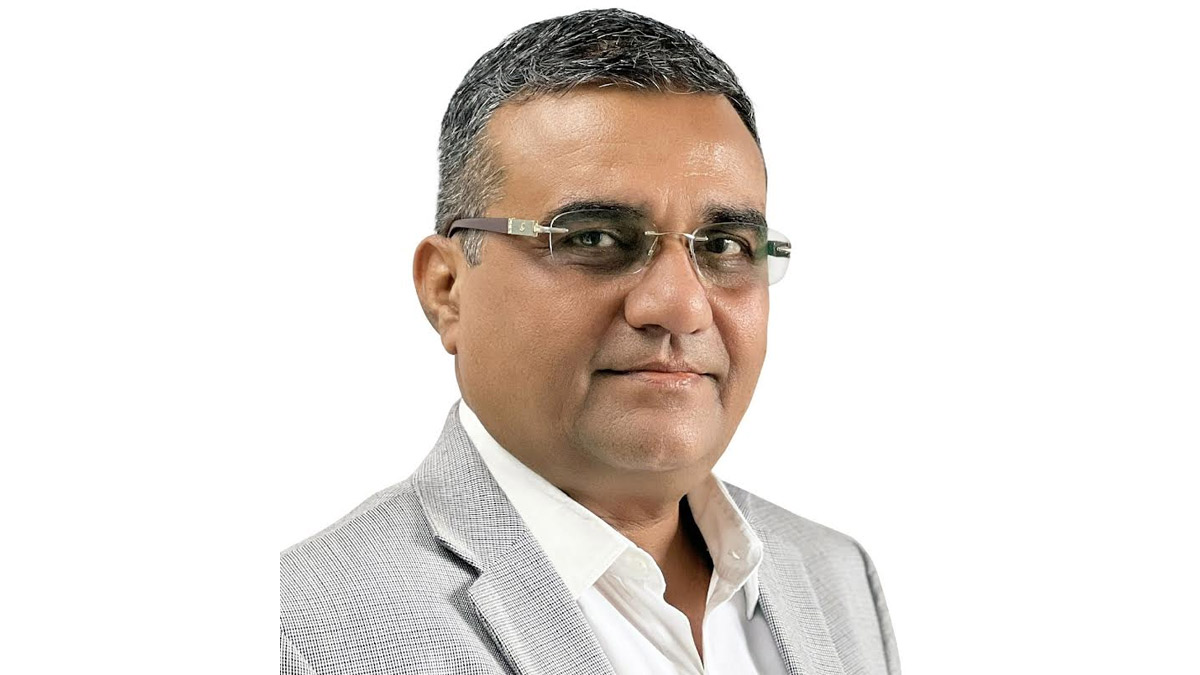
MUMBAI: A new chief, a fresh diagnosis and a sharper prescription for growth. Beacon Group has appointed Dr Rajesh Patel as its Group Chief Executive Officer, effective April 1, 2026, signalling a decisive push to scale its presence in the diagnostics and IVD space. Patel steps into the role with 36 years of experience across the healthcare and diagnostics industry, bringing a career shaped by leadership roles spanning sales, marketing, business development and operational strategy. His mandate is both expansive and precise: to steer the group’s overall strategic direction while tightening coordination across its three core entities Beacon Diagnostics, Vector Biotek and Biogeny Diagnostics.
In practical terms, that means driving cross-company synergies, accelerating market expansion and strengthening organisational capability areas increasingly critical as diagnostic players compete for scale in a fragmented yet rapidly evolving healthcare ecosystem. The group is positioning itself to capture unmet demand across chain laboratories, key accounts and standalone labs, segments that remain underserved despite growing diagnostic needs.
The appointment comes at a time when the In Vitro Diagnostics (IVD) sector in India is entering a more competitive and innovation-led phase, with companies focusing not just on product pipelines but also on service delivery, integration and customer-centric models. Beacon’s leadership appears to be betting that Patel’s execution-focused approach can help translate ambition into operational momentum.
Welcoming the appointment, Chairman Dr D K Joshi described Patel’s induction as a strategic move aligned with the group’s long-term vision, emphasising the role of leadership depth in navigating the next phase of growth.
For Beacon Group, the message is clear, in a sector where precision matters, leadership is the new differentiator—and this appointment is intended to set the tone for what comes next.






