MAM
Mindshare launches global wearable technology unit Life+


MUMBAI: Mindshare, the global media agency network that is part of WPP, has set up a global wearable technology group called Life+ to help brands take advantage of the nascent technology.
Life+ is headed by Mindshare North America MD- Mobile Jeff Malmad and is designed to help brands understand the opportunity that wearable technology presents, whilst ensuring issues around privacy and consumer utility are considered and prioritized from the start.

Mindshare clients will be able to work with leading wearable technology companies to learn, discuss and eventually create, brand related applications, integrations and product developments based on wearable tech APIs.
Life+ has already formed a strategic partnership with MapMyFitness, the leader in the emerging connected fitness category, building on its advanced technology, data, and rapidly growing global fitness community to create unique opportunities for Mindshare clients. The MapMyFitness platform engages over 26 million members by supporting over 400 cutting-edge fitness and activity tracking devices, along with top ranked fitness tracking apps on iOS and Android.
The partnership began at an event in New York on 8 July, where Life+ and MapMyFitness worked with Mindshare clients to research consumer receptivity points within their quantifiable ecosystems, including adaptive messaging opportunities based on physical state and needs. MapMyFitness will be joined by other, undisclosed, wearable technology companies to work with Mindshare client teams on brand integration opportunities as part of Life+.
Life+ is open to any Mindshare client interested in understanding the opportunities that wearable technology can offer in enabling consumers to meet their goals and lead better lives.
Mindshare defines ‘wearables’ as any technology worn by a human externally that is ‘beyond the three screens’ and that integrates with a human’s own biometric characteristics, which includes activity trackers (Jawbone), smart watches (Samsung Galaxy Gear), augmented reality devices (Google Glass) fitness watches and sensors (Garmin) and the broader spectrum of health-related devices.
Mindshare chief digital officer Norm Johnston said, “Twenty years after the launch of the first Internet advertisement, and a year after the long-awaited mobile tipping point, digital marketing is now entering a third and radically different chapter. This new, expanded Internet will give smart brands a chance to give consumers valuable brand content and utilities in a myriad of new hyper-connected destinations. Mindshare look forward to helping our clients navigate and accelerate their efforts in this space.”
The launch of Life+ follows Mindshare’s launch of Audio+ in November 2013, a tie-up with audio recognition service Shazam to audit, map and leverage a brand’s audio assets.






Brands
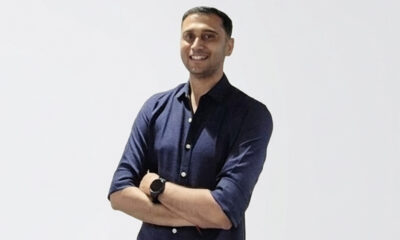
Emami names Dhruv Aggarwal as chief growth officer
Former Bain partner steps in as FMCG firm sharpens growth playbook

MUMBAI: Emami Limited has appointed Dhruv Aggarwal as its chief growth officer, effective 25 March 2026, following the resignation of Giriraj Bagri.
Aggarwal joins the FMCG major from Bain & Company, where he most recently served as partner. With over two decades of experience across consulting and strategy, he brings a global perspective shaped by work across India, the US, the UK and Germany.
During his tenure at Bain, Aggarwal advised consumer, retail and media companies on large-scale transformations, business turnarounds and growth strategies. He was also closely involved with India’s startup ecosystem, guiding early-stage ventures on scaling and digital expansion, while supporting private equity and venture capital firms on investment decisions.
His earlier stints include a brief role at Barclays Capital and operational experience at Jindal Power, giving him a mix of financial and industry exposure.
Academically, Aggarwal holds an MBA from Indian Institute of Management Bangalore and has also been associated with University of Illinois Urbana-Champaign as a PhD candidate and teaching assistant.
The appointment comes at a time when Emami Limited is looking to sharpen its growth strategy in a competitive consumer market. With a seasoned strategist now at the helm of growth, the company appears set to double down on transformation and expansion in the months ahead.








