Brands
Micromax looks to encash anti-China sentiments on return

NEW DELHI: The recent ongoing border tension between Indian and China has prompted a major backlash against Chinese products in India. In a bid to encash this anti-China sentiment, homegrown smartphone brand Micromax is making a comeback in the Indian smartphone market.
The company announced on its official Twitter handle that it will launch three new smartphones this year with premium features, affordable pricing and modern looks. The brand is also using hashtags such as #MadeinIndia and #MadebyIndian on its social media channels to promote its offerings.
The Indian smartphone market is dominated by Chinese brands like Xiaomi, OnePlus, Vivo, Realme and others with no Indian brand in the top five. Micromax had its legacy in the market till 2015, before the entry of Chinese giants. According to Canalys, Micromax overtook Samsung in Q4 2015, grabbing 22 per cent of smartphone sales in India, ahead of Samsung’s 20 per cent.

The brand enjoyed massive success once and was known for its power-packed battery with affordable pricing, which made it popular in rural India. In 2015, the company was ranked as the second-largest smartphone seller in India, after Samsung. But soon after the entry of Chinese makers, the tables turned and Micromax was wiped out.
Xiaomi, Oppo and Vivo focused heavily on retail distribution, marketing channels, new technologies and other key areas. Micromax also faced stiff competition due to the changing regulatory policies and the onset of 4G technology.
Micromax isn’t the only brand which had faced the brunt. Other Indian companies like Karbonn, Lava, Xolo and Intel have also vanished from the market. Some of them tried focussing on entry-level smartphones, but soon Chinese brands captured that market too.
It’s not going to be an easy task for Micromax to regain the lost market after a gap for several years. Can the growing anti-China sentiments be a boon for Indian smartphone manufacturers or is it a short-term phenomenon?
Independent Communications and Marketing consultant Karthik Srinivasan says, “Features like battery life, camera, screen quality, speed of operation, etc., are graded and compared by a lot of people before making their purchase decision. So, either Micromax or any other Indian brand needs to get their quality right (or at last comparably good) to win over Indian consumers. They cannot depend on anti-China sentiments alone.”
TRA founder and CEO N Chandramouli differs. He says, "It will be a big boon for all non-Chinese manufacturers as the current border tension mounts. Even though Chinese products sell very well in phones, the sentiment of Chinese products, in general, has never been too good. In their price segments, Micromax, Lava, and other such Indian brands will definitely find a greater buying propensity among consumers at a time when they are also in a strong comeback gear. Consumers choose products based on their emotions, values, and beliefs and when it comes to the sovereignty of India being attacked, even the most rational consumers will tend to avoid Chinese brands."
When the #MadeinIndia campaign was launched, the company saw a hope of revival as the brand had an efficient assembling product in India. But soon after, Chinese players started manufacturing their products in India too.
There are speculations that Lava also plans to make a comeback. However, there are no details yet.
Micromax was the first-ever smartphone brand to announced Hugh Jackman as its brand ambassador when the company was at its peak. It also had associations with Akshay Kumar and Twinkle Khanna. However, Chinese smartphones adopted the same proposition. Brands like Oppo, Vivo, Xiaomi, and Realme have been riding high on brand ambassadors like Ayushmann Khurrana, Alia Bhatt, Aamir Khan, Ranbir Kapoor, Salman Khan, Ranveer Singh, etc.
This time Micromax not only needs to strengthen its product portfolio but has to boost awareness and change brand perception in the minds of Indian consumers. So, how crucial does the marketing channel become whenever a brand tries to make a comeback, that too riding on national interest?
“The entire marketing narrative is likely to be one of capturing consumer emotions. Depending on how an Indian brand positions its comeback, it can have a lasting impact. I can foresee Indian phone brands seeking an emotional connect creating ads using actors in military uniform, possibly in treacherous terrain, talking on an Indian phone with his child/wife/mother, with ‘Bharat Ke Saath’ type of messaging,” says Chandramouli.
However, Srinivasan explains that the claims made via marketing need to be believable and credible. "It would be silly to assume that consumers are gullible to go just with a 'Made in India' label in marketing,” he says.
It is pertinent to note that OnePlus launched its new model OnePlus 8 Pro a few days back which was sold out within minutes despite the boycott of Chinese products sentiment on social media platforms.


Brands
Rakesh Menon joins Paytm as avp – lending
Fintech product leader takes on new role after building digital lending, payments and credit products across fintech ecosystem
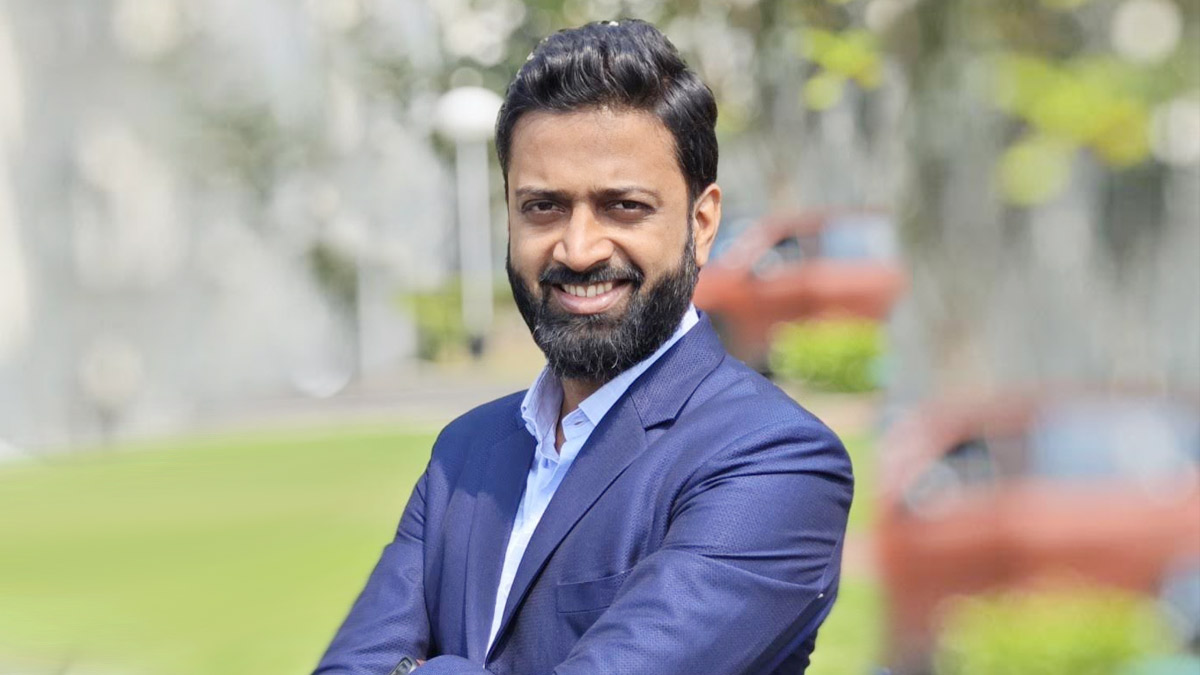
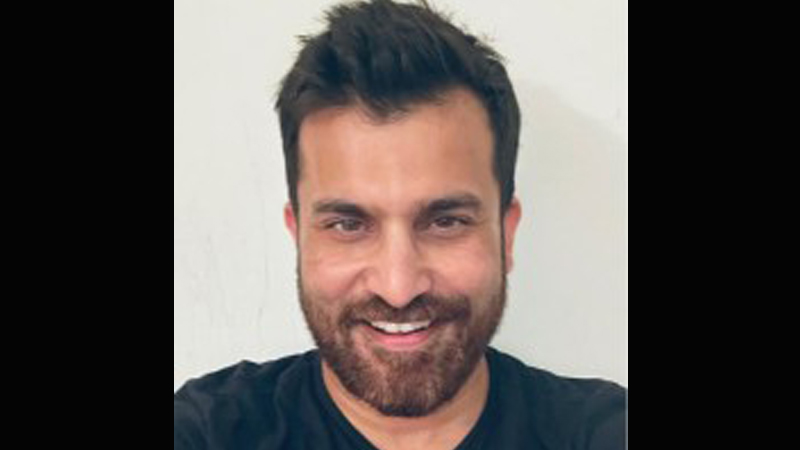
MUMBAI: Rakesh Menon has joined Paytm as assistant vice president – lending, taking on a new role focused on strengthening the company’s lending and credit products.
Prior to this, Menon worked at Profectus Capital Pvt Ltd as chief manager – payments based financing and digital lending.
At Profectus, he designed and launched digital credit products for merchants with variable cash flows, including overdraft-linked and revenue-share lending models. He led end-to-end LOS–LMS API integrations with payment partners and aggregators, enabling real-time underwriting, disbursal and repayment workflows.
He also worked on funnel optimisation initiatives using journey analytics, improving onboarding, KYC and disbursal conversion by 35 per cent. He developed ecosystem partnerships for transaction-data-based credit assessment and automated settlement systems, and collaborated with credit and data science teams to strengthen risk models and early delinquency detection.
Menon standardised partner onboarding and API frameworks, reducing go-live timelines by 40 per cent and improving digital scalability.
Before Profectus Capital, he worked at PayU as senior manager – presales lead – enterprise business from August 2022 to August 2023. He set up a national presales function for fintech and digital commerce clients, aligning solutions such as EMI, BNPL, BBPS and offer engines to merchant requirements.
He also helped improve conversion rates by around 15 per cent through merchant persona mapping, demo frameworks and structured sales playbooks, working closely with product and go-to-market teams.
From April 2019 to July 2022, Menon served as business unit head – SMB – direct acquisitions at Worldline, where he built the SMB online payments vertical from scratch. The business scaled to Rs 2,500 crore in annual transaction volume, growing at 45 per cent year-on-year.
During this period, he introduced paperless onboarding processes including eKYC and eSign, developed partner dashboards and CRM automation systems, and integrated platforms such as Shopify, WooCommerce and Tally to expand merchant adoption.
Across roles, Menon has worked across digital lending, payments and merchant financing, with experience in product development, ecosystem partnerships, API integrations and fintech-led growth strategies.
At Paytm, he will focus on scaling lending products and strengthening digital credit infrastructure within the company’s financial services ecosystem.
His appointment comes as fintech firms continue to expand their lending and embedded finance offerings in a competitive market.







