MAM
Metro Tyres dons new brand identity

MUMBAI: Metro Tyres, manufacturer and exporter of two wheeler tyres in India, have unveiled a new brand identity, a new logo and an ad campaign .
The new identity aims to portray Metro as a company that understands youth aspirations and reaches out to young people, India’s dominant demographic segment, with “cutting-edge” products.
Metro Tyres MD Rummy Chhabra said, “Our new visual identity consists of a re-designed Metro name, appearing in italics to represent motion and speed. Complementing the logo, our advertisement campaign is a story of transformation- from a child to a youth. In doing so, it reflects who we are today and the company we aim to be tomorrow.”

Metro has also tied up with Continental, a Germany-based tyre company. The link with Continental provides Metro with access to the latest technology in the field and exports to the USA, Canada and the European Union under Continental brand.
According to the company, it sells its products through a network of 10,000 dealers spread across India. In addition, it is the sole supplier of tubeless tyres to Honda Motorcycle and Scooter India for Honda CBR 250R, a premium motorcycle made by Honda in India. Besides, Metro supplies to Bajaj Auto, Piaggio, Suzuki, Hero Cycles, TI Cycles, Atlas Cycles and Avon Cycles.







Brands
Axis Bank named Official Banking Partner of DP World PGTI
Partnership supports all tournaments this season to grow professional golf in India.
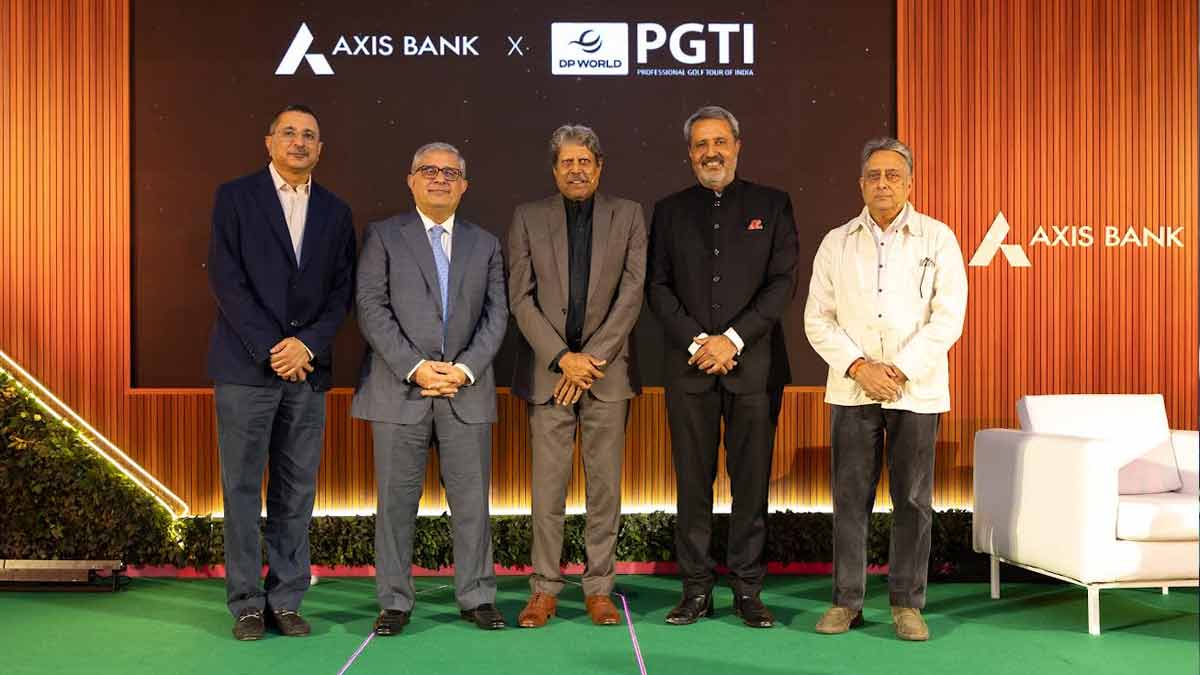
MUMBAI: Axis Bank just teed up a hole-in-one partnership because when a bank sponsors golf’s biggest swing in India, even the fairways feel more financially secure. Axis Bank has been appointed Official Banking Partner of the DP World Professional Golf Tour of India (DP World PGTI), strengthening its commitment to sporting excellence and community engagement while backing the growth of professional golf across the country.
Under the partnership, Axis Bank will support all DP World PGTI tournaments this season, contributing to talent development, enhanced tournament experiences and wider fan engagement. The collaboration aligns the bank’s values of precision, discipline and trust with the Tour’s focus on performance and opportunity.
Axis Bank executive director Munish Sharda said, “We are pleased to partner with DP World PGTI as its Official Banking Partner. Golf embodies precision, discipline, and a pursuit of excellence qualities that strongly reflect who we are at Axis Bank. This association also strengthens our engagement with India’s growing premium customer segments, where the sport has a deep and enduring connect.”
Professional Golf Tour of India president Kapil Dev said, “We are extremely pleased to welcome Axis Bank as a Tour Partner of the DP World Professional Golf Tour of India. Partnerships of this stature play a vital role in strengthening the foundation of the Tour, enhancing opportunities for our players, and expanding the sport’s reach across the country.”
Professional Golf Tour of India CEO Amandeep Johl added, “Axis Bank’s strong legacy of excellence, innovation, and nationwide reach aligns perfectly with DP World PGTI’s goal to elevate professional golf in India and provide greater opportunities for our players.”
In a sport where every stroke counts and every partnership drives distance, Axis Bank isn’t just backing golfers, it’s investing in the fairway to future, turning India’s greens into a stage where precision meets passion and every drive has the power to inspire.