MAM
Media Direction’ to ‘Optimum Media Direction

Omnicom’s creative agencies are DDB, BBDO and TBWA. In India, DDB has a 10 per cent stake in Mudra, BBDO has a majority stake in RK Swamy (50.1 – 49.9 % )- the first Indian agency to have an international tie-up) and TBWA a majority stake in TBWA-Anthem which took place last year with 60-40 ownership.
For the formation of OMD in India, one would assume that all the three creative agencies need to have majority holdings from their international partner, as that is the formula traditionally adopted by OMD in other markets. Considering DDB is a minority holder in Mudra, how OMD International will work this out is still a big question mark. What is clear though, is that the shareholder issues are coming in the way of consensus on the formation of OMD. Some clarity on this issue was given by Swamy, “OMD will come to India in the next few months.”
Internationally, OMD is an established media brand though Optimum Media and Media Direction as entities have been retained under OMD to handle conflicting interests. Media Direction currently functions as OMD’s partner in India, with its P&L separated which guarantees operational independence. Media Direction is also in charge of all OMD’s network client’s in India for recent years like Allianz, Singapore Tourism and Peoplesoft.

How will OMD make a difference to Media Direction?
States Tarkas, “It will make a difference to a limited extent. The big change being access to their international tools and knowhow. But in my experience, I believe that a lot of international tools needs to be tweaked and customised to Indian market realities. So, we are already developing our own indigenous tools.”
One would also assume, that if OMD is formed in the conventional way (which might actually not be the case) Media Direction and Optimum Media Solutions (Mudra’s media agency) will come together to form OMD. In this scenario, Media Direction may then get a significant push as a media agency both in terms of a independent stature as well as being taken more seriously by clients as a media hot-shop.







Brands
Wellbeing Nutrition ropes in Malavika Mohanan as brand ambassador
Actor fronts Marine Collagen and Skin Fuel Glutathione portfolio.
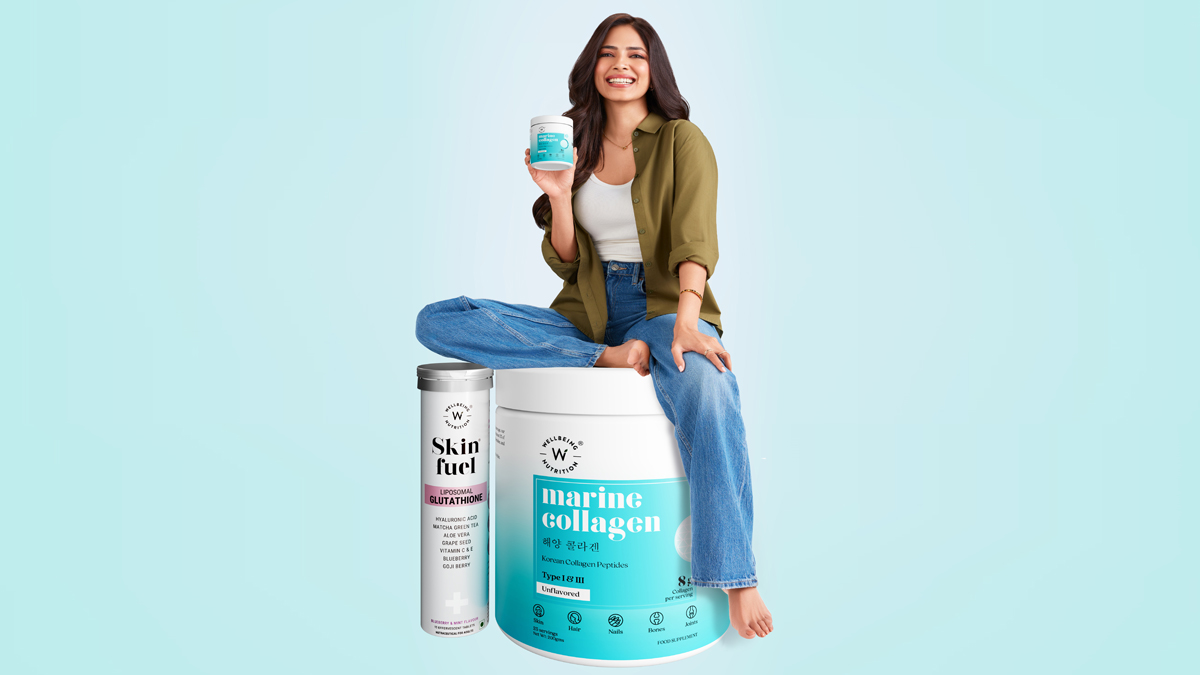
MUMBAI: Malavika Mohanan just became the face of inner glow because when your skincare starts in the bottle instead of the jar, even beauty gets a glow-up from the inside out. Wellbeing Nutrition has appointed acclaimed actor Malavika Mohanan as brand ambassador for its premium Korean Marine Collagen and Skin Fuel Glutathione range. The move signals a deliberate shift in the Indian ingestible beauty segment from surface-level routines to foundation-level nutrition that supports skin health from within.
The campaign positions collagen as the essential “beauty protein” that maintains elasticity and firmness, with daily supplementation reframed as a consistent ritual rather than a quick cosmetic fix. It aims to simplify the science behind collagen and build awareness around long-term skin nourishment.
Wellbeing Nutrition co-founder Saurabh Kapoor said, “In India, collagen is still largely viewed through a cosmetic lens, associated with glow and quick fixes. In reality, it is the primary structural protein of the skin, and we begin losing nearly 1 per cent of it every year in the late 20s. Yet a significant number of consumers remain unaware of its foundational role in long-term skin health. Our goal is to shift the conversation from fixing visible signs to feeding the foundation.”
Malavika Mohanan added, “For me, skincare has always been about consistency and taking care of myself in ways that go beyond just what I apply on my skin. I love the idea of supporting skin health from within, and that’s what drew me to Wellbeing Nutrition’s Marine Collagen and Skin Fuel Gluta.”
The Korean Marine Collagen uses nano-hydrolyzed peptides for better bioavailability, while Skin Fuel Glutathione complements the inside-out approach. The portfolio targets structure, brightness and resilience over time, backed by clinical research.
The ambassador announcement kicks off a broader collagen-focused roadmap for the brand, with planned innovations across formats and functional blends.
In an era where beauty routines are getting deeper than skin, Wellbeing Nutrition isn’t just selling supplements, it’s selling the quiet power of feeding your glow from the inside, one daily scoop at a time.







