MAM
Measuring ROI is the biggest challenge: Digital Marketing Industry Report 2016

MUMBAI: According to the Digital Marketing Industry Report 2016 released by Social Beat, 87 per cent brands leverage digital and 38 per cent of them allocate a third of its budget to digital marketing. The reason why the later figure is low is probably due to inability of the medium to take accountability for the brands.
Tracking Return on Investment (ROI) is the biggest challenge being faced by brands, closely followed by content creation, quality lead generation and attracting talent. Currently, CMOs are using Sales / Leads, Engagement, Brand Reach and Mentions as the metrics to track the effectiveness of their campaigns.
The report is the result of a survey sampled across 376 CMOs and Marketing Heads in India. The companies that participated in the study were from various sectors and verticals including e-Commerce, FMCG, Media/Entertainment, healthcare, education, real estate, and travel.

Most of the respondents said they focus on Social Media Marketing, Search Engine Optimization, Content Marketing and Emailers for marketing their brand online. Not surprisingly, Facebook (89%) and Google (78%) have emerged as the most popular platforms followed by Twitter (56%) and LinkedIn (51%).
Penetration of smartphones, faster internet connectivity and interesting video content have resulted in 51% brands targeting YouTube for marketing their brand. It would be interesting to track the growth of newer channels like Instagram and Snapchat in India for brand marketing in the near future.
Speaking on the report, Social Beat Co-Founder Vikas Chawla said “The report highlights the rise of digital marketing, though brands continue to use television and print mediums to have a 360-degree approach. It was encouraging to see that 87% of the brands surveyed leverage digital marketing. While brand awareness and lead generation/sales seem to be the primary goals set by the CMOs, digital marketing is increasingly being leveraged for Customer Engagement (46%) and customer service (35) too.”
The responses from the survey indicate that digital marketing spends are about one-third of the total marketing spends. The results here are considerably different from the IAMAI – IMRB International Report which pegs the digital spends at 12% of the total marketing spends.
Speaking about the survey, Social Beat cofounder Suneil Chawla said, “Around 10% brands surveyed spend more than Rs. 1 crore annually on digital marketing while around 50% brands spend more than Rs. 6 Lakhs annually. Overall, 20% brands plan to increase their digital marketing spends by 25% in the next financial year. This is important in the context of growing internet and digital penetration in India – brands understand that digital is the way forward. With an expected 500 million internet users in India by 2017, brands understand the massive opportunity to reach out to their consumers.”





MAM
8PM Packaged Drinking Water named Lead Trouser Sponsor for Sunrisers Hyderabad
Brand partners with IPL team for 2026 season with campaign ‘Rise in Orange, Celebrate with Black’.
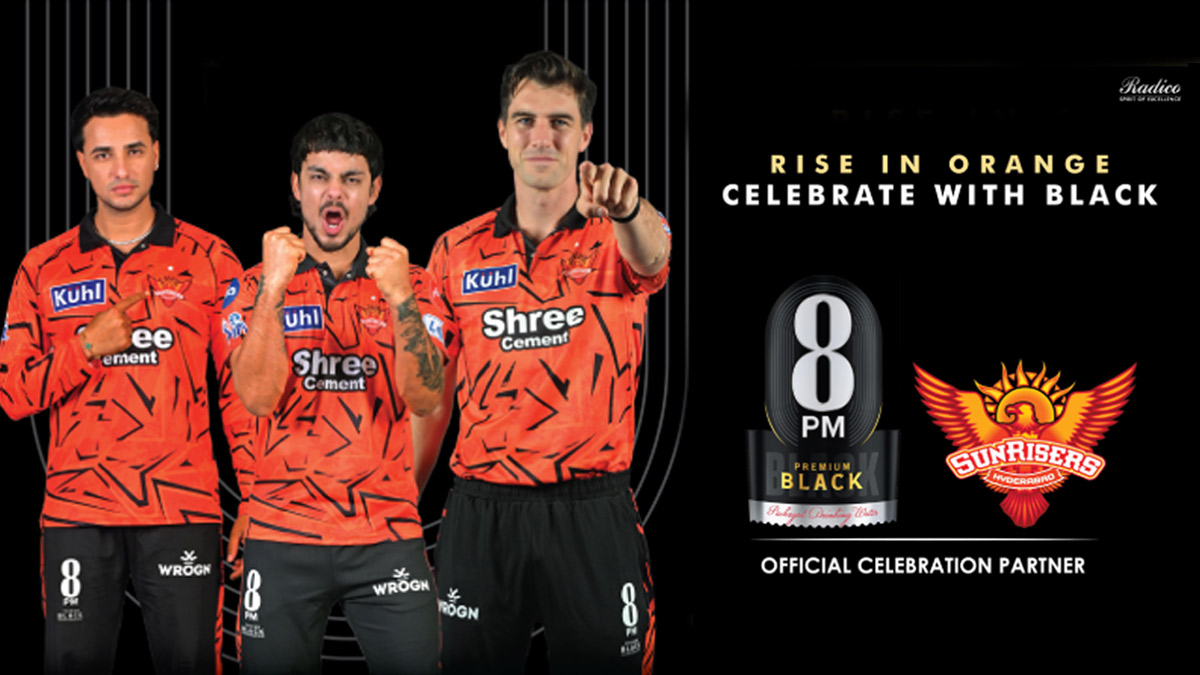
MUMBAI: 8PM Packaged Drinking Water has found a clever way to stay in the game by hitching its wagon to one of cricket’s most exciting teams. The brand from Radico Khaitan Limited has announced its association with Sunrisers Hyderabad as the Lead Trouser Sponsor for India’s Premier Cricket League 2026. The partnership will see 8PM Packaged Drinking Water gain prominent visibility during the high-energy tournament.
To mark the collaboration, the brand has launched the campaign thought “Rise in Orange, Celebrate with Black.” The idea cleverly links the on-field intensity of Sunrisers Hyderabad’s iconic orange jersey with the off-field celebrations powered by 8PM Premium Black Packaged Drinking Water.
Radico Khaitan Limited chief marketing officer Kunal Madan said, “We are delighted to be associated with Sunrisers Hyderabad for the 2026 season. With the league’s unmatched reach and the team’s strong fan following, this is a great opportunity to connect meaningfully with consumers across the country.”
Sunrisers Hyderabad enters the season with a formidable lineup featuring players such as Abhishek Sharma, Ishan Kishan, Travis Head, and Pat Cummins, making it one of the most watched teams this year.
A spokesperson from Sunrisers Hyderabad added, “We are pleased to welcome 8PM Packaged Drinking Water to the Sunrisers family. This association brings together shared values of energy, resilience, and excellence.”
The partnership underscores Radico Khaitan’s strategy of aligning with marquee sporting platforms to build contemporary, consumer-centric brands. By tapping into the emotional connect and massive viewership of the league, 8PM aims to deepen engagement and strengthen brand affinity during the cricket season.
In the fiercely competitive world of Indian cricket sponsorships, 8PM has chosen to play it smart, pairing the thrill of orange with the cool refreshment of black. As Sunrisers Hyderabad prepare for another exciting season, the brand is set to ride the wave of passion, performance, and celebration.







