MAM
McCann Erikson appoints Suraja Kishore as head planning


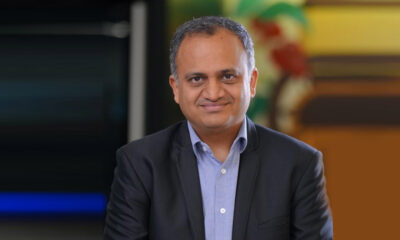
MUMBAI: There’s some change at top at the McCann Erikson office. The agency has roped in Suraja Kishore from Publicis Ambience for its Mumbai office as the head planning.
Suraja comes with over 17 year of experience and has worked on Idea Cellular – What an Idea, and the iconic Tata Tea – Jaago Re campaigns. On his new role, he said, “McCann Erickson is known for its creative force and it has brands that enjoy scale and size. I think it is the right place for strategic planning to make a real difference. I look forward to creating transformational brand stories that are based on powerful human truths.”

He is a postgraduate from Tata Institue of Social Science and began his career as a copywriter at the then Chaitra Leo Burnett. He began is planning stint in Mudra Delhi. He has worked on diverse categories and brands such as Croma, Ginger Hotels, Lakme, Axa Insurance, Citibank, Park Avenue Men grooming products, World Gold Council, Renault Duster, Henko Detergent, Tata Automotive, Hershey’s Milk Mix, Electrolux, Yamaha Motorcycles, Ariel Detergent and Suzlon, among others.
McCann Erikson president Govind Pandey said, “Suraja will gainfully enhance ME’s strategic planning prowess. He is a seasoned professional and has an interesting and rich way of seeing life and people. His contribution will enhance relevance for our brands by adding depth and nuance to our solutions.”
McCann Erickson Mumbai senior VP and GM Namrata Nandan added, “McCann Mumbai’s team is strengthened with Suraja’s addition, and we look forward to working together and creating great work for our brands.”






AD Agencies
Tribes and Omnicom Media win Gold for HSBC Living Hexagon at ET Awards
Kinetic OOH installation turns HSBC’s iconic logo into a living landmark

MUMBAI: Tribes Communication and Omnicom Media have secured a Gold win at the ET Design & Creativity Awards for their innovative out-of-home installation, The Living Hexagon, created for HSBC.
Awarded in the Most Creative Traditional OOH category, the project reimagines one of the world’s most recognisable banking symbols into a dynamic, ever-evolving structure. Designed for HSBC’s International Financial Services Centre presence, the installation was conceived to do more than simply grab attention. It aimed to seamlessly blend into the fast-growing ecosystem of GIFT City.
At the heart of the idea is HSBC’s iconic hexagon, typically associated with precision and consistency. Tribes transformed this static identity into a kinetic structure that responds to natural elements such as wind and light, creating a sense of continuous motion. The result is a visual experience that shifts throughout the day, echoing themes of adaptability and momentum.
Constructed using modular triangular units arranged along a precise geometric axis, the installation moves in synchrony, giving the illusion of a fluid, living form. While the structure evolves with its surroundings, it retains the unmistakable identity of the HSBC brand, striking a balance between innovation and familiarity.
Strategically placed at a key entry point into GIFT City, the installation functions as both a landmark and a statement. It reflects the pace and dynamism of global finance while embedding the brand into the city’s architectural narrative.
With this win, Tribes Communication and Omnicom Media underline the growing role of experiential and design-led thinking in traditional media, proving that even the most established brand assets can find new life when reimagined with creativity and context.






