MAM
Maxus ESP & Chef Vikas Khanna join hands for Askme’s video series


MUMBAI: Maxus ESP has partnered with Chef Vikas Khanna to co-create and design Askme’s video series called ‘Top Trending places for Top Trending moments.’
Maxus ESP identified and finalised various moments that matter to consumers via research. These moments were then incorporated in concepts for the video series.

Explaining the content of the video, Maxus Asia Pacific, South East Asia and South Asia Regional director for content Shailja Saraswati said, “We have curated the videos to suit the contemporary taste of the audience and have ensured that every moment of the viewing becomes an experience to cherish. The videos are custom made for digital audiences always on the lookout for suggestions and will be promoted across digital/app/mobile.”
According to Saraswati, Askme.com has evolved from being just an information realisation service to a curator of the latest trends and satiates the consumer’s need of staying in tune with fast changing content preferences.
Askme.com group head marketing Manav Sethi said, “We are delighted to be a part of this one-of-a kind initiative by Maxus ESP in collaboration with Vikas Khanna. At Askme.com, we have fine-tuned our strategy to offer content that is credible and crisp and this new series of videos is all about celebrating life packed with fun moments and experiences. Askme believes life is all about celebrations and who better than Vikas Khanna, to help consumers out with the right choice for moments that matter.”
The video series was custom created for seeding across digital platforms, including social media assets of AskMe.




Brands
Aman Gupta’s OFF/BEAT secures Rs 100 crore seed funding round
Bessemer backs new venture betting on AI and India’s digital shift
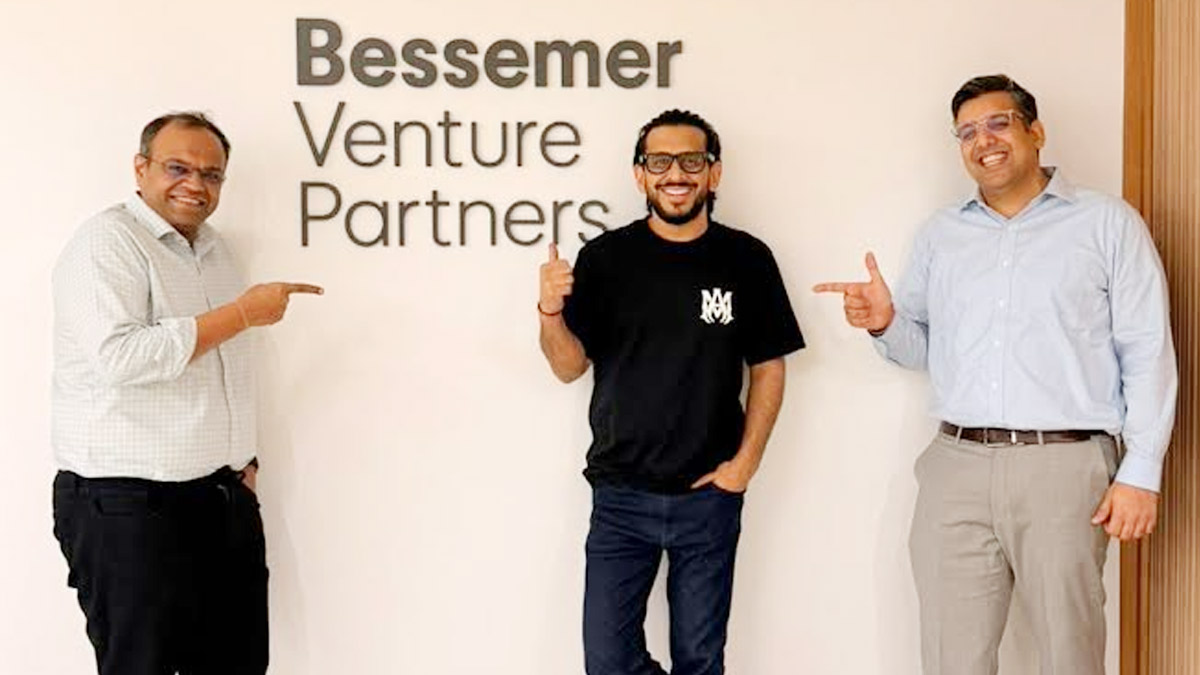
MUMBAI: Aman Gupta has raised Rs 100 crore in seed funding for his new venture OFF/BEAT, with Bessemer Venture Partners leading the round as it bets on a new wave of AI-led, consumer-first businesses in India.
The funding marks an early but significant push for OFF/BEAT, which is positioned to tap into a rapidly evolving market shaped by a digitally native generation and advances in artificial intelligence. The venture aims to build at the intersection of culture and technology, where brand identity and innovation increasingly go hand in hand.
Gupta, best known for co-founding boAt and scaling it into a Rs 3,000 crore-plus business, is now looking to apply those learnings to a new playbook. His focus this time is not just on building a consumer brand, but on leveraging AI and global networks to accelerate growth.
OFF/BEAT founder Aman Gupta said, “Having built from scratch before, I know what capital can do and what it cannot. This time, I was looking for partners with a global perspective who can help me leverage technology and AI, because that is where the future lies. Bessemer’s track record with companies like Anthropic, Shopify, Canva and LinkedIn says it all.”
The choice of investor reflects that ambition. Bessemer Venture Partners has backed global technology players such as Anthropic, Shopify, Canva and LinkedIn, bringing not just capital but strategic support and global reach.
Bessemer Venture Partners partner Anant Vidur Puri said, “We back founders who see around corners. Aman saw how a new India would come to think about aspiration, identity and quality, and built boAt as proof. He is now applying that same instinct to a market being reshaped by AI and by a generation with entirely new expectations.”
The investment comes at a time when India’s startup ecosystem is being reshaped by both consumer behaviour and technological disruption. Founders are increasingly expected to understand not just products, but the cultural shifts that drive adoption.
For OFF/BEAT, the journey is just beginning, but the signal is clear. In a market where attention is fleeting and expectations are rising, building something truly distinctive may be the only way to stay on beat.






