MAM
Max launches its first corporate ad campaign

MUMBAI: Max India has launched its first corporate ad campaign with a twofold objective.
With the new campaign Max India has announced its new brand positioning of ‘For life‘. Secondly, Max is consolidating all its service offerings under the Max umbrella.
The creative agency that has worked on the campaign is Dentsu Creative Impact, while the media agency for the business is Madison Media.

The television commercials are being supported by other mediums like cinema, digital and print. The company will also be conducting few below-the-line activities to promote the brand.
The 40-seconder TVC has been produced by Lemon Yellow Sun Films.
Max India ED – Brand and Human Capital Vibha Rishi said, “Max interacts with millions of lives through many million moments of truth. Each interaction results in a memorable and satisfying experience. The brand positioning captures this sentiment with two simple words ‘For life’. We help our customers in navigating the often confusing complexities of insurance and healthcare ‘Sar jo tera chakraye …aa ja pyaare paas hamare. Kahey ghabraye.’.”
“The current campaign is the focal point of our communication. The entire corporate marketing budget for FY13 is being spent on this campaign itself,” Rishi added.
Talking about ad campaign Dentsu India Group NCD Soumitra Karnik said, “It was almost like doing a large flash mob. There were over 500 people on location, six cameras placed everywhere from in between the crowd, to the rooftops of buildings, in moving cars and even one that was attached to a jumper‘s knee. A lot of people did not even know they were being filmed. We just let the people lose their fear and inhibitions and just enjoy jumping on the trampolines. And they did, which was exactly what we wished to communicate that life is for living to the fullest and in all the ups and downs, Max will be right there to help them bounce back, just like a trampoline.”
Max is a multi business corporate offering services in healthcare, health insurance and life insurance. While the Max brand architecture has undergone a change, the new communication aims to build trust for the corporate brand Max, by virtue of which people can choose its constituent brands with more confidence than their competitors.
The TVC uses a simple visual device of a trampoline to connote the key message that Max India helps you bounce back in life. Various interactions are built around it reflective of the values on which the Max foundation is laid.
The film opens on a morning where you see multiple trampolines placed in a cityscape. Seeing this, passerbys are surprised and get curious to check it out. The film is used to establish how people of different age groups, though apprehensive at first, set out to experience the trampoline which is really a visual metaphor for ‘Max’.






MAM
Beacon Group appoints Dr Rajesh Patel as Group CEO
36-year healthcare veteran to lead Beacon Diagnostics, Vector Biotek, Biogeny.
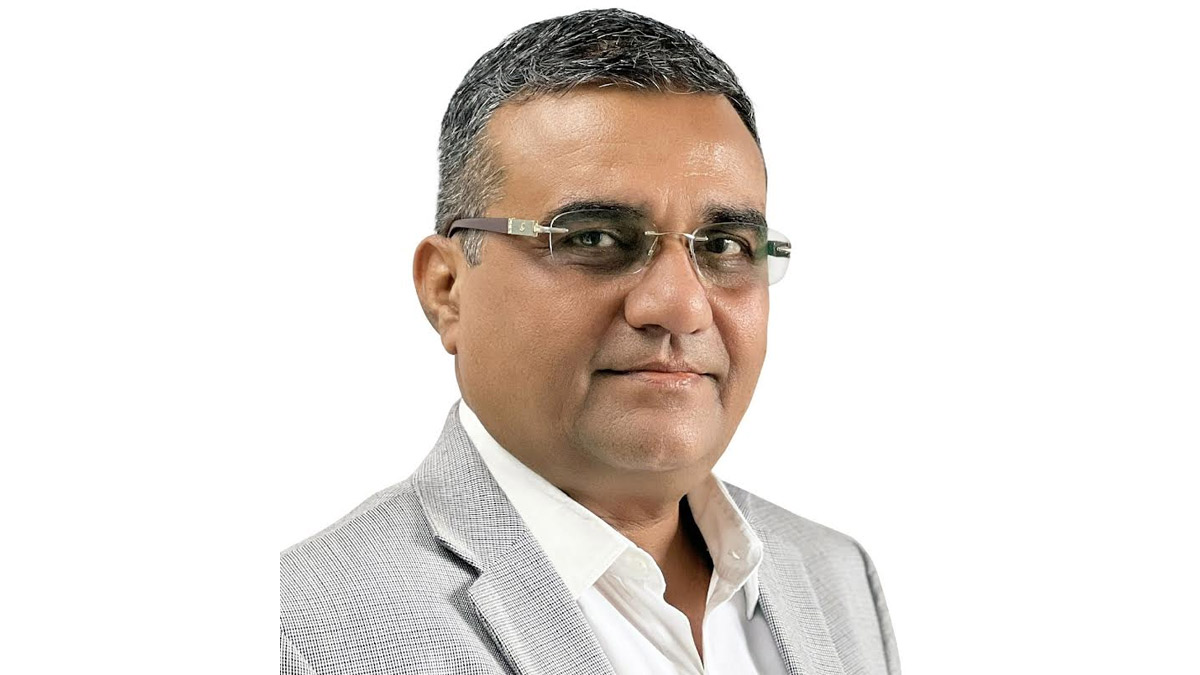
MUMBAI: A new chief, a fresh diagnosis and a sharper prescription for growth. Beacon Group has appointed Dr Rajesh Patel as its Group Chief Executive Officer, effective April 1, 2026, signalling a decisive push to scale its presence in the diagnostics and IVD space. Patel steps into the role with 36 years of experience across the healthcare and diagnostics industry, bringing a career shaped by leadership roles spanning sales, marketing, business development and operational strategy. His mandate is both expansive and precise: to steer the group’s overall strategic direction while tightening coordination across its three core entities Beacon Diagnostics, Vector Biotek and Biogeny Diagnostics.
In practical terms, that means driving cross-company synergies, accelerating market expansion and strengthening organisational capability areas increasingly critical as diagnostic players compete for scale in a fragmented yet rapidly evolving healthcare ecosystem. The group is positioning itself to capture unmet demand across chain laboratories, key accounts and standalone labs, segments that remain underserved despite growing diagnostic needs.
The appointment comes at a time when the In Vitro Diagnostics (IVD) sector in India is entering a more competitive and innovation-led phase, with companies focusing not just on product pipelines but also on service delivery, integration and customer-centric models. Beacon’s leadership appears to be betting that Patel’s execution-focused approach can help translate ambition into operational momentum.
Welcoming the appointment, Chairman Dr D K Joshi described Patel’s induction as a strategic move aligned with the group’s long-term vision, emphasising the role of leadership depth in navigating the next phase of growth.
For Beacon Group, the message is clear, in a sector where precision matters, leadership is the new differentiator—and this appointment is intended to set the tone for what comes next.






