MAM
Mastercard advocates contactless payments

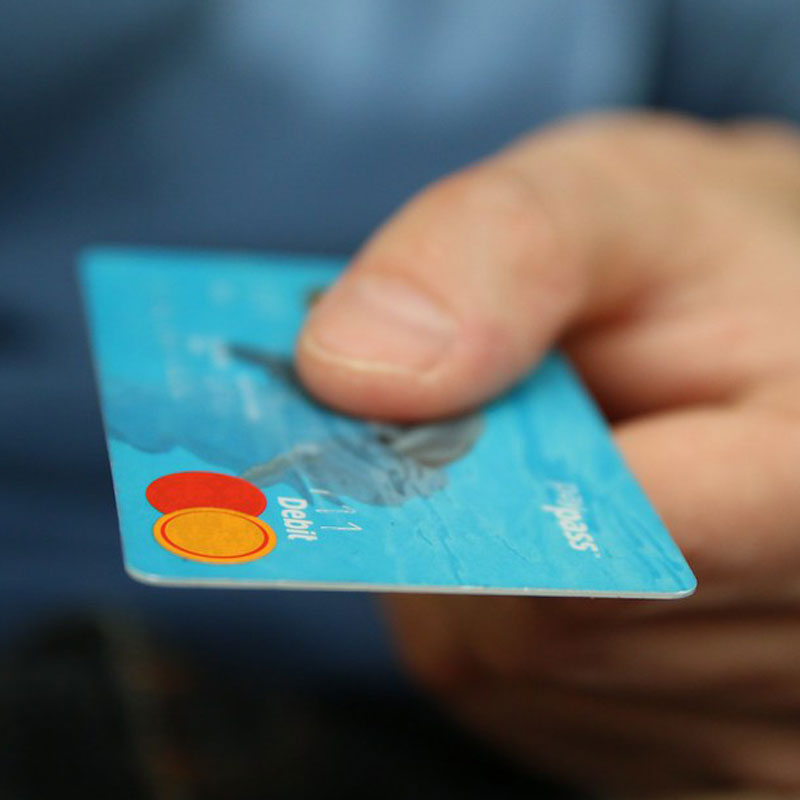
MUMBAI: Mastercard’s commitment towards making transactions more convenient, safe and seamless through tap-and-go card payments has taken on new urgency and importance as the spread of COVID-19 highlights the imperative for “contact-free” environments and experiences as much as possible.
As nations implement stricter containment measures to keep their citizens protected, Mastercard has taken a leadership role by actively consulting with governments and industry partners across the Asia Pacific region to ensure consumers have sufficiently high limits for contactless payments.
Having the right transaction limit helps people stock up on more essential items on each trip to public places without having to touch potentially infectious surfaces, key in a PIN, handle cash or use a pen to process their payments. It is also important for merchants and consumers to know that signatures are no longer required for card payments, which further reduces contact points and speeds up purchases.
Consumers simply need to look for the contactless symbol on the front or back of their cards to see if they can tap when they are checking out with their purchases. For mobile devices, any change in limits has no impact on transactions or personal safety as a fingerprint, facial scan or PIN keyed into the device itself is still required and contact points are confined to the cardholder’s device.

“Face-to-face transactions still need to happen, even in times as unusual as now. Making them as fast and contactless as possible is one way to help people to be more socially responsible, support local businesses and protect everyone in the community when they need it the most,” said Mastercard Asia Pacific executive vice president products and innovation Sandeep Malhotra.
“Mastercard fully supports social distancing, remote working, stay-at-home measures and other efforts to contain COVID-19 and is actively working with partners and customers in every market to bring the industry together and find mutual ways to help, be it through contributing insights and consultative advice or driving more consumer education and awareness building.”
As of February 2020, contactless payments made up approximately 50 per cent of Mastercard’s global card-present purchases, excluding the United States.
The Asia Pacific is seeing an overall rapid expansion in contactless payments but adoption varies across the region – from widespread use in Australia, Singapore, Hong Kong, New Zealand and Malaysia to swift uptake in India and steady growth from a low base in China, Japan, Indonesia and Vietnam. Transaction limits also vary across the region as each market has the autonomy to set its own limits based on what is right for the domestic environment and for cardholders.
Some markets including Singapore, Malaysia, Hong Kong, Taiwan and Japan already have sufficiently high limits. Australia and New Zealand have raised their limits, effective 9 April, and the Philippines will increase its limit on 17 July. Still, other markets are at a more exploratory stage in their deliberations and Mastercard stands ready to support them as initial discussions build momentum for action.
The momentum across Asia Pacific reflects efforts globally to expand the use of contactless payments. In Europe, Mastercard continues to advocate for consumers and merchants alongside industry partners as 29 countries recently raised contactless limits, either permanently or temporarily. In Canada, Mastercard enabled a higher limit in early April.
Limits are being raised in Kenya, Tanzania, Uganda and Mauritius as Mastercard champions efforts for increases across the Middle East and Africa and works with industry partners in Latin America and the Caribbean to enable increases.
Extensive support around the world
Beyond ongoing efforts related to ensuring the safety and security of payments, Mastercard is also taking many other steps to support customers, merchants and consumers during this time of need.
To help communities at the local level, Mastercard is working with customers to bring smaller shops online and increase digital payments acceptance to support their businesses. Mastercard’s Center for Inclusive Growth is tapping into its network of thought leaders to assess the impact on some of the most affected groups, including small businesses, low-skilled workers and financially vulnerable households.
To speed the development and scaling of treatments for COVID-19, a partnership by the Bill and Melinda Gates Foundation, Wellcome Trust and Mastercard has committed up to $125 million in funding.
Employees have also donated time, money and medical supplies to communities around the world as part of Mastercard’s commitment to doing well by doing good.






Brands
Uidai partners with Google to help users locate Aadhaar centres
Verified Aadhaar centres to appear on Maps with services and access info
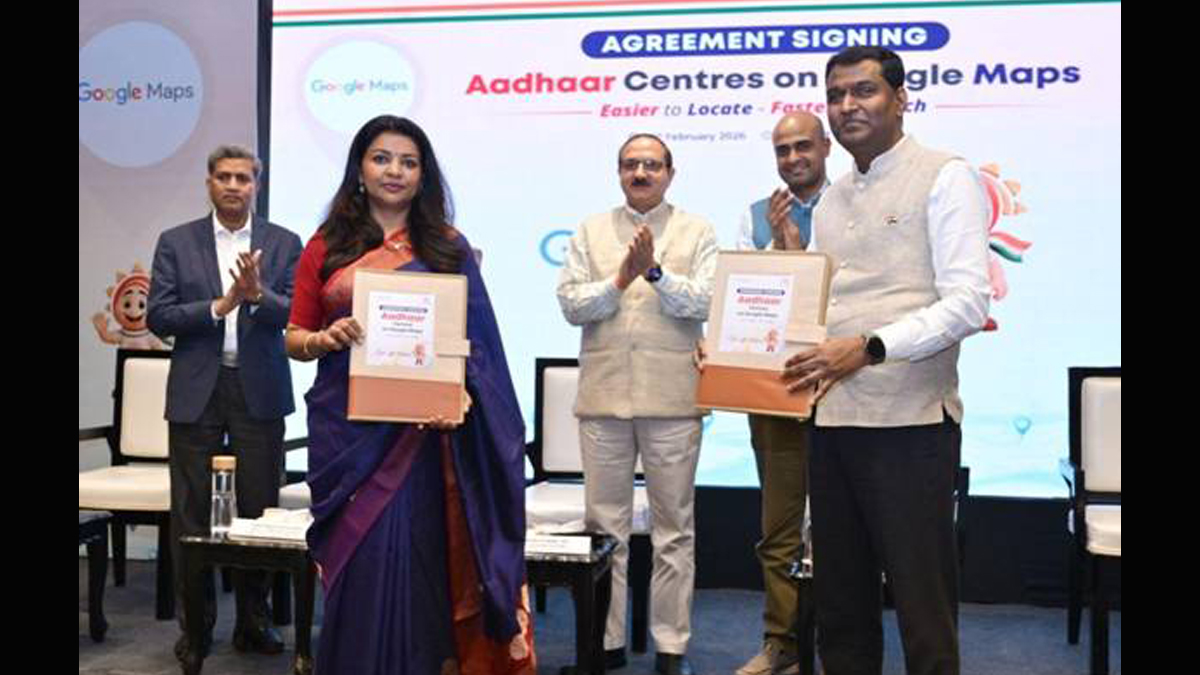
MUMBAI: Finding an Aadhaar centre may soon be as easy as finding your favourite café. In a move aimed at making public services more accessible, the Unique Identification Authority of India has partnered with Google to display authorised Aadhaar centres on Google Maps. The feature, expected to roll out in the coming months, will allow residents to locate verified centres quickly and confidently.
More than 60,000 Aadhaar centres, including state of the art Aadhaar Seva Kendras, will be mapped. When users search on Google Maps, they will be directed to authorised facilities rather than unverified listings, helping curb misinformation and confusion.
The listings will do more than drop a pin. Users will be able to see the nature of services offered at each centre, whether it is adult enrolment, child enrolment, or limited to address and mobile number updates. Details such as operating hours, parking availability and divyang friendly infrastructure will also be shown wherever applicable.
Uidai CEO Bhuvnesh Kumar, said the collaboration is part of the authority’s continued effort to improve ease of living for Aadhaar holders by making authorised centres simpler and faster to navigate.
The partnership will deepen in its next phase, with Uidai using Google Business Profile to manage information and respond directly to public feedback. Looking ahead, the two organisations are also exploring the option of enabling appointment bookings through the Google Maps interface, potentially allowing residents to plan their visits with greater efficiency.
Google India country head, strategic partnerships Roli Agarwal, said integrating verified Aadhaar centres would help millions access trusted services with confidence, bringing essential government infrastructure closer to the people who need it most.
If all goes to plan, a routine Aadhaar update may soon begin not with a queue, but with a search bar.