MAM
Martin Sorrell on how WPP is combating ad world slowdown

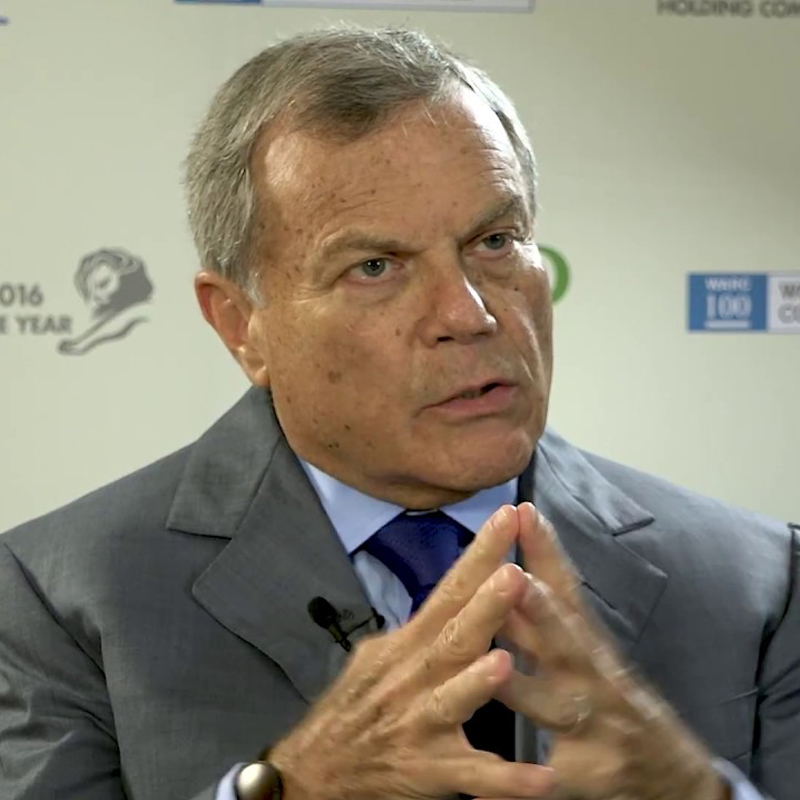
MUMBAI: It’s been sometime that we have got to listen to advertising heavyweight and guru Martin Sorrell’s unique insights. For those who have missed him, he’s still at his vintage best. The WPP CEO shared his worldview on what’s impacting the advertising business and how the industry is combating with the slowdown in a fireside chat with Goldman Sachs analyst Lisa Yan at the 26th Goldman Sachs Communacopia Conference held last week.
Sorrell pointed out that the advertising industry has been generally going through a slow growth-pace for a while now, though it has seen some upward movements for a short period. The reasons: low-economic growth, low-inflation, very little pricing power, and focus on cost, amongst clients. “That’s been tolerable, certainly up until, I would say the end of 2016,” expressed Sorrell. “What we started to see, a little bit of softness…certainly in Q4 of last year.”
What caused this slowdown? Sorrell gave at least three hypotheses that could have contributed, and could continue to do so, and industry will have to have adequate responses to them.

The first being consulting firms who have been looking at generating cost savings for bottomline-focused corporations, and the first expense they have been scratching out is advertising.
“I think you can build the case, so that consultants, it’s not just an Accenture or Deloitte or BCG or McKinsey or Bain, go into client and say you’re spending too much money generally, your costs are too high, we’ll see if we can do something about it, and that fans out from there,” said Sorrell.
The second hypothesis is that increasingly agencies and brands have been diverting spends towards Google and Facebook. “Google and Facebook have become significant destinations… we are the most significant customer with the two – on behalf of our clients,” he said. “If Google was $5 billion, Murdoch $2.25 billion and Facebook $1.7 billion last year, this year the figures are Google $5.5 billion-$6billion, Facebook $2.5 billion, and Murdoch $2.25 billion.”
Sorrel labeled the two digital giants as frenemies, though he acknowledged that they have become friendlier than last year, especially Google.
The third hypothesis – which he called the most plausible reason for the impact this year – “is that in an era of cheap capital, a zero cost — or close to zero-cost capital, there are pools of capital which fund zero-based budgeting approaches or private equity activist approaches that are putting tremendous pressure on particularly packaged goods companies,” said Sorrell. “Their approach has get rid of R&D spending, get reduced marketing spending and its running across sectors…Beyond tech and pharma, top-line growth is very hard to come by. And, I think that’s the central issue. So, as long as there’s cheap capital, as long as there is this very significant pressure of a zero-based budgeting and an activist later, you’re going to see pressure.”
Sorrell does not expect the era of cheap capital to go away quickly thanks to Hurricane Harvey and the tragedies in Houston and Florida. “The results of this is indices rise, the fed probably is going to keep interest rates down lower longer,” he expressed.
WPP has been responding to these challenges, he pointed out, through what it calls horizontality – basically integrating the company in a much more aggressive, seamless, efficient manner.
The second response has been zooming in on the high growth markets of Asia, Latin America, Africa, Middle East and central and eastern Europe. “That continues. That’s a third of our business; it continues to be a high level of focus,” he said.
WPP, has got a razor sharp eye on digital which is 40 per cent of its business. “It is very much in the target range that we identified three, four, five years ago. It doesn’t stop at 40 per cent, 41 per cent, which it was in the first half of the year; it has to go beyond that, so probably to the extent where ultimately everything is permeated in one way or another by digital. But that’s some way off, but getting closer,” highlighted Sorrell.
“Making data, the centre or a significant part of the centre of what we do is critically important, particularly when you have disintermediation in retail from the likes of Amazon or Alibaba or Tencent or JD.com or others where the battlefield will ultimately be about who controls the data,” he added. He, however, mentioned that the growth of data has not been as good as the industry would like to see it but that doesn’t diminish its importance in relation to horizontality.
Sorrell expressed his worry that what’s happening in the packaging goods industry could have worrying implications as a whole for the ad business.
“My hypothesis would be that cheap money is chasing packaged goods and driving up the valuations. And those last three quarters, if you look at revenue growth at 2.4 per cent, it’s mainly price, very little volume. And those of you know how packaged goods companies function know that the moment the volumes stutter and stagnate or even fall, which is the case with a number of packaged goods companies, the trouble starts. If you have fewer consumers, fewer customers, that’s when the trouble starts. So, I come back to this, and it’s fundamental obviously, it’s our lifeblood, I come back to this thing that investing in innovation and brand is key, and that’s the heart of it,” the WPP chief elaborated.
WPP has lost out on a lot of business (AT&T and VW) in recent times, and Sorrell stated that competition will always stay but it’s a question of price. “I’ve never heard any of our people say to me it was because we didn’t do a good job, they’ve always said it’s because somebody else discounted and we lost the business on the basis of price. Sometimes, that maybe the case but I think mainly it’s due to the qualitative side of the offer. But, I think we’ve got our act together much better on integration,” he added.
Google is the biggest destination for WPP’s media spend for their clients. “It is by definition currently the most powerful media channel that you can find, search being the primary product. Boycotting that, not accessing it, I think is a mistake. Working with Google to improve the way that they manage the process is the way to go,” he said.
Sorrell also mentioned that WPP will be changing its regional management approach encouraging more integration on shared client work across agencies. “Well, with the growth of technology, with the rise of the BRICs — Brazil, Russia, India and China should not be regional reports, they should be direct to the center. Even if that upsets regional managers,” he quipped.
He said that he saw Amazon becoming a very serious threat to Google on search with 55 per cent of product searches in the US emanating from it. “Amazon now has a voice activated device. Every one of the Fearsome Five has a voice activated device. What that means for brands is very serious.”






MAM
‘You packed my parachute’: Avinash Kaul’s farewell salutes Network18’s unsung thousands
The outgoing chief’s LinkedIn post skips the boardroom tributes and goes straight to the security guards, drivers and office boys who kept the machine running
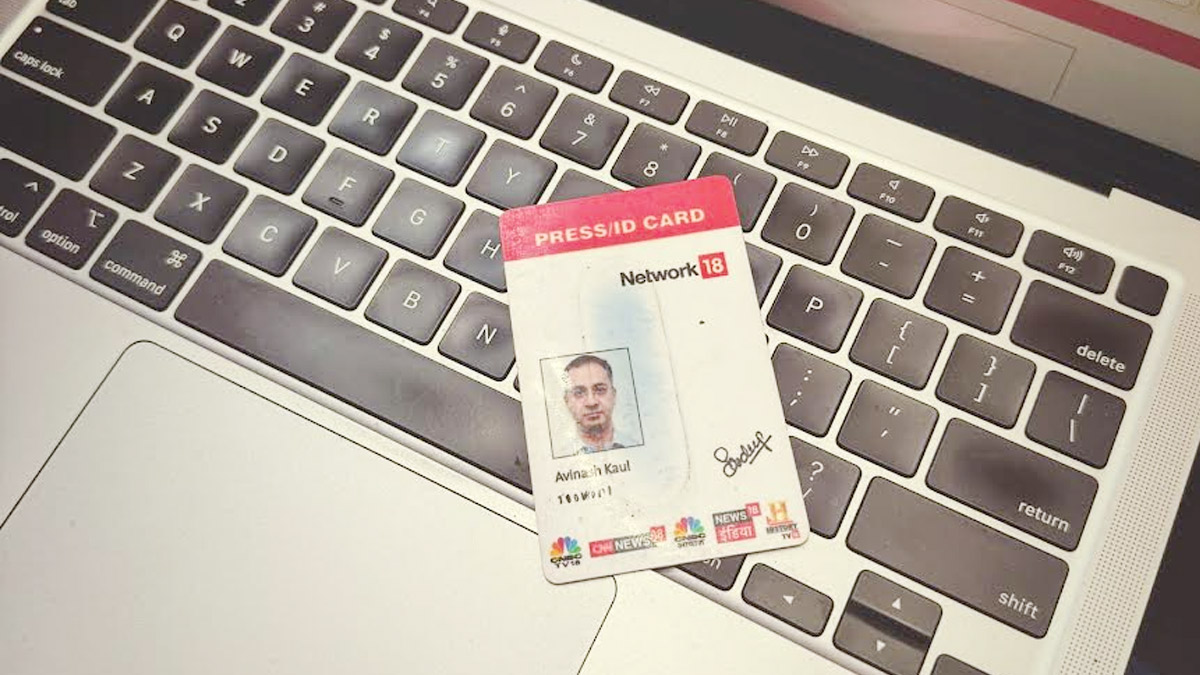
MUMBAI: Most farewell posts by senior media executives follow a familiar script: gratitude to leadership, a nod to the team, a hint of what lies ahead. Avinash Kaul’s is not that post.
Writing on LinkedIn on his last day at Network18 Media & Investments, where he spent nearly 12 years rising to chief executive, Kaul bypassed the boardroom entirely and directed his most heartfelt words at the people furthest from it: the security guard who greeted him before the building was fully awake, the fleet staff who drove him to airports at ungodly hours, the office assistants, the housekeeping teams, and the administrators who, as he put it, “held ten thousand invisible threads so the rest of us could look organised.”
“You packed my parachute,” he wrote. “Every day. Without fanfare, recognition, or ever asking for it.”
It was a striking note from a man who leaves behind a considerable operational record. Kaul joined Network18 managing three channels and exits with responsibility for 20, alongside a publishing business, a growing connected television footprint, and what he says is the highest revenue and highest channel share in the group’s history. He was quick to deflect the credit. “Not because of me. Because of 4,000 people who showed up, every day, in every department, across the country.”
To content teams across India, he issued a reminder that carries some weight given the pressures Indian news media currently faces. “Keep being custodians of trust for 700 million people. That is not a small thing. That is the whole thing.”
To colleagues in revenue and ratings who found him relentless and hard to satisfy, he was unapologetic but generous. “There was never a single moment of ill intent in my heart. Everything I pushed you towards came from one belief – that you were stronger than you knew, and I was not willing to let you settle for less than your real capability.” Those who believed him, he said, flew. Those who did not taught him to be a better communicator. He was grateful to both.
On what comes next, he offered a hint wrapped in metaphor. Something is being built, he said, prepared for “the way you pack a bag before a long climb. Not out of restlessness. Out of readiness.”
In a media landscape that rarely pauses to acknowledge the people who keep the lights on, it was, at the very least, a different kind of goodbye.