MAM
Marketers play catch-up as AI runs ahead of confidence curve


MUMBAI: Artificial intelligence may be the new creative director in advertising but not everyone’s sure how to take its orders. A new global study by programmatic media partner MiQ reveals a curious paradox: 72 per cent of marketers plan to ramp up their use of AI in the next 12 months, yet only 45 per cent feel confident doing so.
In India, the enthusiasm is even louder than the confidence. Nearly 79 per cent of Indian marketers intend to use AI more across their roles in the coming year, and 72 per cent already employ AI tools in some or all of their projects. But just 46 per cent feel fully confident that their teams can use AI to meet campaign KPIs, a gap that sums up what MiQ dubs the “AI Confidence Curve”.
The study, based on insights from 3,169 marketers across 16 countries (including 200 from India), paints a picture of an industry at the crossroads of ambition and anxiety. “Most marketers are bunched together at the early stages of the confidence curve,” said MiQ chief marketing officer Jordan Bitterman. “Usage currently outpaces readiness by 27 percentage points but that’s pure opportunity.”

MiQ India chief commercial officer Varun Mohan added that Indian marketers are “actively adopting AI across functions from creative strategy to campaign optimisation”. He noted that those who prioritise early adoption and upskilling will gain “a competitive edge that will define the next phase of data-led marketing transformation in India.”
The report shows that globally, marketers are most comfortable using AI for content creation (40 per cent), marketing optimisation (38 per cent), and social media management (38% per cent, all areas where generative AI tools like ChatGPT thrive. In India, the trend is even stronger: marketers are leaning heavily on AI for social media management, visual design, and content creation. Google’s Performance Max (69 per cent) and Canva (66 per cent) emerged as the top AI tools among Indian professionals.
Yet, confidence hasn’t quite caught up. Forty percent of marketers admitted their organisations don’t understand AI or large language models well enough, while 38 per cent blamed a lack of training. Another 44 per cent said they struggle to track AI-driven results against business goals.
India’s figures echo this unease: 69 per cent of marketers cited limited expertise and training as the top barrier to AI adoption, and 54 per cent said AI’s role in marketing remains poorly understood. Despite the buzz, many are still measuring success through old-school metrics like click-through rates (62 per cent) and website visits (57 per cent), missing AI’s wider business impact.
Still, optimism remains the dominant flavour. Indian marketers are global frontrunners in behaviour-based targeting, with 45 per cent building campaigns around browsing and shopping activity more than any other country. Youtube (80 per cent), social media (61 per cent), and digital video (58 per cent) are their preferred platforms, showing how multi-channel digital strategy has become second nature.
To bridge the confidence gap, MiQ recommends a mix of smarter tools and sharper minds:
● Break data silos: Use partner-agnostic AI systems that draw from multiple platforms.
● Tie AI to outcomes: Let algorithms optimise for real KPIs, not vanity metrics.
● Invest in AI literacy: With 44 per cent citing knowledge gaps, training is the new media spend.
● Keep humans in the loop: AI can automate, but human judgement keeps it accountable.
As Bitterman puts it, “Every marketer is trying to find the balance between learning and leading with AI. The ones who advance fastest will treat confidence as a capability built every day through connection, curiosity, and collaboration.”
For now, the ad world seems united in one truth: AI may have the answers, but marketers are still figuring out the right questions to ask.




Brands
Jubilant FoodWorks faces Rs 47.5 crore GST demand, plans appeal
Tax authorities flag alleged misclassification of restaurant services
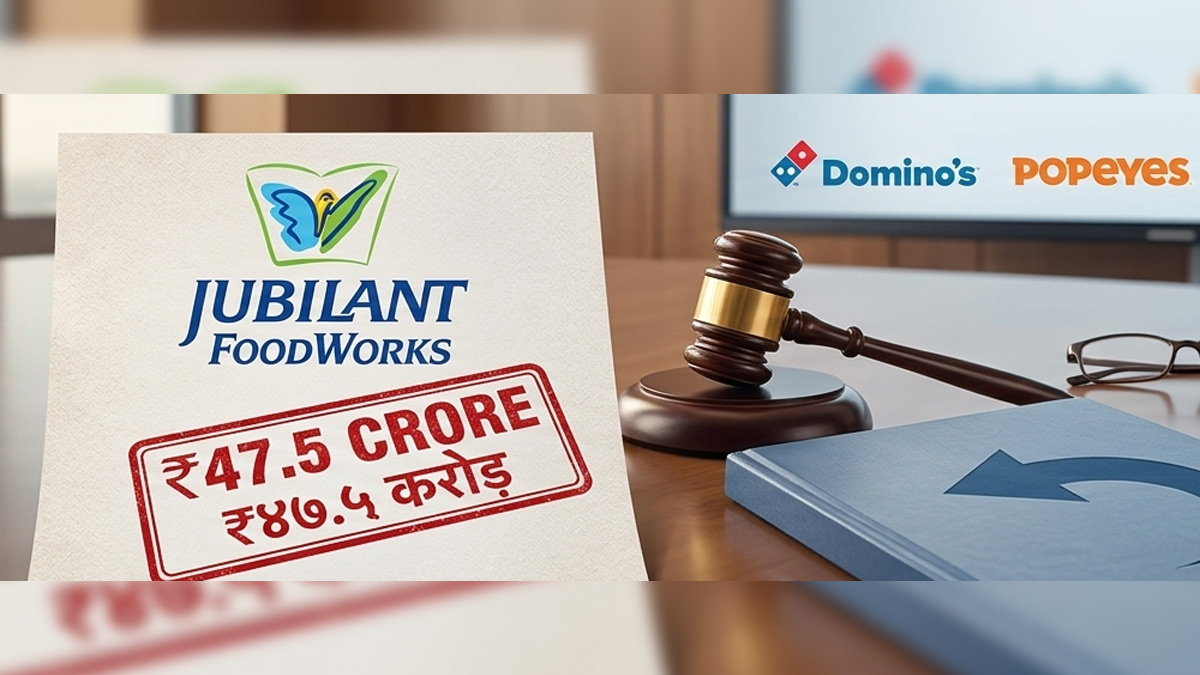
MUMBAI: Jubilant FoodWorks Limited has landed in a tax tussle after receiving a GST demand of Rs 47.5 crore from the office of the additional commissioner of CGST and central excise in Thane, Maharashtra.
The order, issued under the provisions of the Central Goods and Services Tax Act, 2017, relates to an alleged incorrect classification of certain services under the category of restaurant services. According to the tax authorities, this classification resulted in a short payment of goods and services tax for the period between the financial years 2019-20 and 2021-22.
The demand includes Rs 47.5 crore in GST along with an equal amount as penalty, in addition to applicable interest. The order was received by the company on March 13, 2026.
In a regulatory filing to the BSE Limited and the National Stock Exchange of India Limited, the company said it disagrees with the order and believes its arguments were not adequately considered.
The company is preparing to challenge the decision and plans to file an appeal. It added that once the redressal process is complete, the demand is likely to be dropped.
Despite the sizeable figure attached to the notice, the company said it does not expect any material impact on its financials, operations or other activities.
The disclosure was signed by Suman Hegde, EVP and chief financial officer, who confirmed that the company received the order at 19:06 IST on March 13 and has already initiated steps to contest it.
The development places the quick service restaurant major in the middle of a tax debate that could hinge on how certain restaurant-linked services are classified under GST rules. For now, the company appears ready to take the matter from the tax office to the appeals desk.