MAM
Making consumer connects in a fragmented landscape

Conventional, customary, commonplace… Certainly NOT words in the almanac of marketers who are looking to break away from the clutter as they strive to connect to the consumer in today’s ever-increasingly fragmented landscape.
With consumers today getting more fickle in their media consumption while consuming promotional communications through more than one medium at a time, the need for marketers to entice their priority targets in ways that are more engaging seems inevitable.
On the other hand, while consumers have become increasingly cynical to traditional advertising tactics, brand strategists want more action. CFO’s have become increasingly demanding for every penny spent in terms of tangible output reflecting an increase in actual sales.

 With this comes the emergence of non-traditional media. This has led to a genuine attempt to deliver the brand experience to the customer rather than intruding into his personal space with just the brand communication. In case of many non-traditional media, the brand’s presence in the consumer’s context is that experience – it may not need any communication as we know it.
 |
|
Mindshare MD Vikram Sakhuja
|
Speaking to industry experts on the underlying problem, Mindshare managing director Vikram Sakhuja avers, “As part of bringing the brand communication to life, it is important to touch the consumer with the brand at multiple touch points during their day. I categorise the touch points into 8 activity clusters: At home, work, entertainment, education, on the move, eating and drinking, lifestyle and shopping. While we can use conventional media for some of these touch points, it is non-conventional that really works there.”
 |
|
ATG national director V Balasubramanium
|
Whereas ATG (Group M’s specialist arm which deals in econometric modeling and high end analysis) national director V Balasubramanium points out, “At the outset there is no traditional or non-traditional media. All are communication channels. And everything communicates. The importance of so called non-traditional media has gained momentum because of the acceptance of the philosophy that “everything communicates”. Consumer behaviour has changed drastically, so has customer expectations of brands. Gone are the days when brands could lure consumer preference by using just two sensory powers – hear and see. Consumers’ preference is through using all the five sensory powers – hence touch and feel play an important role as well. Marketers are fast to capture this and this has led to the development of the so called non-traditional media.”
 |
|
Starcom MD Ravi Kiran
|
Many European countries and the US today are in the advanced implementation of non-traditional media. China and Australia, too, are not far behind. Discussing new trends, Starcom MD (West and South) Ravi Kiran says, “In the Indian context, non-traditional media that are leading the charge in impact and results are out-of-home [OOH] media, entertainment, sports and market activation. For a small group of customers, digital marketing and wireless marketing are gaining ground very rapidly.”
Overseas Brand Activation: The success stories
|
The demographic landscape (primarily urban) of Indian is witnessing an unprecedented transition. The modern day social composition that has evolved has completely redefined the concept of consumption. It is no longer as simple as the ‘demand and supply’ phenomenon. Today, nearly 15 million people have access to the Internet. Forty-five million people have a mobile phone and they are finger happy with sms, mms, and millions of downloads every month. Also, waiting in the wings are guerilla marketing, buzz marketing, online and off line peer-to-peer [P2P] marketing, cause enabled marketing [CEM], direct-response-television [DRTV], and affinity marketing. Some of these are being experimented with and some will come in the near future.
 |
|
Leading the brigade!
|
Soft drinks, alcohol and entertainment categories in large have understood this space for a while and have used it to good effect. The reason being these categories are highly regulated ones and hence these restricted categories were left with no option but to think out of the box.
As an agency MindShare has invested heavily in this area through Broadmind (Content), Dialect (Local Area Marketing) and DMart (Retail activation). The idea being to develop scale (reach and depth) across all these areas.
Lodestar consulting partner for non-traditional media Dhruv Jha observes, “Mainline media covers quite a bit but somewhere there seems to be a gap in consumer touchpoints. The other being there are a lot of alternate vehicles of media cropping up. Also, off-late we seem to be getting into a culture of moving out. So how do you connect with a consumer on the move? This is where non conventional media plays a critical role.”
A study done by Mindshare in FMCG categories shows that many advertisers who invest in TV and other traditional media are at the point of diminishing returns on awareness / image / sales / market share. Group M CEO South Asia Ashutosh Srivastava tries to bring home his point when he suggests that “Not one big brand can be named in this century which built its brand on the back of big TV campaigns like it used to be in the 80s (Nirma) and 90s (Brittannia, Titan). This is due to the increasing clutter and fragmentation that has led to reduced impact and effectiveness of TV and other traditional media.”
Nonetheless, the rise of 360 degree communications planning which has come into play has been driven by improved understanding of how brand communications work in nontraditional channel formats. More consumer insights and research, especially among agencies that have invested in proprietary research in India and around the world, are now able to use insights from this to sharp focus their target group while leveraging the use of relevant media channels to improve RoI. There has also been a significant improvement in controls and execution capabilities of a few players in the nontraditional mediums.
Coming to specific case studies of effective nontraditional media, Mindshare has done over 70 movie activations including Clinic All Clear (Dil Maange More), Kelloggs (Shrek), Gillette (I Robot) and many more. The agency also built brand properties like Lakme India Fashion Week, Ponds Femina Miss India, Horlicks Centre for Child Development, The Pepsi Huddle and highway activation of auto accessories for truck drivers.
The biggest enabler in non-conventional media, experts say, is to adopt a communication approach (rather than reach, frequency, GRPs) and to articulate an activation platform for a brand. After that it is all about the ideas and implementation capability.
 Another memorable launch that used nontraditional media effectively was the Vanilla Coke (VC). According to Coke’s research, it was the most successful in the category in terms of building awareness and trials. It served its purpose well and generated the required sales in the targeted cities. In fact, the fully integrated 360 degree Vanilla Coke launch has generated higher purchase intent and trials than any other launch by the competition in this category, Coke officials assert.
The SMS campaign for Vanilla Coke was designed to be multi-pronged. While the “Pull” element, which required participating consumers to simply SMS VCOKE to a dedicated number – 8558, generated more than 330,000 enthusiastic responses, the “Push” message reached out to more than 8.2 million consumers across the country who opted for this interactive contest on the Hutch and Airtel networks.The SMS activity was further integrated with India’s first-ever “viral” movement where consumers could involve their friends by creating chain messages and passing on the word and encouraging them to participate in the contest, thus increasing their own chances of winning prizes. These promos were run for a two-month period. The 8558 short code was promoted through TVC, on-ground communication through shop-front banners, hoardings, POP material, bus shelters and online on contest2win and myenjoyzone websites.
Apart from that, a 10-City activity spanning two months and was carried through branded open truck with a life size Vanilla Coke Can accompanied by a team of trained dancers in retro attire and an emcee trained to engage the crowds. The float visited all teen connect areas, key account and hot spots in the city. Consumers were invited to participate in various on-the-spot contests and it provided an opportunity to win great merchandise, besides sampling the product. This activity brought in approximately 250,000 consumers through this channel.
 Starcom in India is doing a pilot project currently for fashion pr?t brand Be: in peer-to-peer [P2P] marketing. Last year, they painted the exterior of a whole aircraft for Sun Microsystems and took the brand to top-of-the-mind amongst opinion leaders. For Heinz Tomato Ketchup, Starcom Entertainment did an integrated eight-medium passion promotion last year around the movie Ek Hasina Thi to drive price awareness amongst a new target market-youth. Another effective use of buzz marketing was done when Sony launched Jassi in 2003. Currently, Starcom is also working on many entertainment marketing and embedded marketing projects in pipeline for clients such as Western Union. Although, Western Union has already conducted an extensive brand building exercise through Starcom, wherein an exercise was executed to improve its profile in Mumbai and be accepted as part of the community.
|
Issues that surround this phenomena are the factors of salability and measurement. Local initiatives are good for awards and credentials and quite often easy to push through because of the small resources required; but they lack real impact. Similarly, unless one builds in metrics into nontraditional media, it will remain a gut call and sooner or later, one will be questioning their ROI. Says Kiran, “At Starcom, we try to convince clients to do formal research to measure the effect of such initiatives. Yes, it costs extra money; but many clients understand the value. Sometimes the effect of nontraditional media cannot be isolated; but by and large success and failure cannot be hidden.” Speaking to TAM Media Research vice president Atul Phadnis on the measurability factor, he says, “The 2004 industry estimates of 118 billion compiled by ADEX India cover Mass Media or Conventional Media – TV, Press, Internet, Cinema, OOH and Radio. There is a host of ‘other media’ popularly classified as unconventional media that the ADEX estimates do not cover. The reason why unconventional media is difficult to project is because it is hugely fragmented and small. At times both the suppliers and the clients are from the unorganized sector and the transactions (cash, kind, barter, exchange) totally unclear and fuzzy. Add to that the confusion on what is considered unconventional media ( POP, Mall Media, In-Film, Posters, Leaflets/ Inserts, DM, etc). On the other hand, conventional media are far more structured elements of the industry. Plus the advantage that ADEX tracks and captures all the ads appearing in 4 vital media – Television, Newspapers, Magazines and Radio thus helping project far more realistic numbers for Conventional Media.” Coming to another critical point which is clients receptiveness, Star India senior vice president marketing and communications Ajay Vidyasagar points out, “I am keen on trying new ideas that cut through the clutter. If the idea is good, I dont mind trying any media for the same. However there is still no substitute for an engaging message communicated to the audience in an audio visual form and in all its glory. |
|
 Western Union chases equity in Mumbai:
 Result: Although exact figures cannot be shared for reasons of confidentiality, the brand showed significant improvement in profile and in dimensions of community alignment in particular.
The Coke, Pepsi, Hutch television advertising in the recent past is an example of that.”While Star may still be fixated with television, others are of the opinion that clients are more receptive to new ideas that one may assume. What they want to be convinced on is the agency’s ability to implement the initiatives and to establish the right metrics.
Sakhuja points out, “For clients new to this space, there is initial hesitation to adopting non conventional media on grounds of reach, cost, lack of measurement and doubts on implementation capability. However I believe that once we allay their concerns and they actually implement a project, they are converted to the cause.”
Kiran explains that since nontraditional media is too large a field, no cookie-cutter analysis would work here. The operating principle here should be: plan, do, measure, learn, and repeat what worked.
Nontraditional media on the overall bottomline contribution to agencies seems to be on a bull run. While Group M states that the non conventional media currently contributes 15 per cent of its overall revenue, Starcom did not really divulge any figures. Madison on the other hand said that they have just ventured into this and hence currently the contribution stands at five per cent.
What the future beholds for this new emerging media seems very heartening with Sakhuja describing it as the ‘Sunshine sector’ . “If the Indian conventional media market today is Rs 10,000 cr (Rs 100 billion), I would estimate the potential of this space easily at Rs 6000 cr (Rs 60 billion). In contrast today’s market would not be more than Rs 800 cr (Rs 8 billion).” Srivastava says, “Mass media is growing by 10-15 per cent and nontraditional media will grow over 25 per cent.” Kiran puts his estimate at 30 per cent stating it will grow several times that of traditional media.
 |
| Source: RECMA ” Diversified Services in the US, Nov 2004 |
In the US, non traditional media is a major driver in terms of bottom line contribution.
With not all brands chasing mass-markets, there are many brands moving into focussed niche groups, nontraditional media is definitely going to be the road forward to reach them. The importance of nontraditional media is, therefore, growing across the world, and India is no exception.
The big difference at the moment lies in the fact that India does not have a big, organised, modern trade as yet. In the western markets, organised trade, with its huge muscle, takes away a large part of brand budgets in terms of trade margins. It also tends to shift buyer behaviour in favour of investments in shopper marketing. Given the current Indian shopping environment, brands still have to focus on driving their top-of-mind recalls.
So, will nontraditional medial phase out traditional media eventually?
Balasubramanium also states that the concept has not completely evolved in the Indian market. “It’s slowly evolving and I am sure the pace of development is quite fast. We have used quite successfully the complete 360 degrees solution on many brands and whenever we have used it the results have been positive. Also one should be careful in implementing the so called nontraditional media. I am not in for using it just for the sake of using or force fitting. Relevance plays an important role and how it integrates with overall brand communication strategy.”
Well, even in the West, print and TV today continue to grow, though at a snail’s pace. Like TV did not replace radio and radio did not replace print it is unlikely that nontraditional media will phase out traditional media. However, in the coming years, nontraditional media will definitely grow faster than TV and print advertising.
Kiran sums it up well when he says, “We have enough empirical evidence to prove that non traditional media works. The debate to avoid is the one between traditional and nontraditional media. Both work. It is up to each brand, its market situation and its objectives which should decide what mix to use.”




MAM
WPP appoints Estée Lauder’s Anne-Isabelle Choueiri as chief transformation officer
Former Estée Lauder executive to lead operations, technology and culture overhaul under WPP’s three-year growth plan
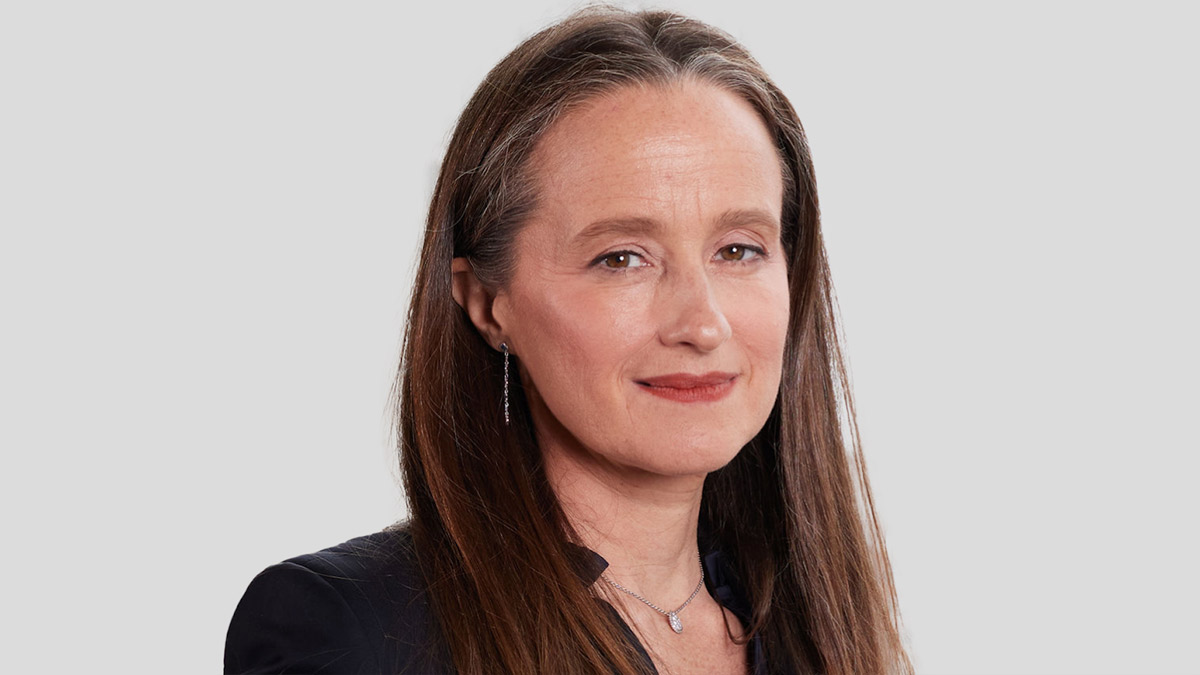
LONDON: WPP has appointed Anne-Isabelle Choueiri as chief transformation officer in a newly created role tasked with delivering the group’s Elevate28 strategy.
Choueiri joins from The Estée Lauder Companies, where she led enterprise-wide strategic initiatives, including the “One ELC” operating model and major upgrades to enterprise marketing, data and analytics capabilities. She also led the redesign of enterprise technology teams and served on the company’s AI taskforce, driving AI strategy, adoption and value realisation across the business.
At WPP, she will be responsible for designing, implementing and embedding the operating model behind Elevate28, the company’s three-year growth plan unveiled in February 2026. She will lead efforts to improve innovation, efficiency and integration across WPP’s client offerings, with a focus on delivering agile, outcome-driven solutions and measurable growth.
Choueiri will oversee organisational transformation across the group, working closely with product and enterprise technology teams to deploy AI, data and technology to build new capabilities and improve operational performance. She will also work with the people function to embed cultural change, strengthen an agile performance mindset and support talent development across the organisation.
Before joining Estée Lauder, she held senior roles across consulting and digital agencies, including at Accenture, Masaï (a Bain & Company spin-off), and Kearney, with experience spanning strategy, data and digital marketing transformation.
Cindy Rose, chief executive officer of WPP, said Choueiri brings a strong track record of leading large-scale transformation across operations, technology and culture, adding that her appointment will help accelerate the group’s next phase of growth under Elevate28.
Choueiri said WPP’s strategy represents an ambitious opportunity to reshape how the company operates and delivers for clients, adding that she looks forward to building integrated solutions and fostering a culture of innovation and change.
She will be based in New York and will join WPP’s executive committee.







