Ad Campaigns
Mahindra believes in walking the talk first: CMO Vivek Nayer


MUMBAI: Taking its ‘Rise’ philosophy ahead, Mahindra Group recently launched the
#NurtureYourCuriosity campaign, which celebrates the power of asking questions in driving innovation. The campaign, which is running live on its social media channels, seeks to engage with and spark conversations among a primarily millennial audience group.
Mahindra & Mahindra Ltd chief marketing officer group corporate brand Vivek Nayer tells Indiantelevision.com the like its previous two campaigns-‘Ladki Hath Se Nikal Jaegi’ and ‘Celebrate Differently’-the ‘Nurture your curiosity campaign’ is a specimen of its walk the talk philosophy.
He says, “Most brands just talk the talk but Mahindra believes in walking the talk first. We first perform ourselves and then ask people to join us. If you look at the ‘Ladki’ campaign, we have been associated with project ‘Nanhi Kali’ for a decade. Same with the ‘Tree’ campaign, we first planted 15 million trees, under our project ‘Hariyali’, and then we raised the topic with the public asking them to join us.”

Nayer further reveals that Mahindra has had a culture of nurturing curiosity for years and has been running several programmes to instate the value of innovation and ask important questions.
He mentions, “It’s a part of our DNA. We have many group programmes to nurture curiosity. For example, we have a programme called ‘shadow board’. It consists of a group of young people who work on a topic that they feel the organisation should tackle and every six months discuss it with the management community. We also run a ‘Campus War Room’ and send case lists to several B-school students to work upon.”
Nayer shares that the campaign is an extension of this very belief; shown through the eyes of a little girl, who asks some very simple but difficult to answer questions.
These four simple questions were put in the video after an extensive brainstorming done by a compact team including members from Nayer’s team and the associated agency’s. Nayer wanted the questions to stump people and have the ability to strike conversations and the agency worked around the brief to come up with suggestions and a list of 30-40 questions. The collaborative effort took around 3 months to come in shape in the form of a video, supplemented with a curiosity test from Harvard Business Review.
Speaking about the test, Nayer says, “The whole point of this test is to enable people to figure our their curiosity quotient. And it also becomes a bit of gamification, letting people come together to interact and strike conversations around curiosity & self-awareness. It helps one in understanding one’s own personality and say this is one area where I am doing better and where else I can work better.”
Nayer feels that the campaign will act as a starting point to the conversation around curiosity in the country, where people usually tend to suppress the inquisitive. “Kids here are often told to just listen to their parents or their teachers. Our education system is not based on asking questions or discovering unlike the western world where kids are taught to discover for themselves. We are still trying to figure out how to improve our education system. And that’s why we are working on this campaign.”





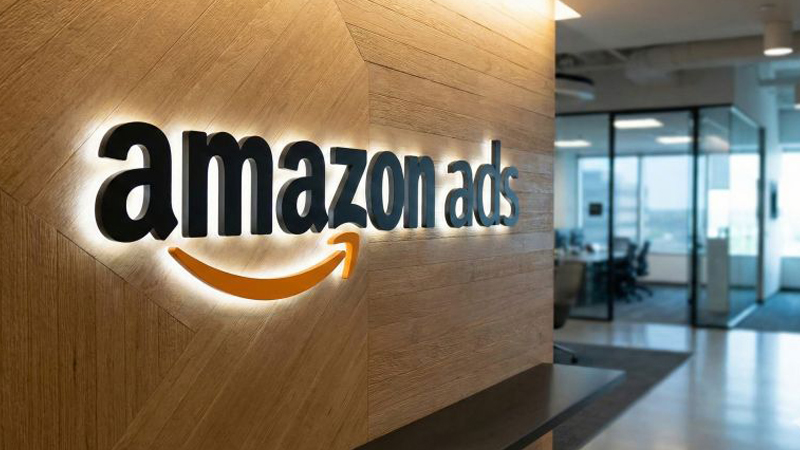
NATIONAL: Amazon Ads has laid out a sharply tech-led vision for the advertising industry in 2026, arguing that artificial intelligence, streaming TV and creator partnerships will combine to turn brand building into a more precise, performance-driven business.
At the heart of the shift, the company says, is the fusion of AI with Amazon’s vast trove of shopping, browsing and streaming signals, allowing advertisers to move beyond blunt reach metrics to campaigns designed around real customer behaviour.
“The future of advertising is not about reaching more people, but the right people with messages that resonate,” said Amazon Ads India head and vice president Girish Prabhu. “By combining AI with deep customer insights, we help brands move from broadcasting campaigns to having meaningful conversations wherever audiences spend their time.”
One of the biggest changes, according to Amazon Ads, will be the collapse of the wall between media planning and creative development. Retail media, powered by first-party data, is increasingly shaping everything from brand discovery to final purchase, pushing marketers to design campaigns around audience insight rather than internal instinct.
AI is also moving from a support tool to a creative engine. Agentic AI, which automates and accelerates production, is expected to make high-quality creative accessible even to small businesses, compressing weeks of work into hours and giving challengers the ability to compete with larger brands on speed and scale.
Behind the scenes, AI-driven analytics will take on a bigger role in campaign optimisation, identifying patterns, spotting opportunities and recommending actions that would previously have required teams of analysts.
Streaming TV is another big battleground. With India’s video streaming audience now above 600 million and connected TV users at 129.2 million in 2025, advertisers are set to treat streaming not just as a branding channel but as a performance engine, measured increasingly by sales, sign-ups and bookings rather than just reach.
Finally, Amazon Ads sees creators and contextual advertising reshaping how brands tell stories. Creators will act less like influencers and more like long-term partners, while scene-aware ads on streaming platforms will allow brands to insert hyper-relevant offers into the flow of what viewers are watching.
Taken together, Amazon Ads argues, these shifts mark a move towards advertising that is both more human and more measurable, where AI handles the complexity, and creativity does the persuading.