MAM
Madhusudhan Rao, Deepak Subramanian join HUL management committee


Mumbai: FMCG major Hindustan Unilever Ltd (HUL) on Wednesday announced the appointment of Madhusudhan Rao and Deepak Subramanian to its management committee. While Rao is named as HUL executive director – beauty and wellbeing and personal care, Subramanian is HUL executive director – home care.
Rao takes over from Priya Nair, who is elevated to global role as HUL chief marketing officer – beauty and wellbeing. Subramanian succeeds Prabha Narasimhan, who has decided to leave the company to pursue an external opportunity, HUL said in a statement.
“Madhusudhan has a successful track record in a variety of operational and strategic roles. He has brought in a strong performance edge in his teams and has pioneered several innovations that uphold Unilever’s high science and technology credentials,” commented HUL chairman and MD Sanjiv Mehta. “Deepak has championed innovation and sustainable strategies to significantly improve brand equity and deliver growth. He has demonstrated superior business acumen in building new categories, primarily in start-up business verticals. I am certain that they will take the business to the next level of performance.”

Talking about Nair’s contribution to the business, Mehta said, “She has been an active champion for building future skills and experimentation, and has led several path-breaking marketing initiatives such as the Kan Khajura Tesan. Under her leadership, the business witnessed high growth in key categories driven by consumer-centric innovations and award-winning, purpose-driven communication.”
“Prabha led home care to deliver a strong performance across South Asia over the last two years. She has contributed immensely towards embedding the Clean Future agenda into the Home Care product development strategy,” he further said about Narasimhan.
Rao joined HUL in 1991 and he is currently serving as Unilever EVP – home and hygiene. In his 30+ years in the company, he demonstrated a strong performance track record in marketing, customer development and brand development roles across geographies. In his current role, Rao helped shape the home and hygiene category as a successful business with a distinctive high-performance culture, said the statement.
Currently working as VP – home care, South-East Asia/ANZ (SEAA) and global head – fabric enhancers, Subramanian joined HUL in 1995 as a management trainee. He significantly improved the profitability of the business, whilst strengthening top-line growth. In his global role, Subramanian helped transform the fabric enhancers category by driving innovations and re-positioning the brands to have more social impact, according to the company.
Recently, the company also announced the separation of the position of chairman of the board and the CEO and managing director. HUL announced the appointment of Nitin Paranjpe, currently chief operating officer of Unilever as non-executive chairman of the company, with effect from 31 March. However, Sanjiv Mehta will continue as HUL chief executive officer and managing director.
The FMCG giant reported a strong all-around performance for the third quarter. The company’s growth was competitive and profitable. The net profit surged to Rs 2,243 with 17 per cent growth year-on-year, according to the statement.







Brands
Google says Gemini AI cuts irrelevant ads by 40 percent
AI driven search and ad tools boost relevance and results for brands.
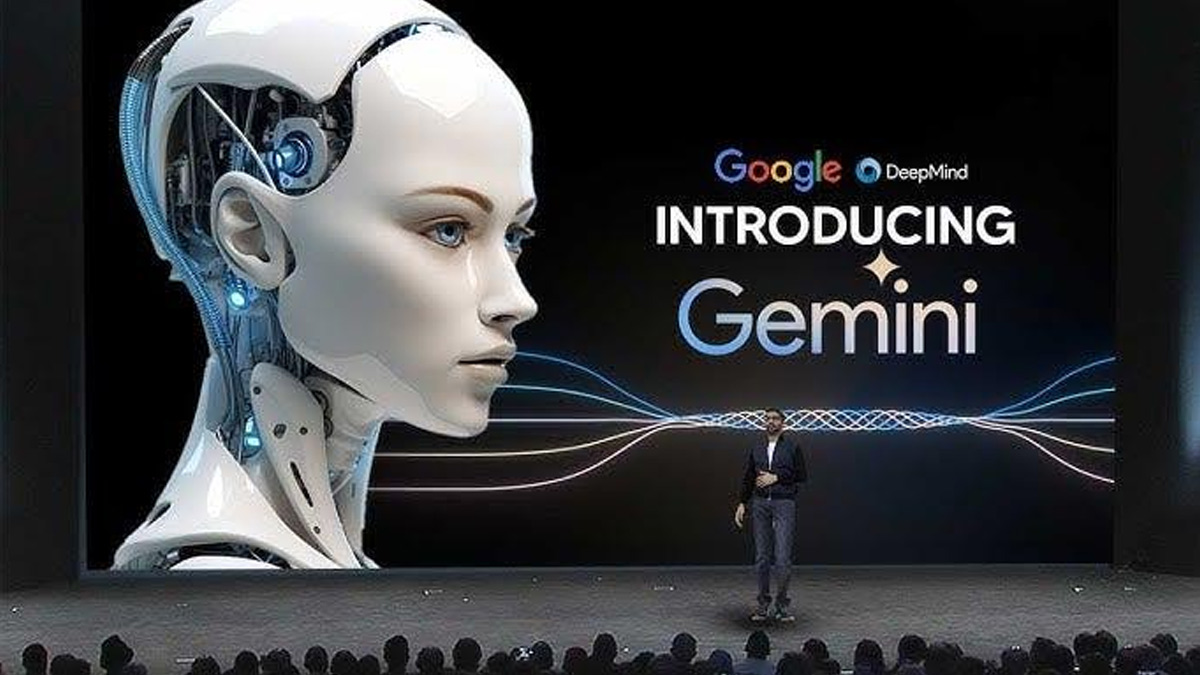
MUMBAI: In the never ending hunt for the right ad at the right moment, artificial intelligence may finally be sharpening the aim. Google says the integration of its multimodal AI models, Gemini, has reduced irrelevant advertisements across its platforms by 40 percent, as improved query understanding allows ads to match user intent more closely.
Speaking at a roundtable on Thursday, Google vice president of Global Ads Dan Taylor said the company has been steadily deploying Gemini powered upgrades to interpret complex search queries more accurately. “We have been making Gemini based improvements to query understanding at a rate of almost one launch per month over the last two years. As the models improve and our ability to deploy them improves, ad quality continues to get better,” Taylor said.
The improvements come as Google leans deeper into AI driven advertising tools. According to the company, 2025 saw a threefold increase in Gemini generated creative assets produced by advertisers using its AI powered ad solutions.
The company also highlighted how these tools are influencing marketing performance for brands in India.
Insurance marketplace Policybazaar recorded a 28 percent rise in health insurance sales while reducing cost per sale by 23 percent after adopting AI Max, a tool that interprets natural language search queries to improve ad targeting.
Meanwhile, hospitality platform OYO reported 50 percent higher return on ad spend (ROAS) and a 25 percent reduction in cost per acquisition after combining its existing search campaigns with Google’s Performance Max (PMax) advertising campaigns.
Taylor noted that evolving consumer behaviour is also reshaping how brands approach digital advertising. According to Google’s data, 86 percent of shoppers in India using Google Search said they were open to trying new brands or products, suggesting that AI driven discovery tools could increasingly influence purchase decisions.
Beyond advertising, Google is also investing in what it calls agentic commerce, an emerging model where AI agents autonomously assist users in discovering, comparing and purchasing products online.
“Our goal with agentic commerce is twofold, first, to remove the grunt work of shopping so consumers can focus on the fun parts; and second, to work hand in hand with the industry to build the foundations needed to make agentic commerce seamless and secure across the web,” Taylor said.
The push into AI enhanced advertising and commerce comes as Google’s core ads business continues to grow. The company recently reported $82.28 billion in advertising revenue, marking a 13.5 percent year on year increase.
For advertisers navigating an increasingly crowded digital landscape, Google is betting that smarter algorithms and sharper intent signals will make ads feel less like interruptions and more like timely suggestions.