MAM
Madame tussauds delhi unveils KFC’s zinger Aka ‘the original celebrity burger’

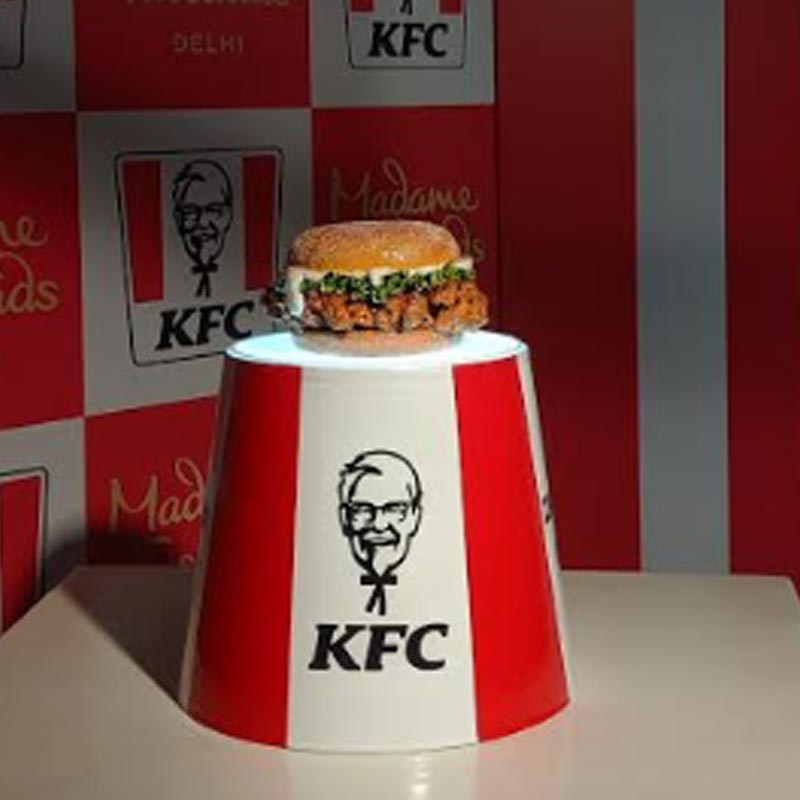
MUMBAI: In what is a historic first, Madame Tussauds, the world’s most famous wax attraction, welcomed the ‘Iconic Burger’ – Zinger at its location in Regal building in Connaught Place, New Delhi. Delighting burger-lovers since 1984 and loved in more than 120 countries, the Zinger is easily the most ‘drool worthy’ addition at Madame Tussauds Delhi. The founder of KFC – Colonel Sanders – was the Original Celebrity Chef; and the ‘Original Celebrity Burger’ – the Zinger – was unveiled today. Just like a true celeb, the Zinger has real fans, has made it to headlines and is truly an original; one of a kind celeb burger. And a place amongst leading celebrities & iconic personalities is just what it deserves.
But how did a not-so-humble burger find its way to Madame Tussauds? Moksh Chopra, Chief Marketing Officer, KFC India explains, “While many have wondered if the Zinger is a piece of art or a celeb; all debates are now put to rest with the Zinger asserting its celeb status at Madame Tussauds. Surely this isn’t any regular burger. It is the only burger that has travelled to space and has even inspired tattoo artworks for some. In 2018 alone we sold more than 10 million Zingers in India – that's like a Zinger each for every person in New Zealand and Singapore!”
Anshul Jain, General Manager, and Director, Merlin Entertainments India Pvt. Ltd, adds, "Madame Tussauds Delhi is one of the most favored and loved family entertainment destination in Delhi NCR. Our endeavor has always been to give a complete and memorable experience to all our visitors. We welcome the Zinger Burger to Madame Tussauds Delhi"

Just as the actual Zinger burger is hand made with care at the KFC restaurant, the Zinger at Madame Tussauds Delhi was crafted with similar precision. Madame Tussauds is globally known for their lifelike figures of famous personalities; each figure being created using precise measurements & photographs by skilled artists and sculptors to capture exact details.
Visitors can feast their eyes upon the Zinger burger at Madame Tussauds in Delhi from 21st August. So hurry, before the Zinger heads out on a new adventure!




Brands
HP launches Smart Champs learning game show with JioStar for students
Sanya Malhotra hosts quiz series blending fun, learning and prizes
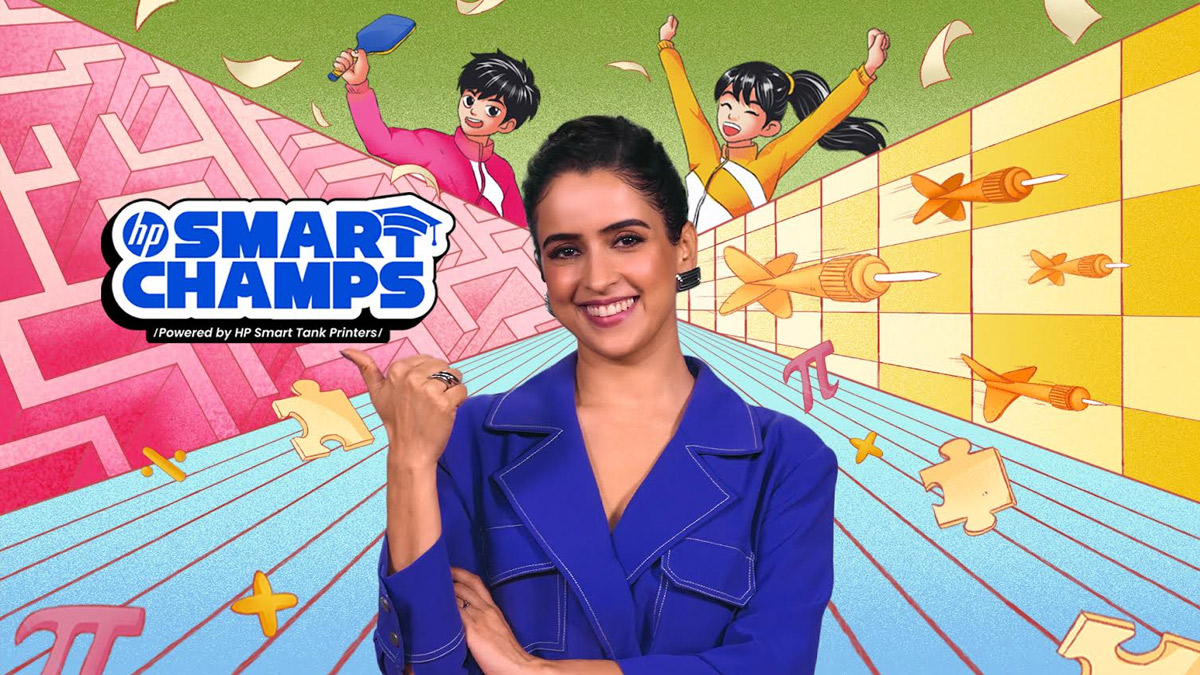
NEW DELHI: HP India has teamed up with JioStar to launch HP Smart Champs, a new learning-based game show designed to make education engaging for school students across the country.
Hosted by Sanya Malhotra, the 10-episode series brings together students from Grades 5 to 9, who compete in teams through quiz and puzzle-based challenges that test knowledge, logic and teamwork. The show will begin streaming on JioHotstar from April 11 and will premiere on Nick on April 18, with weekend episodes airing at 7 PM.
Powered by HP Smart Tank printers, the format integrates print-based learning into the gameplay, using worksheets, clues and visual problem-solving tools to encourage hands-on participation. The idea is to move students beyond rote memorisation and towards more applied, curiosity-led learning.
The competition promises high stakes, with winners set to receive a cash prize of Rs 10 lakh, while runners-up will take home Rs 5 lakh. Additional rewards include HP AI laptops, Smart Tank printers and accessories, while the winning school will be awarded an HP Smart Tech Lab.
Speaking about the initiative, HP India managing director Ipsita Dasgupta said, “At HP, we believe nurturing India’s youth is key to the country’s progress, and technology plays a foundational role in enabling this. With HP Smart Champs, we wanted to create something beyond traditional learning, a fun-filled platform where curiosity, creativity and critical thinking take centre stage.”
On the show’s reach, JioStar head entertainment sales Mahesh Shetty said, “HP Smart Champs reflects how children today learn through exploration and experience. With Nick and JioHotstar, we are creating a multi-screen approach that is both engaging and meaningful.”
Highlighting the role of print, HP India senior director print Satish Kumar said, “The show brings print-based learning to life in an engaging format, helping students develop deeper understanding through hands-on experiences.”
The journey to the finale began with participation from over 1,000 schools across 26 cities, narrowing down to 34 finalists who will compete in a studio showdown in Mumbai.
With its blend of entertainment, education and technology, HP Smart Champs is positioning itself as more than just a quiz show. It is a nationwide push to make learning interactive, accessible and, above all, a lot more fun.







