Brands
Loyalty’s no longer blind: India’s marketers say it’s earned, not bought

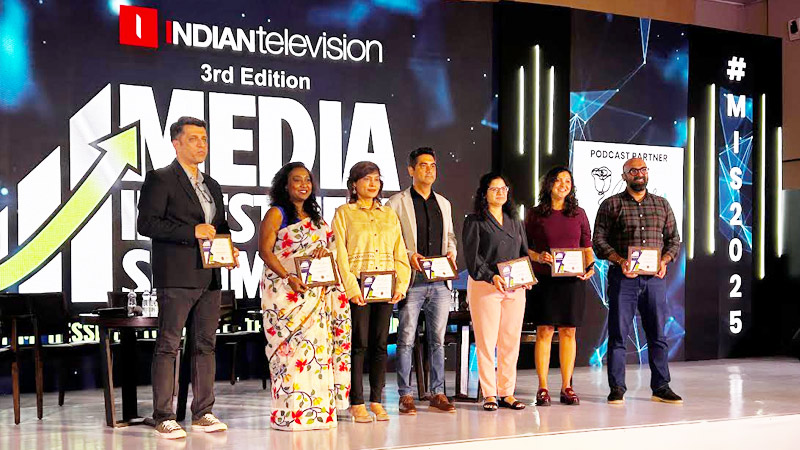
MUMBAI: In a world of swipe-right consumption and split-second brand switches, loyalty is less about freebies and more about frictionless delivery. This was the consensus at Indiantelevision.com’s Media Investment Summit 2025 during panel six, ‘Decoding the Evolving Indian Consumer: What Drives Loyalty in 2025?’ Moderated by Omnicom Media Group India CGO Anand Chakravarthy, the session dissected how Indian consumers are thinking, buying and staying (or straying) from brands today.
Featuring voices from pharma, beauty, wellness, QSR, BFSI, and heavy industry, the session proved that while brand allegiance may be waning, there’s a silver lining for those who can predict—and personalise—customer moments with precision.
Mahuya Chaturvedi of Century Paper framed loyalty as a “contract between buyer and brand”, akin to dating in a pre-app era. “It used to be purer”, she quipped, “fewer choices, fewer distractions. Now the moment that contract’s terms aren’t met—customers walk”.

She argued that brands must over-index on at least one pillar—price, performance, trust, or experience—to sustain recall. “In commoditised sectors like paper, scientific selling and product knowledge—not the product itself—drives repeat”, she noted.
Sayantani Das of Jumboking Burgers traced loyalty’s new anatomy, “It used to be about NFM (Net Frequency and Monitored value); now it’s about emotional bandwidth and physical availability”. She shared that metro station outlets triggered repeat behaviour simply by being the default option. “Loyalty is no longer a campaign, it’s a commuter habit”, she said.
For the healthcare crowd, loyalty isn’t convenience—it’s consequence. Pulak Sarmah of Sun Pharma stressed, “Consumers don’t obsess over brands like we do. They want reliable solutions. If Saridon says pain goes in five minutes, it better work in five”.
Ritu Mittal of Bayer Consumer Health added, “People in pain don’t want to experiment. Trust runs through families. That’s loyalty you can’t buy—it’s earned over generations”.
When discussing pharmacists’ roles in the ecosystem, she revealed how new launches like Saridon GO were backed by frontline chemist education. “Pharmacists aren’t just retailers—they’re trust brokers”, she said.
Krithika Sriram of PLIX noted that loyalty no longer depends on product quality alone. “Those are hygiene factors now. If you’re not helping customers in their wider journey—through diet plans, coaching, or credible education—you’re just another supplement on a shelf”, she said.
By offering custom meal plans alongside apple cider vinegar tablets, Plix increased stickiness without a discount in sight. “Transparency works”, she added. “We told consumers: nothing will change in seven days. Stick with us for 12 weeks—and it worked”.
For Nishant Nayyar of Kaya, loyalty is about staying relevant—physically and emotionally. “We realised if you close a retail outlet, loyalty drops. We’ve learned to stay at a customer’s moment of truth for as long as possible”, he said.
Kaya’s strategy involves using doctors as “influencers”, not celebrities. “Their authority on FDA-approved treatments becomes our marketing currency”, Nayyar explained. Kaya now releases digestible, science-backed video content to explain results without overwhelming jargon.
Drawing from her past life in banking and insurance, panelist Anjali (ex-BFSI, currently at D2C firm Dana) recalled, “Customers hated that we only called them once a year—to sell a renewal”. Her team countered by building content-based engagement models to create consistent touchpoints throughout the year. “Loyalty in BFSI isn’t about points. It’s about not ghosting your customer”, she said.
As the session closed, Chakravarthy prompted each panelist to finish the sentence: “In 2025, the future of loyalty lies with brands who…”
Their answers said it all:
. “…stand for something and do more than transactional strategies” — Krithika Sriram
. “…solve real-life consumer problems and create moments of delight” — Nishant Nayyar
. “…humanise science”— Ritu Mittal
. “…are radically transparent” — Sayantani Das
. “…are agile enough to evolve with each customer’s heartbeat” — Mahuya Chaturvedi
. “…offer extreme personalisation through AI” — Pulak Sarmah
In short, loyalty isn’t dying—it’s diversifying. And in 2025, it seems you don’t own your customer. You earn them, repeatedly.


Brands
Kingfisher signs three-year IPL partnership
Packaged water brand signs on as ‘good times partner’ for 2026–28 cycle
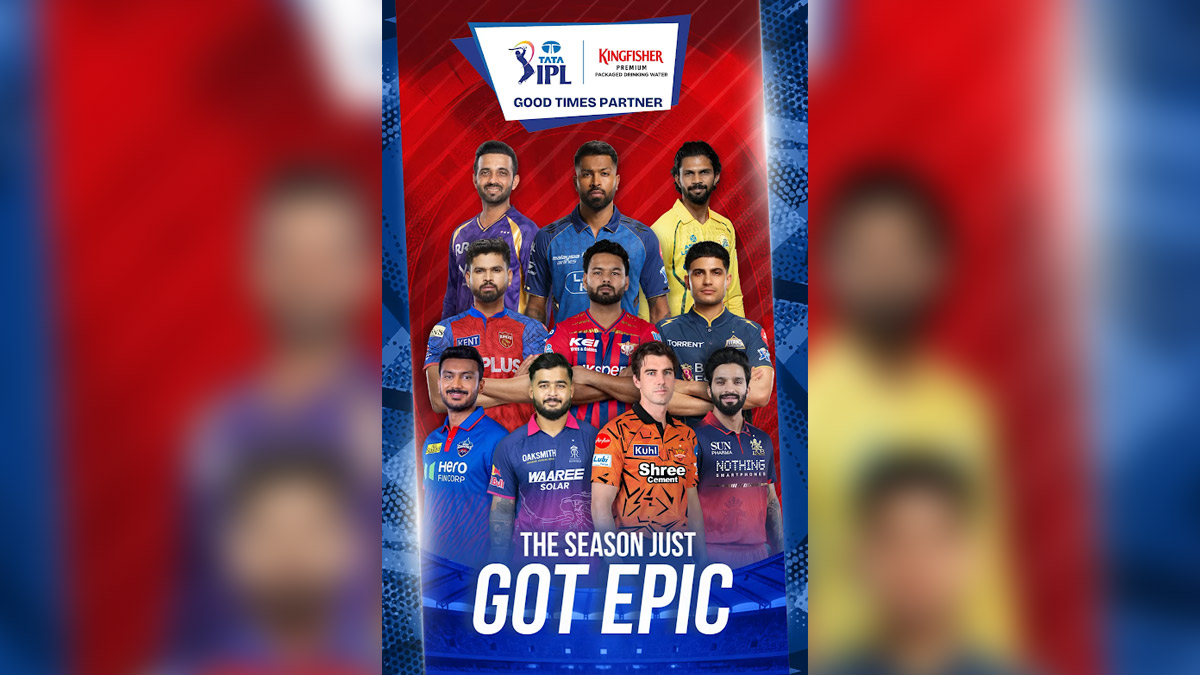
MUMBAI: Kingfisher Premium Packaged Drinking Water is betting big on cricket’s biggest stage, sealing a three-year partnership with the Board of Control for Cricket in India to sharpen fan engagement at the TATA Indian Premier League.
The brand, owned by United Breweries, will serve as the official “good times partner” for the men’s IPL from 2026 to 2028, extending a relationship that began with the Women’s Premier League. The move signals a broader push to embed itself deeper into live sport, with a focus on immersive, consumer-led experiences rather than conventional sponsorship visibility.
At the heart of the tie-up is a suite of fan-first activations spanning broadcast, stadiums and digital channels. These include the “Kingfisher Bird Cam”, offering a branded spider-cam perspective during live matches, and the “Good Times Zone”, an in-stadium entertainment hub during play-offs aimed at amplifying match-day buzz. The brand will also back IPL fan parks, elevate public screening experiences and run digital contests tied to key moments through the season.
Vikram Bahl, chief marketing officer, United Breweries, said cricket in India “is more than a sport, it is a shared cultural moment”, adding that the IPL brings that energy alive at scale. “For Kingfisher Premium Packaged Drinking Water, being present at the heart of these moments, in partnership with the BCCI, is a natural extension of what we stand for. Through this association, we aim to enrich how fans experience the game… making every match more immersive, social and memorable,” Bahl said.
Devajit Saikia, honorary secretary, BCCI, said the IPL “has always been at the forefront of redefining sports entertainment and fan engagement”. He added that the collaboration would fuse cricket fandom with “innovative fan experiences that extend beyond the stadium”, helping create memorable moments for audiences nationwide.
For United Breweries, part of the HEINEKEN group, the play is clear: move from passive branding to active participation in the fan journey—on screens, in stands and across social spaces. With millions tuning in and turning up each season, the IPL remains the country’s most potent marketing theatre. The question now is whether “good times” can translate into lasting brand recall in a market where visibility is easy, but engagement is hard-won.








