MAM
Lodestar UM collaborates with LGBTQIA+ owned businesses for impact day


Mumbai : Lodestar UM, the India unit of UM, a global media agency network of IPG Mediabrands, has announced its participation in the seventh global Impact Day, under the theme, “ONE Day, ONE UM, ONE Better World.” Launched in 2016 under UM’s corporate social responsibility unit, Better World, Impact Day reflects the agency’s commitment to its core values of community, curiosity and courage.
UM employees will participate in activities around three Impact Day pillars:
· Equity – Acts of service that directly impact underserved communities.

· Sustainability – Acts of service that directly impact our planet, locally or globally.
Wellness – Acts of service that directly impact the well-being of another person’s physical or mental health.
In India, Lodestar UM has collaborated with LGBTQIA+ owned businesses such as Kai By Mangi, Dopamore, Arttitty, Sabarshh, Ash.Co, Embarque.co, Queergaon, Astitva Jewelry, Podi Nan Maga, and Scoby Labs. These businesses offer a variety of products, including natural lip gloss and oil, stylish handcrafted accessories, elegant bags and purses, vibrant shirts, handmade exquisite stone jewellery, ceramic ware, fashion apparel, bags, stone and bead accessories, lip-smacking pickles, podis and snacks, resin art accessories, and fermented drinks. By providing a platform to showcase and sell their products, the agency aims to create meaningful, tangible benefits for the community.
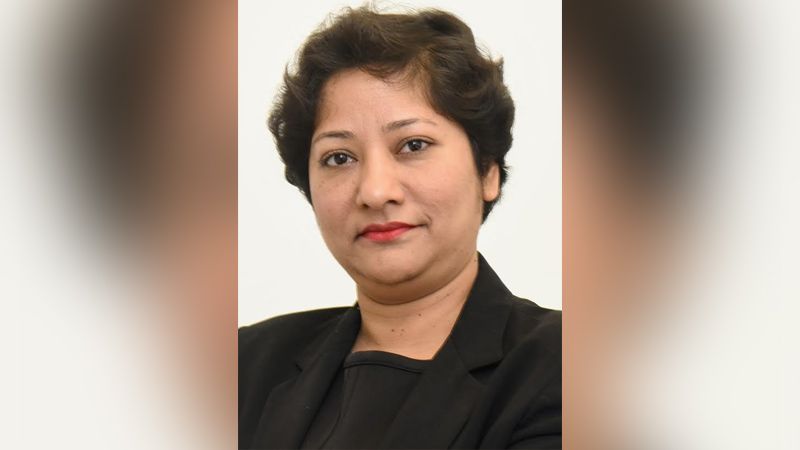
“Our idea for Impact Day goes beyond commerce; we aim to foster enriching connections and meaningful experiences that positively impact the community,” said Lodestar UM CEO Aditi Mishra. “By supporting LGBTQIA+ businesses, we are not only contributing to economic empowerment but also celebrating diversity and inclusion in a tangible way. Impact Day is a powerful reminder of how our collective efforts can drive meaningful change and create a better world for everyone.”
“UMers from all over the globe look forward every year to volunteering as one connected team for our beloved Impact Day tradition,” said Global CEO, UM Andrea Suarez. “Our theme this year, ‘ONE Day, ONE UM, ONE Better World’ highlights the incredible impact we can have when we harness the power of our collective action to give back to the communities in which we live, serve and flourish.”
“Impact Day is a powerful reminder of the positive change we can create when we come together as a global community. It’s a chance for UMers across APAC to make a real difference in the lives of others, and I’m incredibly proud of the diverse and impactful initiatives happening across the region,” said APAC president UM Kasper Aakerlund.



MAM
Lego brings Messi, Ronaldo, Mbappé, Vinicius together
Campaign clocks 314 million views ahead of FIFA World Cup 2026 buzz.
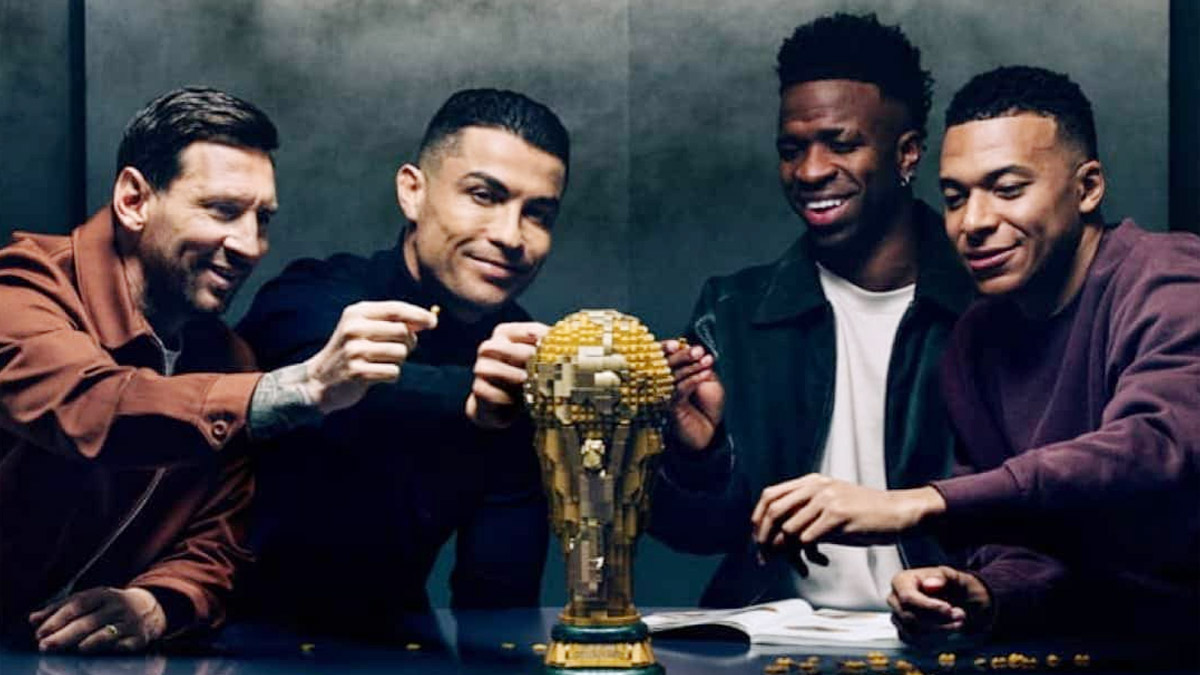
MUMBAI: Four legends, one frame and not a single tackle in sight. Lego has pulled off a crossover few thought possible, uniting Lionel Messi, Cristiano Ronaldo, Kylian Mbappé and Vinícius Júnior in a single campaign ahead of the FIFA World Cup 2026 only this time, they’re building dreams brick by brick.
Titled “Everyone wants a piece”, the campaign features the quartet assembling a Lego version of the World Cup trophy, before placing miniature versions of themselves atop it, a playful nod to football’s ultimate prize. Shared widely across social media, the ad carries a pointed disclaimer: it is not AI-generated, a subtle but telling signal in an era where even reality is often questioned.
The numbers tell their own story. The campaign has already crossed 314 million views on Instagram across the players’ accounts, with fans hailing it as a rare, almost nostalgic moment particularly for the reunion of Messi and Ronaldo, whose last shared campaign ahead of the 2022 World Cup became one of the platform’s most-liked posts.
Beyond the film, Lego is extending the play with exclusive, player-themed sets tied to each of the four stars, part of a broader football-led programme designed to ride the global momentum building towards 2026. The idea, as echoed by the players themselves, leans into the parallels between football and play experimentation, creativity, failure, and triumph.
Messi described the sets as a way to bring on-pitch moments into an imaginative, hands-on world, while Ronaldo called the transformation into a Lego figure a rare honour, blending sport with storytelling. Vinícius, meanwhile, struck a more personal note, recalling childhood moments of building with Lego and framing creativity as a universal language that transcends borders.
The timing is no accident. With the 2026 World Cup set to run from June 11 to July 19 across the United States, Canada and Mexico, and featuring an expanded 48-team format, global anticipation is already building. Argentina, led by Messi, will enter as defending champions, adding another layer of intrigue.
For Lego, the campaign does more than celebrate football, it taps into its mythology. Because when icons become figurines and rivalries turn into play, the beautiful game finds a new kind of pitch. one built, quite literally, by hand.






