Brands
Lacoste Fall-Winter 2026 reimagines rain-delayed heritage
Philippe Chatrier show draws from 1923 Davis Cup downpour with tech-heritage outerwear.


MUMBAI: Lacoste just turned a rained-out match into runway gold because when the court floods, even the trench coat becomes a trophy. Staged on the iconic Philippe Chatrier court at Roland-Garros, Lacoste’s Fall-Winter 2026 show transformed the legendary clay into a theatrical rain-delayed match, paying homage to July 31, 1923, when René Lacoste battled Spain’s Manuel de Gomar in a Davis Cup tie in Deauville. A sudden downpour flooded the grass, forcing spectators to toss newspapers on the court to aid drying while players and onlookers sheltered under umbrellas, trench coats, ponchos, slickers and rubber boots. The match stretched over two days, but Lacoste prevailed in four sets, propelling France toward the finals and setting young René on his path to world champion status.
Creative director Pelagia Kolotouros drew inspiration from that historic interruption and its themes of waiting, resolve, preparation and performance. Rather than focusing solely on centre-court action, she examined spectator culture and the interstitial moments where outerwear mattered as much as the game itself. The collection expands Lacoste’s evolving relationship with outerwear through waterproofing and technical fabrication: the trench as foundation, the poncho reimagined as an evolved polo, bonded tech wool as elemental shield. Padded, voluminous pieces in transparent nylon or with wet/reflective finishes layer against plush velvet and soft tailoring of the emblematic René blazer. The crocodile appears in confident new expressions via embroideries and archival emblem treatments.
A standout Roots Collaboration capsule co-created with Mackintosh, the Scottish outerwear house founded in 1824 blends two heritages shaped by weather and performance. Mackintosh’s signature rubberized, hand-glued and hand-taped cotton informs gender-fluid Neo-Tennis pieces, poncho polo, rain-proof tracksuit, pleated trench skirt, hybrid track jacket shirt. Heritage patterns meet technical fabrics, cable-knit sweaters pair with high-performance nylons, and classic silhouettes gain fresh function.

The palette shifts from cool greys, inky heathers and dark wet metals to vivid Agave Green (post-downpour grass) and Rusty Red (Roland-Garros clay under sudden rain). Accessories include weathered trophy pins, Grand Slam T-shirts, iconic tracksuits, a digital watch with stretch bracelet, the Lenglen bag in new proportions with silicon grip handle, racquet cover and tennis ball clutch in Mackintosh fabrics.
The show captured what young René understood leaving that flooded court: the real game is the perpetual dialogue between body and elements. In a collection that fuses athletic purpose with archival poetry, Lacoste proves heritage isn’t preserved in glass cases, it thrives when you let the rain fall and keep playing through it.



Brands
Maharashtra revokes Ola, Uber, Rapido bike taxi licences
Temporary e-bike taxi permits cancelled as firms fail to meet state rules
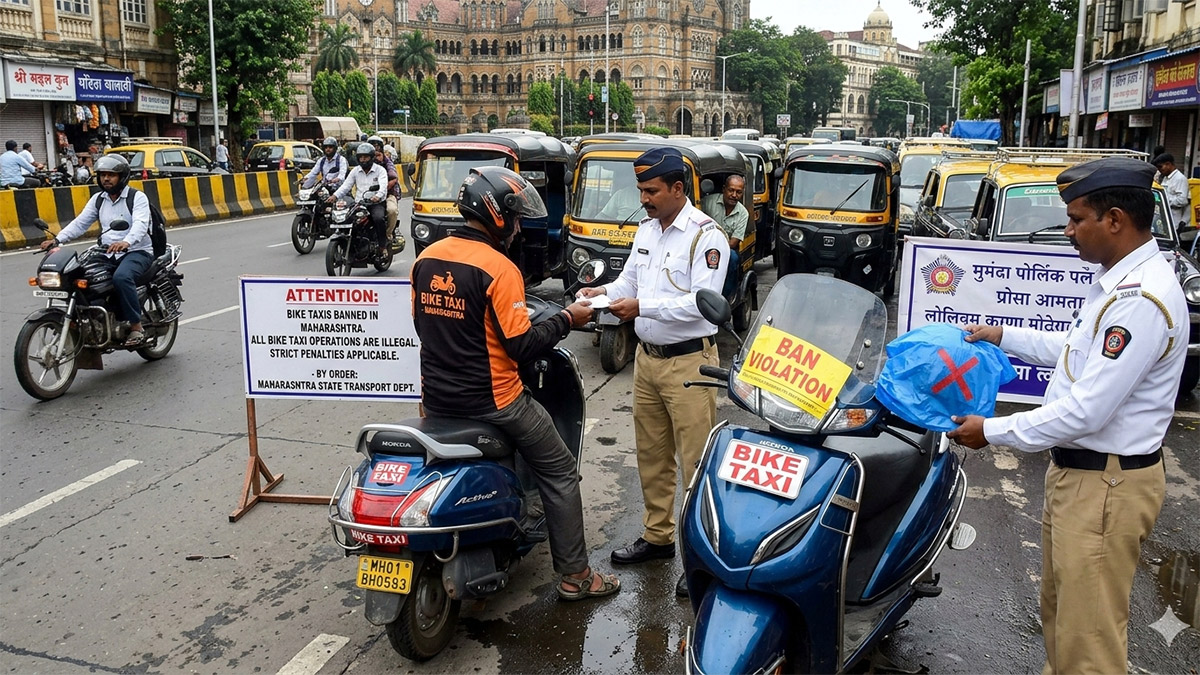
MUMBAI: Maharashtra’s roads are set to see fewer zipping two-wheelers after the state government pulled the plug on provisional licences granted to bike taxi giants Ola, Uber and Rapido. Transport Minister Pratap Sarnaik announced in the Legislative Council on Monday that temporary permissions would be revoked.
“These companies were given permission for just a month and were required to submit certain documents. Since they have not complied, their temporary licences are cancelled. This is to ensure illegal bikes do not operate on our roads,” Sarnaik said.
The move follows the Maharashtra E Bike Taxi Rules 2024, designed to generate employment for local youth and offer commuters a cheaper, greener ride option. The rules, approved in August 2024, allow electric bike taxis in cities with over one lakh residents.
Under the policy, only electric vehicles can ply as taxis, and operators had 30 days to fulfil licensing and compliance requirements. Yet, officials claim many continued operations without meeting these conditions. Sarnaik added that a large number of bike taxis currently running in Mumbai and the wider Mumbai Metropolitan Region are illegal.
In a firm enforcement twist, the government has instructed authorities to focus on vehicle owners rather than riders when registering cases. Safety concerns, particularly for women passengers, and accident complaints have also been flagged by the transport department.
Since April 2024, Regional Transport Offices have taken action against 130 non-compliant bike taxis, collecting fines exceeding Rs 33 lakh. Authorities say further measures will follow to ensure services adhere to regulations before returning to city streets.
Maharashtra’s bike taxi saga has been a rollercoaster. Initially banned in January 2023 due to concerns over private vehicles ferrying passengers, the sector was later formalised through an electric bike framework in 2024. Provisional licences were granted in 2025, but the government now warns that any bike taxi operating on city roads without proper permits will be considered illegal.
Adding to the transport shake-up, the government has also halted the issuance of new auto rickshaw permits from March 9 to ease urban traffic pressures and safeguard livelihoods of existing drivers. A fresh standard operating procedure for future permits is set to go before the state cabinet soon.
Maharashtra commuters may have to find alternative rides as the state reins in its two-wheeled taxi revolution, leaving app-based bikers in a legal limbo.