Above The Line
Kantar releases CX+ India Retail Banking Report 2019


MUMBAI: In today’s experience era, the majority of CEOs believe customer centricity is essential for driving business growth. However, there is still a big gap between ambition and reality; while 91% of retail bank CEOs in India see the need to become customer-centric, just 29% of consumers believe banks offer truly customer-centric experiences, according to Kantar CX+ study.
The new CX+ study released by Kantar today is the only sector-specific index that assesses banks based on a unique combination of their customer experience scores. In addition, the study identifies each bank’s Experience Gap – which quantifies the difference between their Brand Promise and the actual customer experience delivered.
The Top Ten CX+ Retail Banks in India

Ranking
Brand
1
HSBC
2
Standard Chartered
3
Citi
4
Yes Bank
5
IndusInd bank
6
ICICI Bank
7
Kotak Mahindra Bank
8
HDFC Bank
9
Syndicate Bank
10
Axis bank
CX+ reflects that providing excellent customer experiences is no longer enough. In a connected environment, brands and customer experience have become synonymous. Thus the roadmap to growth is based on 5 key CX success factors:
Clarity of brand promise
Empowered employees
Empowered customers
Creating lasting memories
Exceptional delivery
Commenting on the launch of the findings and CX+ ranking, Preeti Reddy, CEO-South Asia, Insights Division, Kantar said: “We live in the age of experience, but many brands are still missing the mark as there’s a huge gap between brand promise and customer experience. Our study reveals that the top-ranking Retail banks in India have delivered a superior customer experience that is matched with a strong brand promise thus giving them a distinctive Experience advantage over their competition. However, there’s a huge opportunity for growth as half of India is still unbanked and are increasingly looking up to their banks to give them more personalised experiences, smoother and more convenient digital services, and a more human approach to technology. Encouragingly, the entire industry has a unique opportunity to enhance its service for a receptive, fast-growing audience.
Other findings underline the clear benefits of delivering strong customer experience:
Banks that lead in the CX+ Index are 1.6x are more likely to be recommended than banks at the lower end of the index.
Banks that deliver an excellent experience on digital channels are 2.5x more likely to delight customers.
Customers are 3.6x more delighted when they feel appreciated by their bank.
While improved customer experience can benefit financial services companies across the board, the opportunity to grow is particularly significant among women, according to the research:
About 114m Indian women are unbanked. About half of women in India with personal bank accounts use them in a limited capacity or not at all.
Women use more online banking than men (w: 55,7%, m: 49,8%) and are less likely to visit branches (w: 61,6%, m: 64,7%).
Women are more skeptical regarding FinTechs / technology-enabled banking providers. They feel less in control of their finances with technology-enabled banking providers
(w: 39%, m: 44%).
The Kantar CX+ study analyzed 7,280 retail banking customers in India and was conducted in 2019.







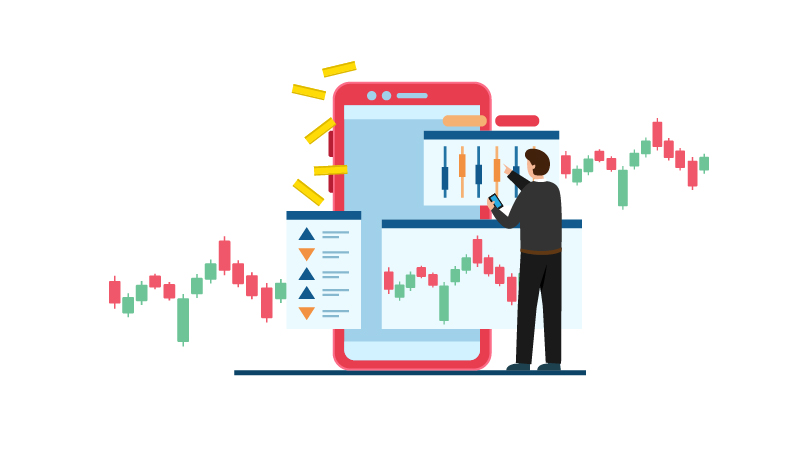
Open Interest plays a simple but important role in the futures and options market. It shows how many outstanding contracts are active at any moment. Traders often rely on it to understand market strength and possible trend direction. When you compare Nifty OI Data with Bank Nifty OI Data, you get a clearer view of how the broader market and the banking sector behave. Both indices move differently, and their OI patterns reveal useful clues that help traders stay ahead.
Why Open Interest Matters
Open Interest shows whether money is entering or leaving the market. It also helps traders judge whether a trend has real strength. Prices may rise sharply, but if OI does not support the move, the rally often fades. Many beginners focus only on price, but OI adds a second layer of understanding. It gives a more complete picture of market sentiment and participation.
OI rises when new contracts are created. It falls when contracts are closed. This simple behaviour makes it a reliable indicator. It does not predict the market, but it provides context that can support better decision-making.
How Nifty OI Data Works
Nifty represents the broader market. It has a mix of sectors. Its OI behaviour usually reflects the mood of the entire economy. When Nifty OI Data rises with price, it suggests strong momentum. When both fall together, the market is losing interest. If Nifty rises but OI falls, traders may be covering shorts rather than building new positions. This situation often creates confusion, but it also warns traders to be careful.
The Nifty tends to move steadily. Its OI patterns are slower, and they often react to global trends. Many traders watch these levels every day because they help track market direction without relying only on price action.
How Bank Nifty OI Data Works
Bank Nifty focuses only on the banking sector. It moves faster and reacts naturally to interest rates, economic signals and liquidity conditions. Bank Nifty OI Data changes quickly, and this volatility gives traders early signals. A sudden spike in OI with a sharp price movement usually shows aggressive positions. Bank Nifty often leads the market because banking activity strongly influences economic growth.
When Bank Nifty price rises along with OI, traders usually expect more upside. When both fall together, the trend weakens. If the price drops and OI rises, short positions may be increasing. This behaviour is common in Bank Nifty, and it shows why its OI data is more sensitive than Nifty’s.
Difference Between Nifty OI Data and Bank Nifty OI Data
The two indices respond to different forces. Nifty reacts to broad economic conditions. Bank Nifty responds to sector-specific triggers. This makes their OI patterns unique. Traders get a deeper understanding of the market when they watch both.
Here is a simple comparison:

This table shows how each index behaves. Nifty gives a calm picture. Bank Nifty provides sharper signals. Many traders use both to balance their market view.
How Traders Use OI in Real Trading
Traders combine OI with price action. They also track key strike levels with heavy open interest. When those levels shift, the market often makes a move. For example, sudden changes at important support or resistance levels can guide intraday and positional strategies. Traders often stay alert when OI builds near round numbers because large participants prefer these zones.
OI also helps identify whether a breakout is real. When price breaks an important level and OI rises, the move usually lasts longer. Breakouts with falling OI are less reliable. Both Nifty and Bank Nifty show these behaviours, but Bank Nifty displays them more sharply.
When to Trust OI Signals
OI is useful, but it works best with price strength. Traders should confirm patterns before acting. A strong trend with weak OI may reverse without warning. A weak trend with strong OI may surprise traders with a sudden expansion. Market news can also create temporary spikes.
Using Nifty and Bank Nifty OI together keeps traders prepared. When both align, market direction becomes clearer. When they differ, the market may move sideways or shift soon.
Conclusion
Nifty OI Data and Bank Nifty OI Data offer valuable insights into market sentiment. They help traders judge the strength of trends and understand where money is flowing. Nifty brings stability. Bank Nifty brings speed. Together, they form a balanced view of the market. Traders who read OI carefully gain confidence and make more informed choices.
If you track these OI patterns regularly, you will understand the market better and respond more effectively to changes.






