MAM
Kaizzen launches AI Collective to sharpen modern communications

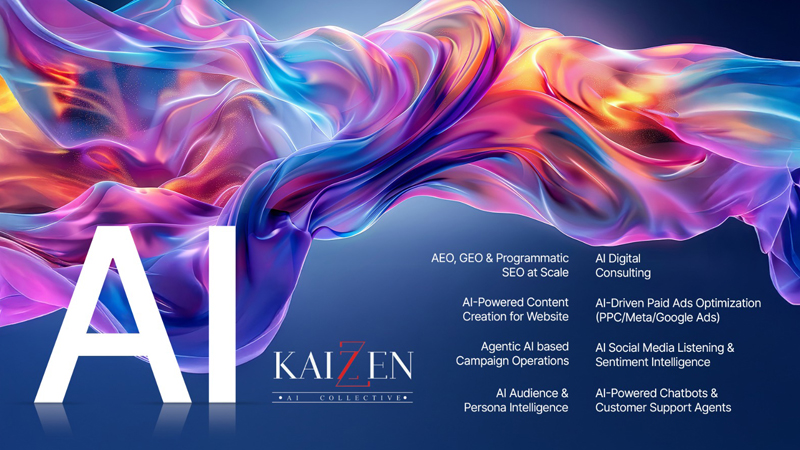
NEW DELHI: Kaizzen, the communications consultancy, has added a fresh edge to its portfolio with the launch of Kaizzen AI Collective, a new service vertical designed to strengthen reputation management and brand visibility in an AI-first world.
Positioned as a comprehensive, intelligence-led offering, Kaizzen AI Collective expands the firm’s existing capabilities across public relations, crisis communications, digital and social media, creative and production, insights and public affairs. The new services will be available to clients across markets, drawing on Kaizzen’s footprint in India, the UAE and other global hubs.
As artificial intelligence increasingly shapes how stories are created, shared and amplified, Kaizzen believes data-backed decision-making has moved from being a differentiator to a necessity. The AI Collective aims to help brands navigate this shift with sharper strategy, faster execution and clearer measurement.

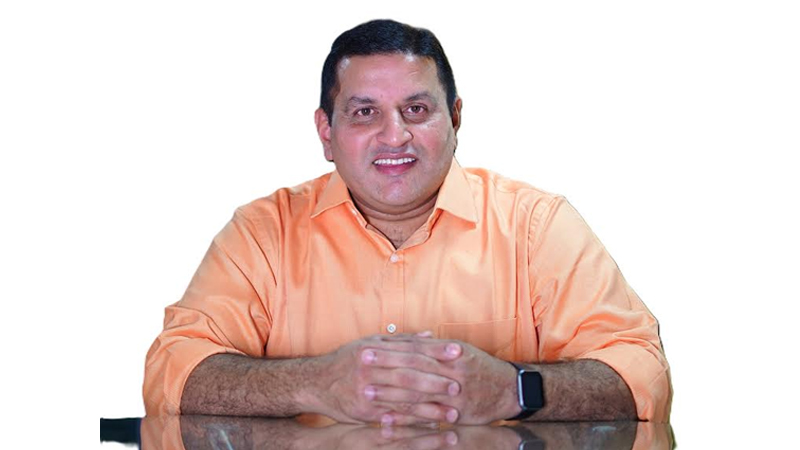
“Nearly 1.8 billion people worldwide are already using AI, with India second only to China,” said Kaizzen founder and CEO Vineet Handa. “AI is no longer optional. It is a strategic imperative. With Kaizzen AI Collective, we want to help our partners run smarter, more effective campaigns, while also preparing our people to lead in a future where technology and human judgement work together.”
The consultancy sees the new vertical as a key step in its growth journey and in the broader AI-led transformation of India’s communications industry. What sets the Collective apart, Kaizzen says, is the depth and breadth of its offerings, bringing together strategy, intelligence, creativity and measurement under one roof.
Kaizzen COO Nikhil Pavithran, said the focus is firmly on long-term value rather than short-term hype. “Kaizzen AI Collective is not about chasing trends. It is about building capability, credibility and competitive advantage for the ecosystem we operate in. Our commitment is to responsible and ethical AI adoption, with impact that can be clearly measured.”
With this launch, Kaizzen reinforces its positioning as a forward-looking communications partner, ready to meet the evolving needs of businesses and institutions, while future-proofing its talent for a rapidly changing industry.


Brands
Samsung certifies 1,000 Maharashtra students in AI and coding
The South Korean electronics giant marks its first large-scale skilling push in the state, with women making up nearly half the national programme’s enrolment
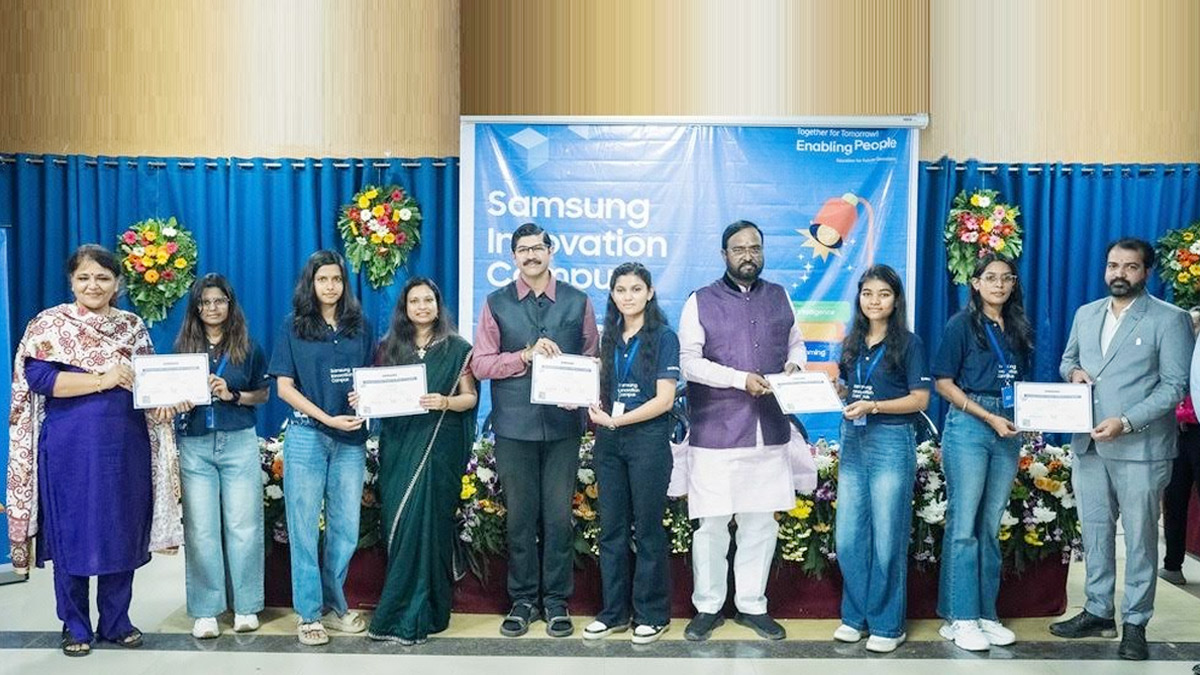
PUNE: Samsung has put 1,000 students in Maharashtra through a certified training programme in artificial intelligence and coding, the largest such drive the South Korean electronics company has run in the state and a signal that corporate India’s skilling ambitions are moving well beyond the boardroom brochure.
The certifications were awarded under Samsung Innovation Campus (SIC), the company’s flagship corporate social responsibility programme, which launched in India in 2022 with the stated aim of democratising access to future-technology education. The 1,000 graduates were drawn from four institutions: 127 from Savitribai Phule Pune University, 373 from Pimpri Chinchwad University, 250 from D.Y. Patil University’s Ramrao Adik Institute of Technology and 250 from Anjuman-I-Islam’s Kalsekar Technical Campus. All completed training in either AI or coding and programming, the two disciplines Samsung has identified as the critical pillars of the digital economy.
The programme does not stop at technical training. Soft-skills development and career-readiness modules are baked into the curriculum, a deliberate attempt to close the gap between what universities teach and what employers actually want.
“India’s digital growth story will ultimately be shaped by the quality of its talent pipeline,” said Shubham Mukherjee, head of CSR and corporate communications at Samsung Southwest Asia. “As technologies like AI move from the periphery to the core of industries, skilling must evolve from basic training to building real-world capability. This milestone in Maharashtra reflects how industry and academia can come together to create a future-ready workforce that is both globally competitive and locally relevant.”
The Maharashtra drive sits within a rapidly scaling national effort. Samsung Innovation Campus trained 20,000 young people across India in 2025, hitting its stated target for the year. Women account for 48 per cent of national enrolments, a figure the company cites as evidence of its push for an inclusive technology ecosystem. The programme is implemented in partnership with the Electronics Sector Skills Council of India and the Telecom Sector Skill Council.
Samsung, which is marking 30 years in India this year, runs SIC alongside two other initiatives, Samsung Solve for Tomorrow and Samsung DOST, as part of a broader effort to build what it calls a generation of innovators with both the technical depth and the problem-solving mindset to thrive in a fast-moving digital world.
A thousand certified students is a tidy headline. Whether they find jobs that match their new skills is the harder question, and the one that will ultimately determine whether corporate skilling programmes like this one are genuine pipelines or well-photographed gestures.






