MAM
Jio Platforms Ltd reports robust financial performance and strategic advancements


Mumbai: Reliance Industries Limited (RIL) has reported a remarkable financial performance for the year ended 31 March 2024 highlighting Jio Platforms Ltd’s (JPL) financial results. As per reports company reported quarterly revenue of Rs 33,835 crore, marking a significant increase of 13.3 per cent year-over-year (YoY). The quarterly EBITDA reached Rs 14,360 crore, reflecting a 12.5 per cent YoY growth.
JPL demonstrated exceptional subscriber growth, adding 42.4 million net new subscribers during FY24. This growth, coupled with the expansion of 5G and home services, drove data traffic to approximately 148 exabytes for the year, a substantial 31 per cent increase YoY.
As per the report Jio has maintained its leadership in India’s 5G transition, boasting over 108 million 5G subscribers, which represents around 28 per cent of Jio’s wireless data traffic. This achievement positions Jio as having the largest 5G subscriber base for any operator outside China. Additionally, JioAirFiber has seen robust demand across approximately 5,900 towns, leading to the highest-ever quarterly home connects.

In terms of digital services, Jio Platforms has achieved a remarkable 64 per cent increase in standalone quarterly revenue YoY. The annual performance highlights include double-digit revenue growth driven by significant subscriber additions in mobility and an expanded wireline services portfolio. The company’s strong EBITDA growth is attributed to higher revenues and consistent margin improvements. Increased depreciation resulted from higher network utilization and additions to the gross block, while finance costs remained broadly flat due to stable leverage.
For the quarterly performance comparison between 4Q FY24 and 4Q FY23, operating revenue growth continued to be fueled by robust subscriber increases in mobility and home services, along with an improved ARPU mix. EBITDA growth was driven by healthy revenue increases and operating leverage. Depreciation saw an increase due to heightened network utilisation and gross block additions, with finance costs remaining stable.
Operationally, Jio’s average revenue per user (ARPU) stood at Rs 181.7, with a better subscriber mix partially offset by a growing share of promotional 5G traffic. Data and voice traffic experienced increases of 35.2 per cent and 9.7 per cent YoY, respectively.
Jio has successfully rolled out its True5G network across India, with over 108 million subscribers now migrated to the 5G network. The True5G network now carries approximately 28 per cent of Jio’s wireless data traffic, facilitated by Jio’s own 5G+4G combo core. The JioAirFiber services, available in around 5,900 cities and towns, continue to attract strong customer demand due to its unique entertainment-first proposition combined with high-quality broadband connectivity. AirFiber subscribers have an average daily data usage of approximately 13 GB, which is 30 per cent higher than JioFiber users. The network slicing on the Standalone 5G network and Jio’s point-to-multipoint deployment are transforming fixed broadband infrastructure in India.
As per the report, Jio introduced several new offers, including the IPL Dhan Dhana Dhan offer for new JioBharat device users, which provides an additional two months of free service with a recharge of the new two-month plan. Additionally, Jio launched the Dhan Dhana Dhan 50-day free service offer for all mobility users who subscribe to new JioAirFiber or JioFiber connections. New JioAirFiber Plus subscribers also enjoy three times the speed for two months.
The company has also introduced affordable international roaming and in-flight packs, offering bundled voice and data services for seamless travel across top destinations including the USA, UAE, and other top-50 countries. These in-flight packs are available in partnership with 22 airlines.
Reliance Jio Infocomm chairman Akash M Ambani said, “Jio continues to maintain its network leadership and offer innovative digital solutions to multiple customer cohorts. This is driving consistent outperformance in terms of subscriber additions and engagement levels. Continued acceleration in the growth of JioAirFiber subscriber base and ramp-up of digital services will sustain industry-leading growth for Jio.”
As per the report, Reliance BP Mobility Ltd (RBML), operating under the Jio-bp brand, runs 1,729 retail fuel outlets across the country. The brand recently launched a country-wide campaign titled “You Deserve More,” which showcases pioneering customer value propositions (CVPs). This campaign highlights high-performance HSD and MS, powered by bespoke active technology, available at prevailing market prices across the network.
RBML has expanded its partnerships with international airlines and is benefiting from the rapidly growing Indian aviation sector. In line with its decarbonization efforts, RBML has emphasized the expansion of its EV and CBG/CNG networks. Under the Jio-bp Pulse initiative, RBML has grown its network to over 4,520 live charging points, including 26 of India’s largest charging hubs with over 100 charging points each, located at 330+ unique sites with industry-leading charger uptime.





MAM
India’s experience economy grows as live events market hits Rs 17,000 crore
EY-Parthenon and BookMyShow report finds 78 per cent Indians prefer experiences over products

MUMBAI: India’s live entertainment scene is no longer just about music, comedy or festivals. It is increasingly becoming a powerful stage for brands seeking deeper connections with consumers.
A new report titled Beyond Attention, Into Immersion by EY-Parthenon and BookMyShow suggests that India’s experience economy is entering a strong growth phase, driven by consumers who are choosing memorable moments over material purchases.
According to the study, the country’s live events ecosystem, which includes concerts, comedy tours, festivals and immersive exhibitions, is estimated to reach around Rs 17,000 crore in 2025. The growth reflects a broader cultural shift in how Indians spend their time and money.
The report finds that 78 per cent of Indian consumers now prefer spending on experiences rather than physical products. From attending concerts and festivals to participating in interactive brand installations, audiences are increasingly seeking engagement, community and shareable moments.
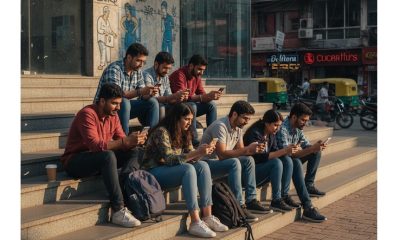
This change in consumer behaviour is particularly evident among younger audiences who want to participate rather than simply watch. Instead of passively consuming entertainment, many now look for experiences that allow them to interact, express themselves and connect with like minded communities.
For marketers, this shift has turned experiential marketing into a strategic priority rather than a promotional add on. Brands are moving away from interruption driven advertising and towards immersive formats that allow consumers to discover, test and emotionally connect with products.
The report suggests that experiential marketing now plays a role across the entire consumer journey. It can spark brand discovery, strengthen storytelling, encourage product trials and ultimately influence purchase decisions and loyalty.
The impact is already visible. Post event surveys conducted among 7,450 attendees at major events including Lollapalooza India and concerts by Ed Sheeran and Guns N’ Roses highlight the effectiveness of these experiences.
Around 59 per cent of attendees recalled brands they interacted with during the events, while 55 per cent said those interactions increased their likelihood of purchasing from the brand. A further 63 per cent reported that brand activations actually enhanced their event experience rather than distracting from it. Nearly 29 per cent also said the interaction improved their perception of the brand.
Brands are also changing the way they approach events. Instead of simply putting logos on stages or banners, companies are building experiences into the fabric of the event itself.
Financial services brands, for example, are offering early ticket access, exclusive lounges and curated event experiences for cardholders. Fashion and beauty companies are using festivals to showcase products through pop ups, interactive installations and social media friendly spaces that encourage visitors to share their experiences online.
The scope of experiential marketing now stretches far beyond live entertainment. Retailers are designing experiential stores where customers can explore products in lifelike environments. Entertainment platforms are extending popular intellectual properties into immersive exhibitions and fan events. Technology is also playing a growing role through augmented reality and virtual try on tools that blend digital discovery with physical interaction.
Cultural festivals remain one of the most powerful platforms for such engagement in India. Celebrations such as Navratri and Holi bring together large communities, emotional participation and heightened consumer spending. For brands, these moments offer an opportunity to become part of the celebration rather than simply advertise around it.
Despite the momentum, the report notes that some companies still hesitate to adopt experiential marketing at scale. Budget constraints, limited expertise and uncertainty around measuring return on investment remain common concerns.
However, the growing body of data around consumer engagement and brand impact is gradually addressing these challenges. More marketers are expected to allocate a larger share of their budgets to experiential formats over the coming years.
Taken together, the findings point to a clear trend. As consumers seek meaning, memories and moments worth sharing, live experiences are emerging as one of the most powerful ways for brands to stay relevant in a crowded media landscape.