MAM
Isobar India ropes in Chandrashekhar Mhaskar as VP


MUMBAI: Isobar India has appointed Chandrashekhar Mhaskar as Vice President to drive the digital creative and services division nationally. Additionally, he will also handle the responsibilities for the West India region.
A computer engineer by qualification and having followed his heart, Mhaskar has been part of the digital advertising industry for more than two decades including international exposure in London and Singapore. He has had varied experience in heading Digital SBUs at renowned agencies such as Ogilvy One, Cheil Worldwide, and Maxus. He was also a successful entrepreneur before taking up the mandate at Isobar. His industry experience spans Television, Film, Internet, eCommerce, Mobile, Social, Online Media and New Technology; across industry verticals like FMCG, IT, Entertainment, BFSI, Education, and Telecommunications.
Big clients under his belt included Nokia, Cisco, British Airways, Perfetti, American Express, and Samsun. He brings with him a rich experience of integrating agency and client teams to collaboratively conceptualize award-winning digital advertising solutions and execute them to successfully tackle business challenges and drive ROI.

Mhaskar will also join Isobar India’s Leadership team, which includes Gopa Kumar, Vice-President; Anish Varghese, National Creative Director and Rahul Vengalil, Business Head (South), alongside Shamsuddin Jasani, Managing Director for Isobar India. Isobar India has emerged as a leader amongst the digital agencies in India, winning multiple awards including Campaign Asia’s Agency of the Year, and this appointment will further strengthen it.
Shamsuddin Jasani, Isobar India Managing Director, says: “We are happy to welcome Chandrashekhar on board with our amazing team. Over the last two years, we have clearly emerged as one the leading full service digital agencies in India of media buying and over 100 creative and technology professionals. Chandrashekhar brings a vast experience across all aspects of digital, especially creative services, which he will be heading nationally. We already have a very strong Creative services and Technology business, and with Chandrashekhar leading the way, we are looking at reaching even greater heights.”
Commenting on his appointment, Chandrashekhar Mhaskar, Vice-President, Isobar India, said: “I am immensely excited to join Isobar and be part of a team that is brimming with stupendous energy. Isobar is already in the fray of creating some cutting-edge creative and tech solutions which have garnered media attention. I am really looking forward to working with Shamsuddin and the senior management team to take Isobar to greater heights in India.”





Brands
KKR sixes to power EV charger rollout under VIDA campaign
Cricket meets clean mobility as big hits spark India’s charging growth
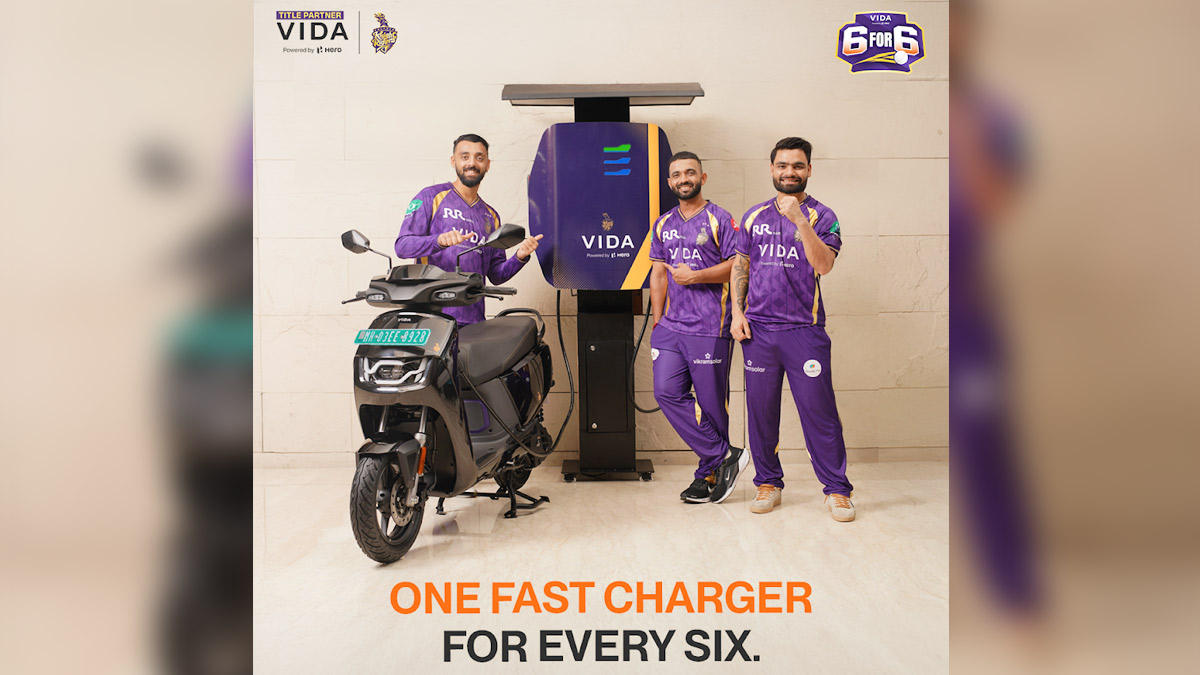
NEW DELHI: VIDA, the electric mobility arm of Hero MotoCorp, has teamed up with Kolkata Knight Riders to launch a campaign that turns cricketing flair into real-world impact.
Titled ‘6 for 6’, the initiative promises to install a 6kW fast EV charger for every six hit by KKR during the ongoing Indian Premier League season. The idea is simple but powerful, as each big hit on the field contributes directly to expanding India’s fast-charging infrastructure.
The campaign builds on VIDA’s growing network, which already spans over 5,300 fast-charging points across more than 430 cities. With EV adoption gaining pace, the brand is using cricket’s mass appeal to accelerate both awareness and infrastructure growth.
Explaining the thinking behind the move, Hero MotoCorp emerging mobility business unit chief business officer Kausalya Nandakumar said, “Cricket has an incredible ability to unite and inspire millions across the country. With the ‘6 for 6’ campaign, we are turning every big hit on the field into a step towards a cleaner and a more accessible mobility future.”
She added that VIDA’s expanding fast-charging network and removable battery technology are designed to make EV ownership more convenient and practical for everyday users.
From the franchise’s side, the campaign is also about giving on-field moments a larger purpose. Kolkata Knight Riders chief executive officer Venky Mysore said, “The ‘6 for 6’ campaign exemplifies the potential of sport as a platform for meaningful, real-world impact. By linking every six to the expansion of EV charging infrastructure, this partnership transforms fan excitement into tangible progress.”
As part of the rollout, VIDA has introduced co-branded charging stations in KKR’s signature colours, with a flagship installation unveiled alongside team players. The chargers are designed for quick top-ups, powering VIDA scooters from zero to 80 percent in about an hour, while also being positioned along key highways to support longer journeys.
The initiative also taps into VIDA’s removable battery system, which allows users to charge using standard household plug points, adding flexibility to the charging ecosystem.
By blending the thrill of cricket with the urgency of clean mobility, VIDA and KKR have found a neat way to make every six count twice, once on the scoreboard and again on India’s road to an electric future.








