Digital Agencies
Influencers, advertising, data and tech at the core of BrandVid 2019


MUMBAI: The second edition of the Indiantelevision.com’s marquee summit BrandVid 2019 concluded with some interesting and insightful discussions around the video content industry in Mumbai yesterday. The day-long conference saw some of the leading geniuses from the marketing industry talking about how to optimise video content as a brand communication tool and get better results in terms of consumer engagement as well as revenues.
Indiantelevision.com founder, CEO and editor-in-chief Anil Wanvari opened the event. He mentioned, “Branded content has an emotional connect; it has a story to tell. The global content market is expected to grow to about $412 billion as per various reports out of which 10-20 per cent will be led by branded content.”
The day was divided into five in-depth sessions and a fireside chats covering the various aspects related to the world of branded video content and was kickstarted by MullenLowe Lintas Group group CCO and chairman Amer Jaleel. He highlighted a key point that most brands seem to have forgotten today – that of not being very obvious to the consumer. “Brands today want to be obvious because of the insecurity of the clutter. Fuzziness is going and directness is returning. If brands want to be relevant today then the way forward is to be random, obscure and slanted,” he highlighted.

Jaleel went on to make the point that it is impossible for creativity to catch up with the speed at which technology is moving. “Technology is synthetic and artificial and craft needs talking to people, which needs time,” he said.
The events of the day continued with a panel discussion on ‘Branded Video Rewind’, which covered all the aspects of the evolution of branded video over the years and how the past fiscal was for the industry in terms of video spends, creative allocation, number and nature of brand films.
Moderated by L&K Saatchi & Saatchi India CEO and Managing Partner Anil Nair, the panel had Sony Pictures Networks India Pvt Ltd head – content, partnerships, new initiatives – digital business Amogh Dusad, Shemaroo Entertainment Ltd COO Kranti Gada, GroupM South Asia president growth and transformation Tushar Vyas, Eros Now group CMO Manav Sethi, and Bajaj Consumer Care president Sandeep Verma sharing their views on the evolution of branded videos.Varma mentioned that today video content is no longer just for virality but is more holistic in the content marketing approach. However, the panellists agreed that there is no sure-shot way to guarantee that your content will hit the right note. Gada said, “Brands are not yet focusing on branded content as a core strategy. It is sporadic.” The panel also drove the point that in branded content, the creative thought should be the main driving force and the brand needs to ride on it not vice versa. The idea is to not force fit the content.
The next item on the agenda was a fireside between YouTube India director Satya Raghavan and Indiantelevision.com founder, CEO, and editor-in-chief Anil Wanvari. Raghavan voice the opinion of many that today’s thumb-based apps have reduced the attention span to single digit numbers. In such a scenario, YouTube helps its content creators in getting reach. “YouTube’s algorithm helps the average content creator to get 50-60 per cent of its views. People are now optimising their content to get into the algorithm. So, content creators don’t have to worry about reaching the target audience,” he revealed.
It was followed by a panel discussion on ‘GenZ: The New Video Sticklers’ between Burger King India CMO Srinivas Adapa, Leo Burnett Orchard COO Prashanth Challapalli, Onida CMO Pratyush Chinmoi and MediaCom west head Priya Choudhary. It was moderated by Worldwide Media VP – Content Studio Vidyut Patra.
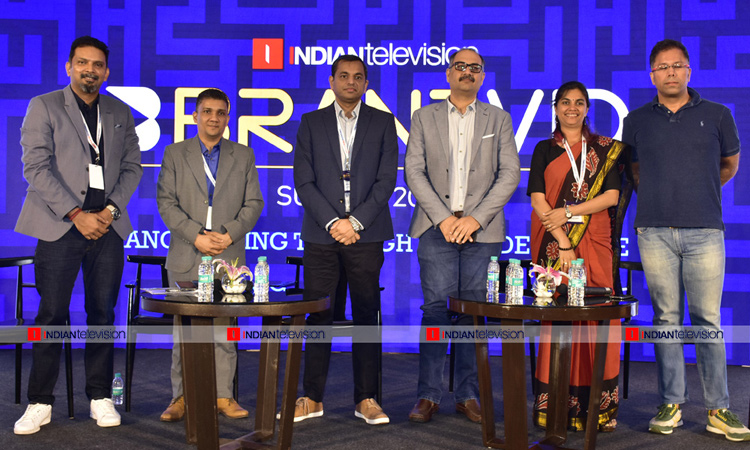
The session covered how the brands are using video as a vehicle to achieve greater engagement and build personal connects with GenZ. Since Gen Z has a variety of apps to choose from and each with a different mode of working, brands need to pick the platform that is appropriate for its message. For instance, YouTube is for getting reach and long-form content, TikTok is for user-generated content while Instagram is for sharp targeting. “Not all brands have a content strategy. They all have a brand strategy. Therefore, they go after influencers. But, people are on Instagram because they are following their interest, not brands,” said Challapalli. To this point, Choudhary added, “Gen Z sees through influencers who are promoting brands so you have to smart in your strategy.” This is also the generation that is averse to seeing ads.
The conference further continued with a panel discussion on ‘Moving the needle from exposure to engagement: Still the challenge?’. The session saw L'Oréal India head of media Neel Pandya, Colgate-Palmolive associate director and head – integrated marketing communication and e-commerce marketing Priyanka Gandhi, Syska CMO Amit Sethiya, Mondelez India Foods Pvt. Ltd. sr. category manager – equity and activation: chocolate marketing Sameer Yadav, and ITC Limited head – consumer health care Sanjay Srinivas in a deep discussion on how effective branded content offers advertisers a chance to engage with consumers in a rather intimate manner, incentivising brands to build ongoing relationships and how its vulnerability stands as a challenge to the marketers. The session was moderated by Tonic WorldWide CEO Chetan Asher.
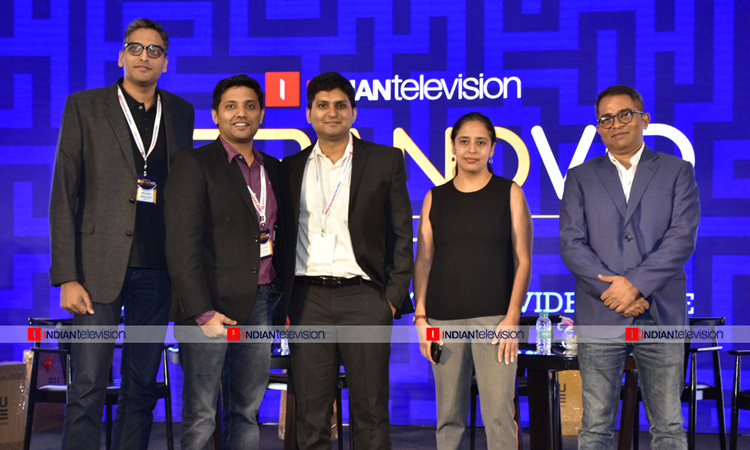
The panel made the point that content marketers need to decide what does engagement mean to them; whether that is the number of likes and shares or beyond that. “Brands need to know how to integrate with authenticity. Your brand should not stick out. For this, first, there needs to be a purpose and then relevance,” said Gandhi. Pandya also added that brands need to realise that not every avenue can drive sales. The purpose of branded content is generally not to get more sales but to get engagement and visibility.
The events of the day progressed with a panel discussion on ‘Driving Social’, with TVF global head content and business Rahul Sarangi, ISOBAR COO Gopa Kumar, Mastercard director marketing Puneeth Bekal, GoZoop director strategy Amyn Ghadaili, and Lokmat Media Pvt Ltd senior EVP and head of digital business Hemant Jain. The session moderated by Nirvana Digital CEO Pinakin Thakkar covered all the important aspects of using social media and related technologies effectively for telling memorable brand stories.
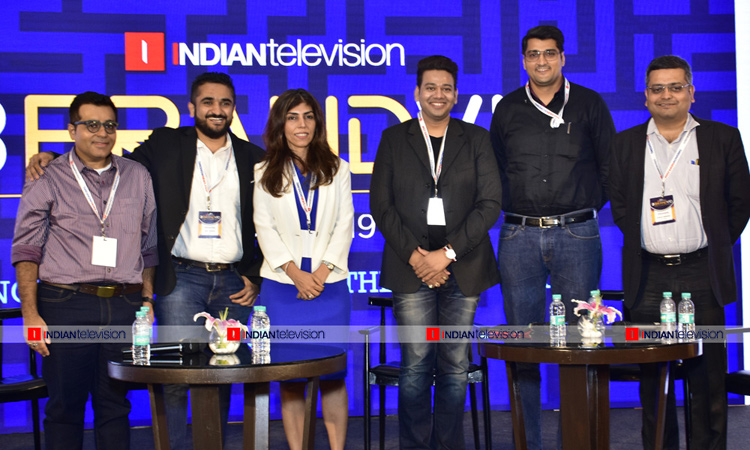
TVF’s Sarangi said, “Brands need to have a personality for people to engage with them.” On the current trend of using influencers to drive sales and visibility, he pointed out that they themselves are content creators. While everyone is thinking of digital as the upcoming big medium, Ghadaili said, “Digital is not a medium. It is a space that has many mediums.” The panel also made the point that in this space what is important is that the product has value and the influencers also believe in it.
The final session on the agenda was a panel discussion on “Understanding the audience: Data & tech in content creation (Brandfilm breakthrough)” spanning insights into how data can be better used to understand audience and what role can technology play in compelling storytelling.
Part of the panel were Prime Focus Technologies VP creative services Bhaskar Sitholey, Shemaroo head of marketing Rahul Mishra, Byju's App marketing head Atit Mehta, Logicserve Digital co-founder and CEO Prasad Shejale, JioGenNext VP advertising Mohit Kapoor, and VDO.ai co-founder Arjit Sachdeva. The session was moderated by Qyuki Digital Media co-founder and managing director Samir Bangara.

Mishra highlighted that digital had shifted the content creation balance. “Nowadays, consumers are creating content on digital and they are the content creators now,” he said. On the usage of data, Mehta felt that data inspires marketers to take bold steps. “If someone is spending on the world cup, then he is also spending on digital,” he said. To this, Shejale added the way forward is both data-driven and data inspired content.
The event concluded with a gala awards event night, the first Indiantelevision.com BrandVid Awards.




BENGALURU: For years, creative teams have learned to live with ambiguity. Vague comments, last-minute changes, feedback that arrives without context, clarity, or conviction. It became part of the job – something teams worked around rather than getting it solved.
But as we head into 2026, that tolerance is wearing thin.
Creative work today moves faster, scales wider, and involves more stakeholders than before. Teams are producing more content across more formats, often with distributed collaborators and tighter timelines. In this environment, guesswork is no longer a harmless inconvenience. It’s a cost – to time, to budgets, and to creative mindspace.
The real problem isn’t feedback, it’s how it’s given
Most creative professionals you see today will tell you they’re not against feedback. In fact, they rely on it. Good feedback sharpens ideas, strengthens execution, and pushes work forward. The problem is ‘unclear’ feedback. When someone says “this doesn’t feel right” without context, they aren’t just revising – they’re basically decoding. They’re guessing what the problem might be, trying different directions, and burning time in the process. Multiply that by a few stakeholders and a few rounds, and suddenly days disappear.
In 2026, when teams are expected to deliver faster without compromising quality, interpretation is a luxury most can’t afford.
Scale has changed rverything
Creative projects used to be smaller and simpler. A designer, a manager, maybe one client contact. Feedback loops were short, even if they weren’t perfect.
Today, the same project might involve internal marketing teams, agencies, freelancers, brand reviewers, and regional teams. Everyone has a say. Everyone leaves comments. And often, those comments don’t agree. More people reviewing work means alignment matters more than ever. Clear feedback isn’t just about being nice to creative teams, it’s about keeping projects moving when complexity increases.
Guesswork quietly wears teams down
One of the less talked-about impacts of unclear feedback is what it does to people.
When feedback is vague or contradictory, creatives second-guess their decisions. They hesitate. They overwork. They keep extra time buffers “just in case.” Over time, confidence drops. Ownership fades. Work becomes safer, not stronger. Creative energy gets spent on managing uncertainty instead of pushing ideas forward. And in an industry already grappling with burnout, unclear feedback adds unnecessary mental load.
Actionable feedback is a shared skill
Clear feedback doesn’t mean controlling creative decisions or dictating every detail. It means being specific enough that someone knows what to do next.
Actionable feedback answers three basic questions:
What exactly needs attention?
Why does it matter?
What outcome are we aiming for?
This applies whether you’re reviewing a video frame, a design layout, or a copy draft. The clearer the feedback, the fewer follow-ups it creates. In 2026, teams that treat feedback as a skill and not an afterthought, will move faster with less friction.
Tools shape behaviour (whether we admit it or not)
The way feedback is delivered is often dictated by the tools teams use. Comments buried in long email threads, messages split across chat apps, or notes detached from the actual work all contribute to confusion.
When feedback lives outside the work, context often gets lost. When it’s disconnected from versions and timelines, decisions get questioned. When it’s scattered, accountability disappears. More teams are starting to realise that feedback problems aren’t just communication issues, they’re workflow issues. How work moves between people matters just as much as the work itself.
From Opinions To Alignment
One of the biggest shifts happening in creative teams is a move away from purely opinion-driven feedback. Instead of “I like this” or “I don’t,” teams are asking better questions:
● Does this meet the brief?
● Does this solve the problem?
● Does this align with the goal?
This change reduces unnecessary back-and-forth and helps feedback feel less personal and more productive. It also makes decisions easier to explain and defend. As creative work becomes more strategic, feedback has to support that shift.
2026 Is About Fewer Loops, Not Faster Loops
There’s a misconception that speed means moving through feedback cycles faster. In reality, the most creative teams aren’t just accelerating loops, they’re reducing them. Clear, actionable feedback upfront leads to fewer revisions later. Clear approval stages prevent last-minute surprises. Clear decisions stop work from circling endlessly.
In 2026, efficiency won’t come from working harder or longer. It will come from designing workflows that respect creative time and attention.
Ending guesswork is a mindset change
Ultimately, ending creative guesswork isn’t just about better tools or processes. It’s about mindset. It’s about recognising that clarity is an act of respect – for the work, for the people doing it, for the time invested and for the mindspace used. It’s about moving from “figure it out” to “here’s what we’re aiming for.”
Creative teams that embrace this shift will find themselves not only delivering faster, but also enjoying the process more. And in an industry built on imagination, that might be the most valuable outcome of all.






