Brands
Influencer-led brand marketing is the way to target GenZ and millennials


MUMBAI: In terms of media consumption patterns GenZ has the lowest attention span, which comes to only eight seconds and video being the viewers’ choice of content consumption, one-third of them watch videos for at least an hour a day.
Gen Z was the topic in focus at BrandVid 2019 session ‘GenZ: The new video sticklers’. The session included speakers– Burger King India CMO Srinivas Adapa, Leo Burnett Orchard COO Prashanth Challapalli, Onida CMO Pratyush Chinmoi and MediaCom west head Priya Choudhary. It was moderated by Worldwide Media VP – Content Studio Vidyut Patra.
The panellists agreed that YouTube is for getting reach and long-form content, TikTok is for user-generated content while Instagram is for sharp targeting. “Not all brands have a content strategy. They all have a brand strategy. Therefore, they go after influencers. But, people are on Instagram because they are following their interest, not brands,” said Challapalli.

To which Choudhary said that influencers play a role especially with GenZ and even millennials. She said that the lure of brands is going down and the new generation trusts these influencers. Hence, a long term content strategy is extremely important to make it work. “We have done extensive consumer work with GenZ and they are smart. They see through brands using influencers so the minute an influencer starts endorsing the brand they stop trusting the influencers so we have to figure out a very smart way of doing it. And it cannot be in-your-face it has to be subtle. So influencers are worth investing but there has to be a right way to use them,” she said.
In the case of long term content, Adapa feels that it is a struggle. He explained the two ways to look at it, one way could be a story told from the lens of the brand without force fitting the brand plug-in. The second way could be running a series of episodes where a brand can be deeply integrated inside the show. Adapa went on by saying, “From a Burger King perspective, one is from the US and one is from India. In the US we just launched something called an ‘Upside Whopper’ which is a tie-up with Stranger Things since season 3 is launching. Back in India, we launched the limited edition Big Boss whopper which is in line with the reality show. So yes, the straight forward answer is that we need much deeper integrated brand integration.”
Choudhary chipped in and said that the thumb movement today is almost a microsecond and Facebook even believes there are brands can make meaningful content in just two seconds, thus putting pressure on brands. According to her, there are also categories in which a longer video is required. It depends on what job the brand is trying to do, what the category is and which environment one is looking into. “I would like to add that we used to believe that 30 seconds is enough to tell a story, more and more we are realising that better stories can be told in short form,” she said.
Adapa said that in today’s data-driven age, it does not take too long to know if people are really completing your video online or not. “GenZ is very kind with comments, they will let you know very quickly saying you are wasting my time or it is wow, but even in terms of analytics, both Google and YouTube are very clear in terms of x or y percentage of people who actually have crossed this much seconds in a video so it’s very quick and easy to learn and adapt and develop from there,” he said.
When Patra questioned about how home-grown brands are treating this format, Challapalli said that a brand like Ola does not do much of TV commercials. It believes in digital content. He added that Ola doesn’t look at the age of the target audience or where do they come from, it looks at what their pain points are. He gave the example of its April Fool’s day campaign that had nothing to do with mobility but about lack of public toilets. It was later that they realised that every ride will contribute to the creation of public toilets.
Chinmoi comes from a brand that is popular with the earlier generations. Recently, Onida resurrected its devil mascot to target the new generation. “Gen Z customers are the ones who are going to be the major future buyers,” he said.
Challapalli also said, “We do a lot of social listening and data analytics and look at the larger cultural trends that are happening and think that can we do something around it,” he concluded.






Brands
ITC Sunfeast Farmlite launches Sugar Free Cookies range
New variants offer guilt-free indulgence for health-conscious snackers.
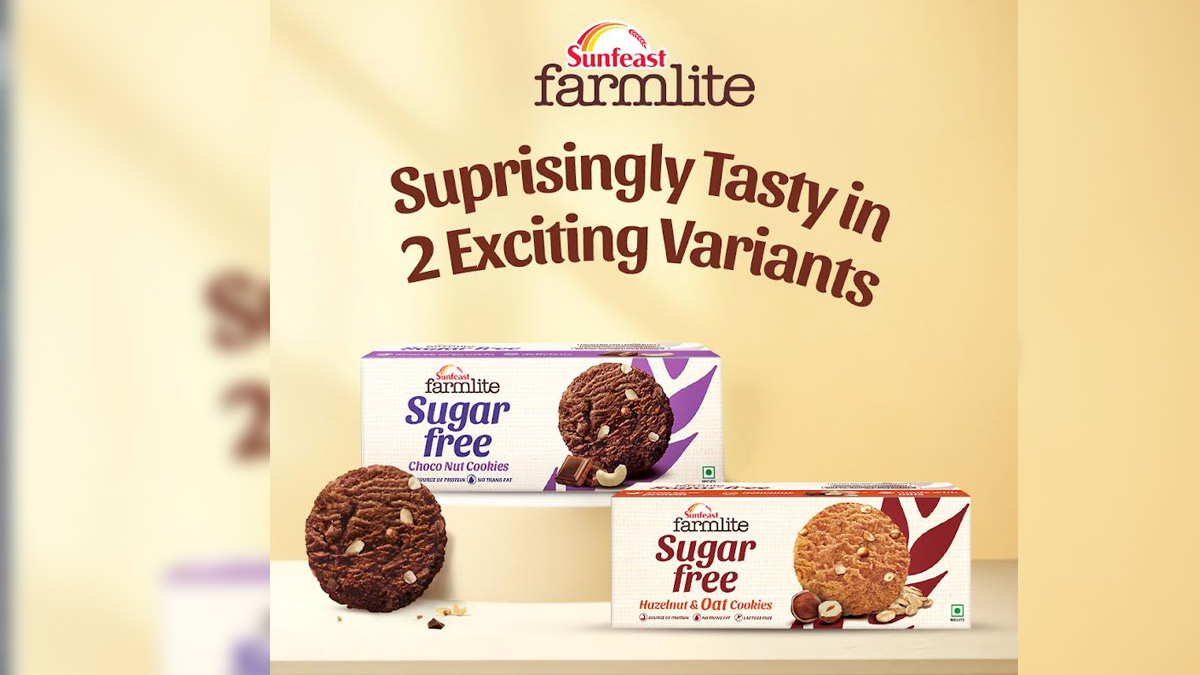
MUMBAI: ITC Sunfeast Farmlite is sweetening the deal for biscuit lovers who want to have their cookie and eat it too without the sugar. The better-for-you biscuits range from ITC Foods has expanded its portfolio with the launch of an all-new Sugar Free Cookies line, aligning with the company’s vision of ‘Help India Eat Better’. The range is designed for consumers who are rethinking sugar in their daily snacking but refuse to compromise on taste and indulgence.
The collection debuts with two tempting variants: Choco Nut Cookies and Hazelnut & Oats Cookies. Both are a source of protein and contain no trans-fat, while the Hazelnut & Oats variant is also lactose-free.
ITC Ltd. vice president (marketing), biscuits, foods division, Suraj Kathuria said, “At Sunfeast Farmlite, we believe mindful snacking should never come at the cost of indulgence. With this launch, we are catering to the growing need for guilt-free snacking while delivering a rich, satisfying cookie experience.”
ITC Ltd. vice president & head of food sciences for foods division Dr Shantanu Das added, “We have applied robust food science to develop cookies that are sugar-free while preserving the taste and texture consumers love.”
Each cookie comes in convenient single-serve packs to maintain texture and freshness. Both variants are available in 100g packs priced at ₹100 and can be found on quick-commerce platforms including Blinkit, Swiggy Instamart, and Zepto.
In a market increasingly leaning towards healthier choices, ITC Sunfeast Farmlite’s new Sugar Free Cookies prove that cutting sugar doesn’t mean cutting joy. For the health-conscious yet indulgent snacker, this could be the perfect bite-sized solution.






