MAM
India’s advertising clampdown leaves alcobev industry hungover


MUMBAI: Having a little drink here and there never harmed anyone. While most of us would like to believe and often preach this, the Indian government clearly does not seem to think so. Maybe that’s also because we Indians like to consider ourselves “Sanskaari” who do not indulge in any misdemeanour or wrongdoing. A part of it is also because it may ‘influence’ the children to indulge in drinking and turn them into big bad drunk people.
India has held a strong stance on the ban of advertising tobacco and liquor products since 1995. That’s why we don’t see Kingfisher, Budweiser, Smirnoff, etc advertising liquor on television or outdoor. The ban was enforced after extensive research from the Indian Ministry of Health that found cigarettes and liquor had adverse effects on a person’s health. Also, the Indian government holds the notion that these products are especially harmful to a person’s mental health while making them lazy and unmotivated. The combination of these factors eventually led to a ban on advertising of these products throughout its media channels.
However, the increase in population saw the sales of tobacco and liquor increase at an exponential rate, forcing companies to seek alternative means of advertising, which led to the eventual creation of surrogate advertising in India.

Advertising alcoholic beverages have been banned in India as per the Cable Television Network (Regulation) Amendment Bill which came into effect on 8 September 2000. Private channels often permit alcohol companies to advertise using the surrogate route and that is why we see major liquor brands promoting and advertising themselves for their club sodas, mineral water, CDs or playing cards to hammer the brand name into the heads of consumers.

Bagpiper was one of the earliest brands that took to surrogate advertising. The brand introduced the slogan of “Khoob jamega rang jab mil bhaitenge teen yaar. Aap, main aur Bagpiper” in 1993 and got the-then famous Bollywood celebrities such as Dharmendra, Jackie Shroff and others to feature in its ‘soda’ campaigns.
India is the third largest liquor market in the world, with an overall retail market size of US$ 35 billion per annum. The annual consumption rate has been increasing steadily over the past six years and stood at 8.9 per cent as of 2017.
The Indian Premier League (IPL) tournament 2018 saw more liquor ads than ever. There are ads for Black & White, Royal Challenge, Signature, Chivas and Seagram’s Royal Stag. It was nothing but a charade of surrogate ads that were openly selling liquor. One such instance was RC showcasing Indian cricketer Virat Kohli marketing a sports drink which is not to be found anywhere easily on e-commerce websites or local supermarkets.
While liquor brands already have limited channels to advertise (including on the board and in-store at bars and wine shops, pubs), they have been further cut down to practically nothing! Remember seeing Virat Kohli’s image on a wine shop’s hoarding? Or whiskey pouring down from a bottle of McDowell’s or Blender’s Pride? Well, those are things of the past now as the Excise Department of Maharashtra in April this year directed all alcohol stores to remove advertisements of liquor brands, flexes and neon signs. Indore had earlier put a ban on advertisement boards outside liquor shops in December 2017.

The department stated that the names could be displayed on boards having a maximum size of 60×90 cm. This includes the display of license number, location and hours of operations. The directive comes on the basis of an archaic 69-year-old Bombay Prohibition Act, 1949.
Following this, in May 2018, the Excise Department also banned advertising liquor inside the store but has now allowed it on the condition that “the liquor brand or product should not be visible from the entrance of the store”.
Sale of beer, wine and spirits in Mumbai has been growing exponentially over the last few years and that’s due to the changing lifestyle of people, increased social calls and income to spare. While sale of spirits saw a 35.39 per cent increase this year, beer saw a 14.26 per cent jump, while wine saw the highest increase, with an increase of 42.96 per cent when compared to figures of April 2017.
Alcohol sale has been completely stopped in the state of Bihar since 2016 whereas Kerala, a state which records annual liquor sales of over Rs 12000 crore, is also considering putting a state ban on alcohol sale by 2025.
Earlier, marketing for liquor brands involved largely print and television where they communicated a lifestyle and an attitude.
But with this new directive, alcohol brands have been squeezed tight with no medium to advertise themselves as they can’t use television, print, magazine, hoarding or radio. One might wonder what these brands will do next and how will they market themselves in a cluttered AlcoBev sector? Maybe that’s why AlcoBev brands are increasingly shifting their focus on digital advertising as there are no restrictions on the media so far. On digital, these brands can say the narrative they want to, the way they want to.
Nevertheless, AlcoBev brands can still advertise in other parts of the county but we don’t really know how long it will be before the directive is passed on to other states as well. Since Maharashtra contributes to the largest share of alcohol consumption in India, banning advertisement here will only result in reduced business for these brands. How will customers know if new brands have entered the market or there is a new product launch unless the store manager tells them?
But shouldn’t we be asking whether all of this is really necessary in today’s digital world? A kid as young as seven or eight years old has a smartphone and is able to operate the device like a charm. Kids or young adults on the brink of adulthood are bound to be curious about the big world outside. Even if the government bans liquor advertising on television, print and outdoor, they can easily find that content on Facebook, Instagram and YouTube.
Today, any person irrespective of the age can log in to a liquor company’s official website to get access to all the information they may need. And social media is just a cheery on the top for these curious young minds.
Maybe it’s time for liquor rules and regulations to be more liberal because the digital audience will anyway find its way.



Brands
Tessolve lands a semiconductor veteran to drive its next big push
Ravi Kumar Chirugudu, who started his career at ISRO and has spent 35 years building chips and companies, joins the Bengaluru-based firm as president and chief operating officer
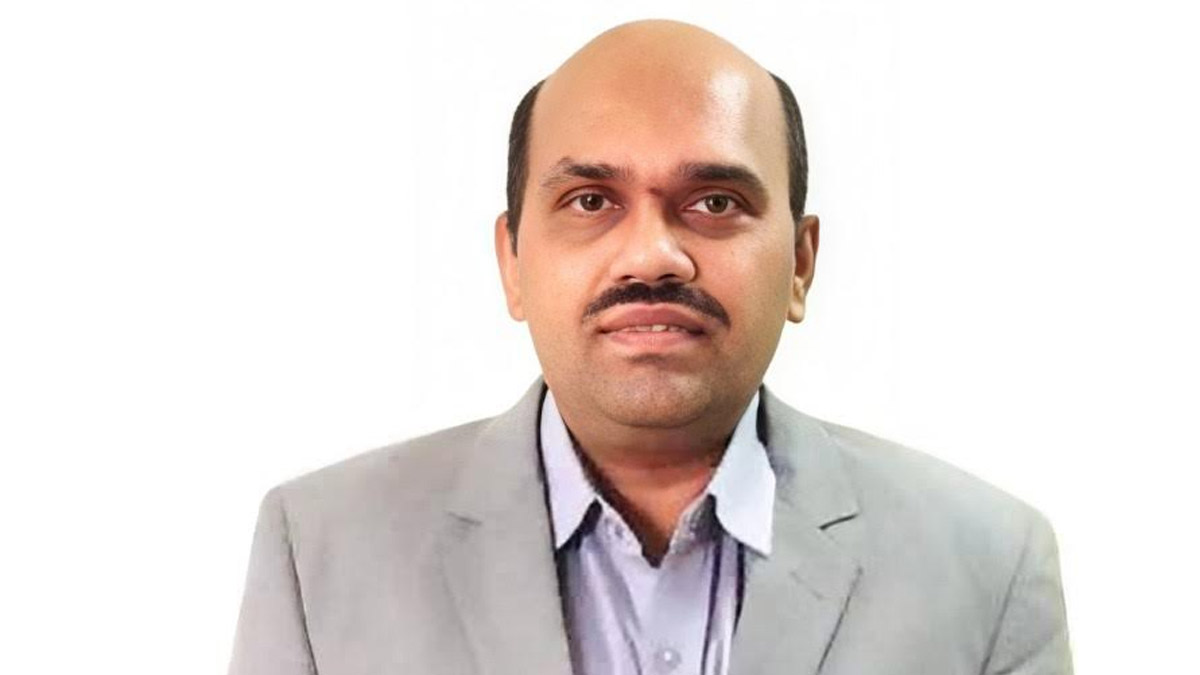
BENGALURU: Tessolve has never been shy about its ambitions. The Bengaluru-based engineering services firm already counts 18 of the world’s top 20 semiconductor companies among its clients, employs more than 3,500 engineers across 12 countries, and last year pocketed a $150m investment from TPG. Now it has hired the executive it believes can turn those assets into something bigger. Ravi Kumar Chirugudu, a 35-year semiconductor veteran who once built satellite payloads for ISRO and has since scaled engineering organisations across three continents, joins as president and chief operating officer, effective immediately.
THE MAN AND THE MANDATE
The appointment is, by any measure, a serious hire. Ravi Kumar Chirugudu comes to Tessolve after senior leadership stints at HCL Technologies, Altran and Wipro, where he managed large profit-and-loss portfolios and oversaw cross-regional teams. Over the course of his career, he has been instrumental in bringing more than 1,000 new products to market across the high-tech, energy and manufacturing verticals. Before the private sector claimed him, he began his working life as a scientist at the Indian Space Research Organisation, contributing to research and development in charge-coupled device technology and satellite payloads, a foundation that shaped everything that followed.
In his new role, he will lead Tessolve’s global growth strategy: expanding its engineering capabilities, deepening customer relationships and accelerating innovation across semiconductor and high-performance computing domains. The brief is broad, but the context is specific. Tessolve operates in the $550 billion global semiconductor market, and its recent moves, the acquisition of Germany’s Dream Chip Technologies and the TPG funding round, have sharpened both its reach and its expectations.
Srini Chinamilli, co-founder and chief executive of Tessolve, is characteristically direct about why Ravi Kumar Chirugudu was the choice:
“As we scale our global semiconductor and system engineering capabilities, Ravi’s appointment marks an important step forward. As global semiconductor demand continues to accelerate across industries, it is creating significant opportunities across the semiconductor lifecycle, from design, packaging, validation and systems integration. Ravi’s deep knowledge and leadership in this ecosystem brings the right mix of industry expertise, customer connect and execution capability, which will play a key role in strengthening our position as a trusted global engineering partner and reinforcing our market leadership.”
THE NEW ARRIVAL SPEAKS
Ravi Kumar Chirugudu, for his part, frames the move in terms of timing and culture, two factors that veteran executives tend to weigh as heavily as title or compensation:
“I am happy to join Tessolve at a time when the industry is rapidly evolving towards more complex, AI-driven systems. What stands out to me is its strong people-first culture and its commitment to bringing value to its customers. The strength of its global team, combined with its deep expertise in semiconductor innovation and next-generation product engineering, creates a solid foundation to build differentiated, scalable solutions. I look forward to working closely with the team to drive strategic growth and strengthen its role in shaping the global semiconductor ecosystem.”
The reference to AI-driven systems is not incidental. The semiconductor industry is in the midst of a structural reshaping, driven by the insatiable compute demands of artificial intelligence. For engineering services firms like Tessolve, which offers end-to-end capabilities from silicon design to packaged parts and invests in high-performance computing, high-speed interfaces, photonics and 5G, the moment is both an opportunity and a test. The company says it is well positioned to capture the next wave of industry growth. Ravi Kumar Chirugudu is now the person who has to prove it.
He came in from outer space, literally, and spent three decades learning how the semiconductor industry works from the inside out. Now Tessolve is betting that accumulated knowledge can help it cross the next frontier. In the $550 billion global chip market, the gap between ambition and execution is measured in engineering hours and leadership quality. Tessolve has just gone shopping for both.






