MAM
Indian TV AD EX to grow at 12 .3 per cent in 2016: Carat report 2016


MUMBAI: Based on data received from 59 markets across the Americas, Asia Pacific and EMEA, Carat’s latest global forecast highlights that advertising spends will reach US$538 billion in 2016, accounting for a +4.5 per cent year-on-year increase. The report also forecasts India growing begun on a positive note with a forecast growth rate of +12.0 per cent in 2016. Carat’s first forecast for worldwide advertising expenditure in 2017 also predicts India’s ad spends will leapfrog to a growth of 13.9 per cent by 2017.
Unlike growth in the other BRIC markets – Brazil, Russia and China – advertising expenditure in India would continue to accelerate in this year, supported by the India T20 Cricket World Cup and the state elections. TV advertising revenues are forecast to grow by +12.3 per cent in 2016, supported by strong spending from e-commerce companies and FMCG brands.
While TV is expected to remain dominant for many years to come, advertisers are increasingly utilising online video as an invaluable complement. In spite of the much talked about digital marketing drive in the country, the overall share of total digital advertising spends in India is still relatively low at 8.9 per cent (2016).

Whereas the global ad spends on news paper are declining in markets like North America and Latin, India shows a positive newspaper advertising spend at +10.5 per cent in 2016, primarily due to investment from e-commerce, automotive and a small contribution from government spending. Retail advertisers also continue to spend on print.
Carat’s first forecasts for 2017 predict continuing strong growth for the advertising market in India with an estimated increase of +13.9 per cent and expected favourable economic conditions in which advertisers vie for the consumers’ attention.
The report makes it clear that while TV will continue to dominate the lion share of advertising spends, digital is the real growth driver. Powered by the upsurge of mobile (+37.9 per cent), online video (+34.7 per cent) and social media (+29.8 per cent) in 2016, the strength of digital is expected to continue to grow at double digit prediction levels of +15.0 per cent this year, and a further +13.6 per cent in 2017.
Overall, Carat predicts the upsurge of digital to account for 27.0 per cent of advertising spends in 2016 and extend significantly to 29.3 per cent in 2017, reaching US$161 billion globally.
Whilst digital is constantly closing the gap, TV continues to command the majority of market share with a steady 42 per cent. In 2015 ad spends is predicted to grow by +3.1 per cent this year as the Olympic Games and US elections are predicted to generate significant TV viewership across various markets. In addition, Carat’s forecasts reconfirm the steady decline in Print* in 2016 and into 2017 with Newspapers declining by -5.4 per cent and Magazines by -1.7 per cent in 2016 whilst highlighting positive year-on-year growth in 2016 for all other media, including Outdoor (+3.4 per cent),
Radio (+2.2 per cent) and Cinema (+2.8 per cent), with the latter expected to grow further at +5.0 per cent in 2017.






Brands
Jubilant FoodWorks faces Rs 47.5 crore GST demand, plans appeal
Tax authorities flag alleged misclassification of restaurant services
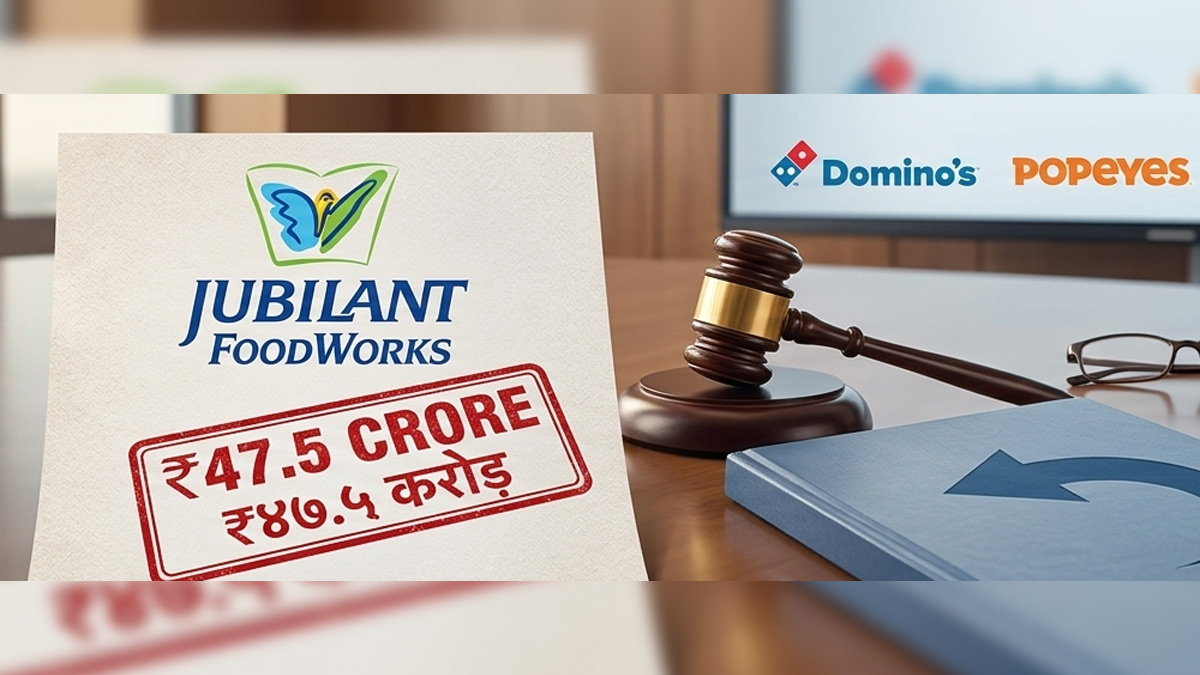
MUMBAI: Jubilant FoodWorks Limited has landed in a tax tussle after receiving a GST demand of Rs 47.5 crore from the office of the additional commissioner of CGST and central excise in Thane, Maharashtra.
The order, issued under the provisions of the Central Goods and Services Tax Act, 2017, relates to an alleged incorrect classification of certain services under the category of restaurant services. According to the tax authorities, this classification resulted in a short payment of goods and services tax for the period between the financial years 2019-20 and 2021-22.
The demand includes Rs 47.5 crore in GST along with an equal amount as penalty, in addition to applicable interest. The order was received by the company on March 13, 2026.
In a regulatory filing to the BSE Limited and the National Stock Exchange of India Limited, the company said it disagrees with the order and believes its arguments were not adequately considered.
The company is preparing to challenge the decision and plans to file an appeal. It added that once the redressal process is complete, the demand is likely to be dropped.
Despite the sizeable figure attached to the notice, the company said it does not expect any material impact on its financials, operations or other activities.
The disclosure was signed by Suman Hegde, EVP and chief financial officer, who confirmed that the company received the order at 19:06 IST on March 13 and has already initiated steps to contest it.
The development places the quick service restaurant major in the middle of a tax debate that could hinge on how certain restaurant-linked services are classified under GST rules. For now, the company appears ready to take the matter from the tax office to the appeals desk.