MAM
Indian digital marketers underinvested in mobile advertising in 2016

Delhi: When asked to look back at 2016, 89 percent of digital marketers in India are likely to say that they underinvested in mobile advertising, with tablet and desktop advertising likely to come in second and third respectively according to an Adobe Digital Insights – Indian Advertising Report 2017 (Adobe Ad Report). Indian marketers know that mobile is the future was one six of the key insights of the report.
Other insights of the Adobe report include: Indian consumers want personalization; Mobile is increasingly the channel of choice for Video; Consumers are happy with marketers, but want more; Programmatic is the path to the future; and Marketers ask for more tech to meet consumers personalization expectations are the other five insights of the Adobe Ad Report.
Adobe says that Indian consumers show stronger preferences towards personalization that any other country it surveyed. About 75 percent (80 percent millennial) of Indians prefer to see ads that are personalized. ADI Int’l Survey 2017 covered over 3,000 consumers and over 300 digital marketers from 3 countries – Australia, India and South Korea. (over 1,000 consumers in each country, and over 100 marketers from India and South Korea and over 75 from Australia).

Sixty three percent (69 percent millennials) of the Indian consumers surveyed were comfortable with the brands they use regularly using their personal data to customize website, content, emails, and advertising. Indian consumers are much more likely than those in any other country to say that digital marketers usually respect their privacy. Fifty eight percent (63 percent millennials) of the surveyed consumers felt that marketers today are usually respectful of their digital privacy.
59 percent (68 percent millennial) of Indians surveyed said that they found digital ads more ‘more interesting and useful’ than ads on channels such as television and radio that can’t personalized.
Indian consumers are more likely to see relevant ads while either browsing or while on social media versus in a mobile app or while watching video. Indian consumers between ages 18 to 34 said that they spent an average of 41 percent of their time viewing video on mobile, while across all the respondents who said that they spent 34 percent of their time viewing video on mobile. Comparatively, 22 percent (35 percent millennials) of time was spent by Australians and 29 percent (38 percent millennials) of time was spent by South Koreans in watching video content.
Of all the countries surveyed by Adobe, India shows the greatest disconnect between consumers and markers in terms of whether ads have improved over the last two years – Seventy three percent of the consumers said that they think brands do a good job of showing ads of products and services of interest to them, but only 48 percent thought that advertisers have gotten better over the last two years at delivering compelling ads. At the same time, 63 percent of the marketers felt that advertisers have gotten better.
72 percent (77 percent millennials) felt that social media channels are getting better at giving them relevant content and ads. Sixty six percent (72 percent millennials) felt that the ads they see were relevant to them.
Most marketers in India expect their programmatic investing to increase in 2017, with audience targeting as the top benefit of programmatic. For putting the target audience targeting capabilities to good use, optimization is expected to be the top investment area for digital marketers. In terms of effectively targeting more consumers, marketers are most likely to cite technology limitations related to pulling available data together for personalization. While social platforms led the way, 25 to 38 percent of the advertisers planned to spend more than half their budget programmatically on any given channel – this could be TV, Connected TV, Desktop video, Mobile video, Out-of-home, Search, Display or Social.
Most advertisers (91 percent Indians) are most satisfied with their ability to measure the effectiveness of their advertisements across channels. India leads (82 percent Indians) the way in believing that third party measurement is important.





Brands
Jubilant FoodWorks faces Rs 47.5 crore GST demand, plans appeal
Tax authorities flag alleged misclassification of restaurant services
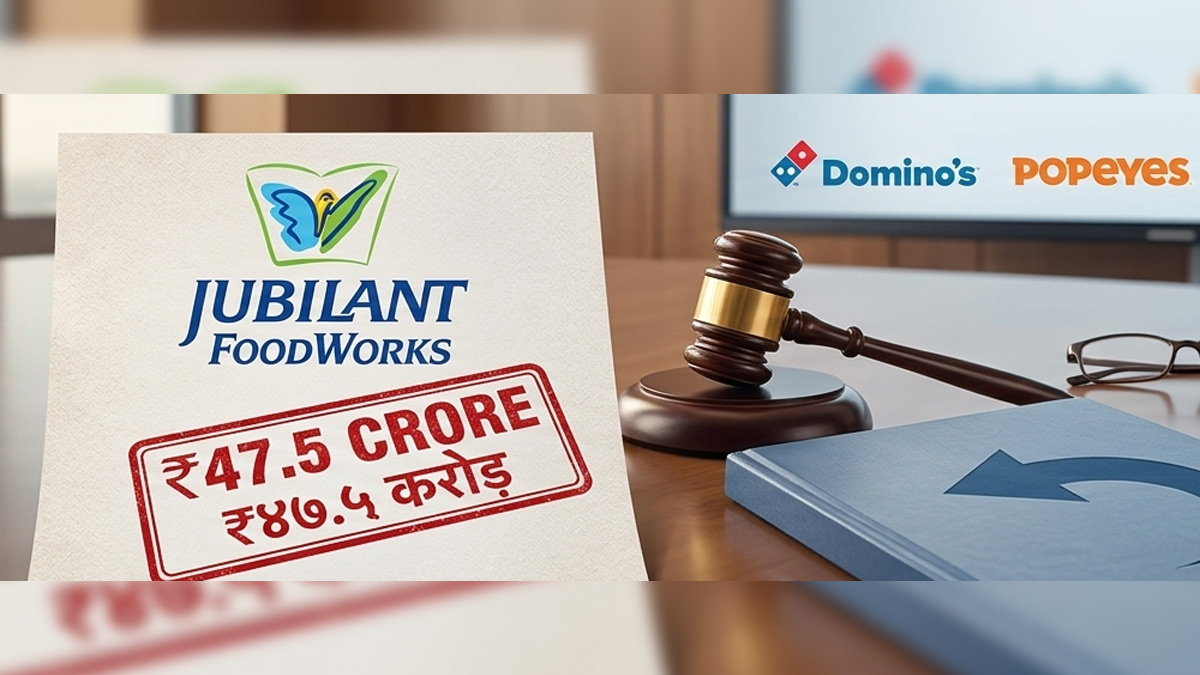
MUMBAI: Jubilant FoodWorks Limited has landed in a tax tussle after receiving a GST demand of Rs 47.5 crore from the office of the additional commissioner of CGST and central excise in Thane, Maharashtra.
The order, issued under the provisions of the Central Goods and Services Tax Act, 2017, relates to an alleged incorrect classification of certain services under the category of restaurant services. According to the tax authorities, this classification resulted in a short payment of goods and services tax for the period between the financial years 2019-20 and 2021-22.
The demand includes Rs 47.5 crore in GST along with an equal amount as penalty, in addition to applicable interest. The order was received by the company on March 13, 2026.
In a regulatory filing to the BSE Limited and the National Stock Exchange of India Limited, the company said it disagrees with the order and believes its arguments were not adequately considered.
The company is preparing to challenge the decision and plans to file an appeal. It added that once the redressal process is complete, the demand is likely to be dropped.
Despite the sizeable figure attached to the notice, the company said it does not expect any material impact on its financials, operations or other activities.
The disclosure was signed by Suman Hegde, EVP and chief financial officer, who confirmed that the company received the order at 19:06 IST on March 13 and has already initiated steps to contest it.
The development places the quick service restaurant major in the middle of a tax debate that could hinge on how certain restaurant-linked services are classified under GST rules. For now, the company appears ready to take the matter from the tax office to the appeals desk.