MAM
India tops global survey in satisfaction with romantic/sex life: Ipsos survey

Mumbai: Ipsos Global Advisor 31 country, love life satisfaction around the world survey shows interesting insights about urban Indians and their romantic life. India tops all 31 markets covered in the survey, in satisfaction with romantic/sex life with at least 76 per cent urban Indians claiming to be satisfied. In comparison, only 62 per cent global citizens claimed to be satisfied on this attribute. Mexico was tied in with India at the top spot (76 per cent), followed by China (75 per cent), Thailand (75 per cent), Indonesia (73 per cent) and Colombia (73 per cent). And the citizens least satisfied with their romantic/ sex life were from Japan (37 per cent), South Korea (45 per cent) & Canada (52 per cent).
Feeling loved
Reminiscing the track Love Me Do of The Beatles, love is definitely felt across all global markets with almost 3 in 4 global citizens (74 per cent) claiming to be satisfied with feeling loved. 84 per cent urban Indians felt satisfied with their feeling of being loved. India was placed 2nd in the pecking order and was preceded by Colombia (86 per cent) and Peru (86 per cent) – tied at the top spot.

Japan was placed at the bottom of the heap with only 1 in 2 satisfied with feeling loved (51 per cent).
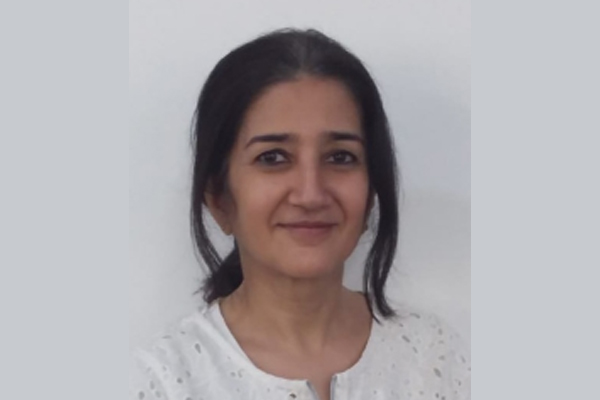
Commenting on the findings of the survey, Ipsos UU & Synthesio, India group service line leader Ashwini Sirsikar said, “India topping the charts is not really a surprise as we as a society believe in love, institution of marriage, stable and enduring romantic relationships. If we look at Valentine’s Day per se, from being a subdued activity in the past, it is now more overt with gifting, dining, celebrating, with social media being a key enabler. Marketers have leveraged this opportunity to pull out all stops to celebrate this day of love into a weeklong activity – starting with rose day, propose day, teddy day, promise day, hug day, kiss day, culminating with Valentine’s Day.”
Relationship with partner/ spouse
So, how satisfied are citizens with their partner/ spouse? This question was posed to those married or partnered. Interestingly, 83 per cent urban Indians and 83 per cent global citizens claimed to be satisfied with the relationship shared with their partner/ spouse. India was placed 15th in the pecking order. Markets placed at the top were Thailand (92 per cent), Netherlands (91 per cent) and Indonesia (88 per cent). Though South Korea (68 per cent) and Japan (69 per cent) were ranked lowest, at the same time majority of their citizens were satisfied with their relationship with their significant other.
“Urban Indian couples are mostly working, with dual incomes to augment their lifestyle, and lead a comfortable life, as they get household help for chores. With education and financial freedom, couples these days share an almost equal relationship, of understanding and camaraderie. The survey reaffirms our belief in love and affection,” added Sirsikar.








Digital
OpenAI’s Stargate lead Peter Hoeschele exits with two senior leaders
Trio behind compute push set to join new startup amid leadership reshuffle

SAN FRANCISCO: Peter Hoeschele, a key figure behind OpenAI’s early Stargate data centre initiative, has exited the company, according to a report by The Information.
The departure is part of a broader leadership shift, with two other senior executives, Shamez Hemani and Anuj Saharan, also set to leave in the coming days. All three are expected to join the same new startup, although details about the venture remain under wraps.
The trio played a central role in OpenAI’s Stargate effort, an initiative aimed at building large-scale data centre capacity in-house to reduce reliance on external infrastructure providers. Their exits mark a notable moment for the company’s compute strategy as it continues to scale rapidly.
OpenAI spokesperson said in a statement to The Information, “We’re grateful for the contributions Peter, Shamez, and Anuj have made to OpenAI and wish them the very best in what comes next.” The company also pointed to the recent appointment of Sachin Katti to lead its industrial compute organisation, signalling continuity in its infrastructure roadmap.
OpenAI has indicated that it does not plan to directly replace Hoeschele’s role, suggesting a possible restructuring of responsibilities within the team.
As competition intensifies in the race to build next-generation AI systems, leadership changes in core infrastructure teams are likely to draw close attention. For now, the spotlight shifts to what this departing trio builds next, and how OpenAI adapts as it scales its ambitions.






