MAM
India continues to be the second most economically confident nation: study

MUMBAI: India continues to be the second most economically confident nation globally on the back of improved performance by industry and services sector, according to a report by global research firm Ipsos.
According to the ‘Ipsos Economic Pulse of the World’ study, Saudi Arabia (94 per cent) solidified its position at the top of the national economic assessment in February 2015, followed by India (80 per cent), Germany (76 per cent), Sweden (73 per cent), China (71 per cent), and Egypt (61 per cent).

The lowest average global economic assessment this month is in Italy (eight per cent). Close behind are France (10 per cent), Brazil (12 per cent), Spain (12 per cent), South Korea (13 per cent) and Hungary (16 per cent).
One in two (50 per cent) Indians believe that the local economy, which impacts their personal finance is good, a sharp drop of five points.
Indians are very hopeful that the Narendra Modi-led NDA government will continue making progress on its domestic reforms agenda and encourage investments that will trigger economic growth and create more jobs; with more than six in ten (64 per cent) people expecting that the economy in their local area will be stronger in next six months, a rise of two points making India the most optimistic country globally.
“The Indian economy is reviving, aided by positive policy actions by the government that has improved investors’ confidence and lower global oil prices. However, India needs to revitalize the investment cycle and fast-track structural reforms to speed up growth further,” said Ipsos managing director – India Amit Adarkar.
“India – Asia’s third-largest economy is expected to grow faster than China in the next few years backed by strong GDP growth, low inflation and stable development focused government at the center,” added Adarkar.
The online Ipsos Economic Pulse of the World survey was conducted in February 2015 among 18,235 people in 24 countries.
Starting the New Year on a positive note, the average global economic assessment of national economies surveyed in 24 countries is down one point as 40 per cent of global citizen’s rate their national economies to be ‘good’.
Countries with the greatest improvements in this wave: Saudi Arabia (94 per cent, +7 pts.), Belgium (39 per cent, +6 pts.), Japan (26 per cent, +3 pts.), Argentina (24 per cent, +3 pts.), Mexico (22 per cent, +3 pts.), France (10 per cent, +3 pts.), Russia (28 per cent, +2 pts.), Sweden (73 per cent, +1 pts.), South Africa (27 per cent, +1 pts.) and Spain (12 per cent, +1 pts.).
Countries with the greatest declines: China (71 per cent, -9 pts.), Egypt (61 per cent, -6 pts.), Germany (76 per cent, -5 pts.), Brazil (12 per cent, -5 pts.), Canada (59 per cent, -4 pts), the United States (47 per cent, -4 pts.), Australia (56 per cent, -2 pts.), Great Britain (44 per cent, -2 pts), Turkey (43 per cent, -2 pts), and Poland (25 per cent, -1 pts.).
Saudi Arabia (68 per cent) regains the top position in the local economic assessment, which impacts their personal finance. Sweden (59 per cent) is in the distant second, followed by China (53 per cent), Germany (53 per cent), Israel (51 per cent), India (50 per cent) and Canada (40 per cent). Small minority assess their local economy as ‘good’ in Italy (11 per cent) followed by Hungary (12 per cent), South Korea (13 per cent), Spain (13 per cent), France (15 per cent), Japan (15 per cent) and Mexico (15 per cent).
India (64 per cent) remains in the lead of the future outlook assessment, followed by Saudi Arabia (60 per cent), Brazil (51 per cent), China (44 per cent), Egypt (44 per cent), Mexico (38 per cent) and Argentina (32 per cent). Once again, only a fistful in France (five per cent) expect their local economy to be strong six months from now, followed by Israel (eight per cent), Belgium (10 per cent), Sweden (10 per cent), Hungary (11 per cent), South Korea (11 per cent), Italy (12 per cent), Poland (12 per cent) and Japan (14 per cent).





Brands
Kingfisher signs three-year IPL partnership
Packaged water brand signs on as ‘good times partner’ for 2026–28 cycle
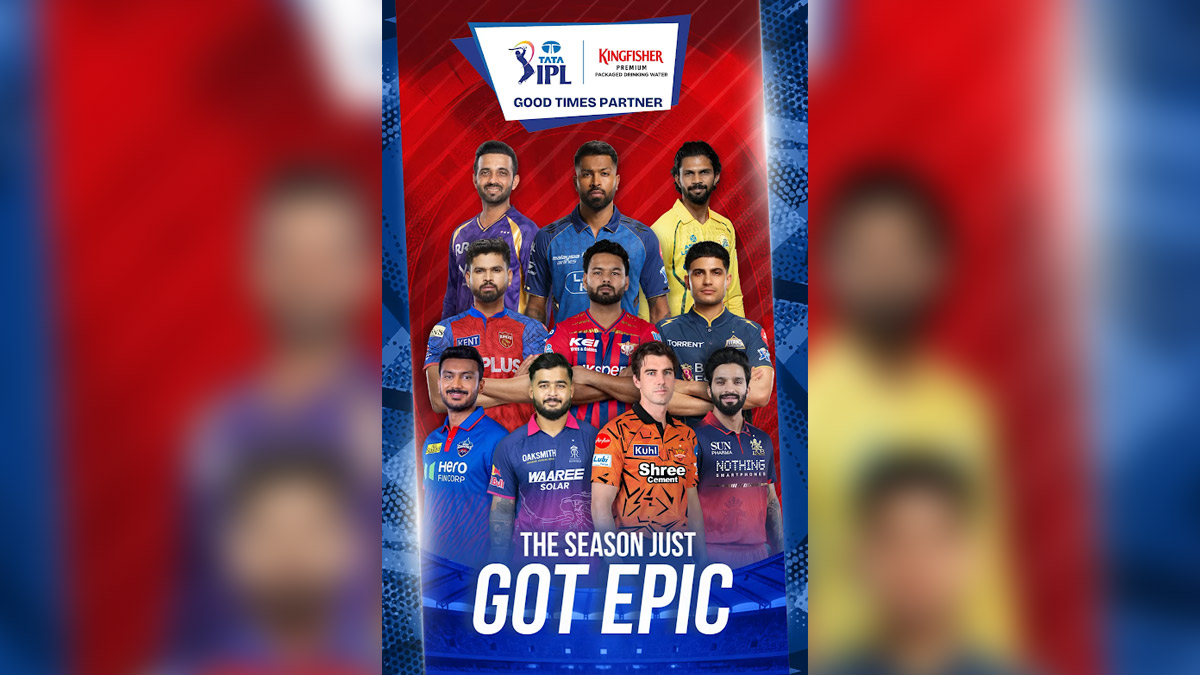
MUMBAI: Kingfisher Premium Packaged Drinking Water is betting big on cricket’s biggest stage, sealing a three-year partnership with the Board of Control for Cricket in India to sharpen fan engagement at the TATA Indian Premier League.
The brand, owned by United Breweries, will serve as the official “good times partner” for the men’s IPL from 2026 to 2028, extending a relationship that began with the Women’s Premier League. The move signals a broader push to embed itself deeper into live sport, with a focus on immersive, consumer-led experiences rather than conventional sponsorship visibility.
At the heart of the tie-up is a suite of fan-first activations spanning broadcast, stadiums and digital channels. These include the “Kingfisher Bird Cam”, offering a branded spider-cam perspective during live matches, and the “Good Times Zone”, an in-stadium entertainment hub during play-offs aimed at amplifying match-day buzz. The brand will also back IPL fan parks, elevate public screening experiences and run digital contests tied to key moments through the season.
Vikram Bahl, chief marketing officer, United Breweries, said cricket in India “is more than a sport, it is a shared cultural moment”, adding that the IPL brings that energy alive at scale. “For Kingfisher Premium Packaged Drinking Water, being present at the heart of these moments, in partnership with the BCCI, is a natural extension of what we stand for. Through this association, we aim to enrich how fans experience the game… making every match more immersive, social and memorable,” Bahl said.
Devajit Saikia, honorary secretary, BCCI, said the IPL “has always been at the forefront of redefining sports entertainment and fan engagement”. He added that the collaboration would fuse cricket fandom with “innovative fan experiences that extend beyond the stadium”, helping create memorable moments for audiences nationwide.
For United Breweries, part of the HEINEKEN group, the play is clear: move from passive branding to active participation in the fan journey—on screens, in stands and across social spaces. With millions tuning in and turning up each season, the IPL remains the country’s most potent marketing theatre. The question now is whether “good times” can translate into lasting brand recall in a market where visibility is easy, but engagement is hard-won.








