MAM
HUL survey: Only 38% women in India get to define their identity themselves

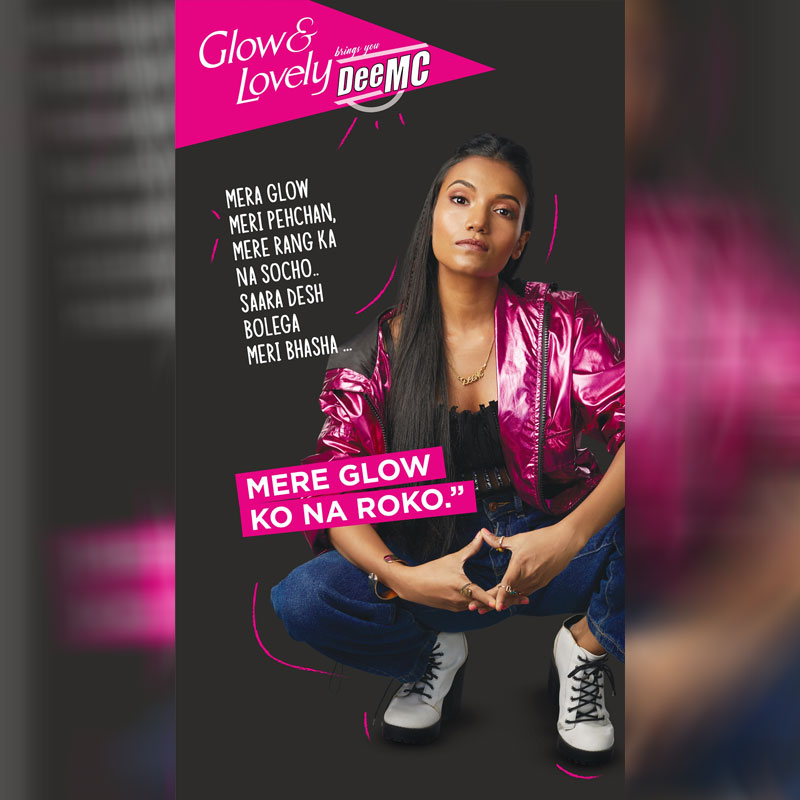
NEW DELHI: HUL’s beauty brand Glow & Lovely has unveiled the findings of the recently conducted ‘Identity Survey’ which revealed that only 38 per cent Indian women actually get to define their identity on their own terms. The survey was conducted with the aim to understand the thoughts and concerns that Indian women have in relation to their identity which has laid the ground for the brand’s narrative of #IChooseMyGlow and the ‘Glow Ko Na Roko’ campaign.
‘Glow’ reflects the personality and individuality of every woman, who focuses on pursuing her dreams and is a celebration of the inner confidence she radiates. This is reflective of a more inclusive form of positive beauty that complements their need to have the choices to define their identity. This was the starting point for the research that delved deep into how a woman’s self is defined and what hurdles are faced while embracing it.
Some of the highlights of the report are as follows:-

66 per cent women would compromise their identity for the sake of others
There has been a paradigm shift in the 21st century, with women being vocal participants in society instead of passive observers. However, majority of Indian women would still not think twice before putting others’ needs before them. They would knowingly compromise their identity for their family, partners or society if required.
Society (36.4 per cent) is the biggest roadblock for women
While women in India would like to make their own decisions, they have been conditioned to listen to others. Society (36.4 per cent), family (31.4 per cent) and partners (18.2 per cent) are major hurdles that keep women from choosing their own identity. It will require the support of society to encourage women to embark on the journey of choosing their own identity.
93 per cent women feel a girl’s identity is as important as a boy’s
There has been an apparent shift when it comes to conversations around gender and equality. Women feel that female and male identity are equally important; however, they still hold back in certain instances. This is corroborated by the Identity Survey finding above that 66 per cent women would compromise their identity for their family, partner or society if required.
Women’s freedom to make their own choices depends on certain key factors
Women’s ability to exercise their will is directly linked to female happiness (21.7 per cent), confidence (18.1 per cent) and respect (12.7 per cent). Traditionally, women have single-handedly shouldered the responsibility of home as well as professional life. However, one has always taken precedence over the other. Making their own choices has always been synonymous with a feeling of guilt. Today’s woman does not link this feeling of guilt when it comes to choosing her own identity. A woman’s freedom to choose her own identity brings her positivity and a sense of dignity. This freedom of choice is directly linked to her happiness and confidence.
HUL executive director – beauty and personal care (BPC) Priya Nair said, “We’ve been driving the evolution of Fair & Lovely for several years to progressively move to a more inclusive vision of beauty. With the introduction of Glow & Lovely, we are very excited about this new chapter in the brand’s journey that celebrates every woman’s ‘glow’. Extensive research showed us that ‘glow’ resonates with our consumers as one of the best articulations of what the product does, while also reflecting the personality and individuality of the woman of today. Glow then become the starting point for the ‘Identity Survey’, which aimed to find out the definition of female identity in India.”
“The narrative #IChooseMyGlow and GlowKoNaRoko campaign upholds the principle and our belief that no correlation should be made between skin tone and a person’s achievement, potential, beauty or worth and that a woman’s identity should be defined by her. We hope that the true meaning of ‘glow’ and this narrative will resonate strongly with women across the country,” she further added.
Clinical Psychologist & Psychotherapist Varkha Chulani said the results of the Identity Survey – which pointed out that majority of women (in metros and non-metros) are yet to understand that identity is simply a meaning of ‘self’ without association to any ‘other’ – is an eyeopener.
“Female identity in India has rarely been a conversation. It is well known that even today, identity of many women is defined by their parents, relationships, with society being the biggest challenge when it comes to defining their self. It is critical that we normalize conversations around female identity to give them the freedom to make their choices and harness their true potential,” she said.
The campaign #GlowKoNaRoko and the narrative #IChooseMyGlow is also in conformity with the brand’s purpose of promoting women empowerment through the GAL Careers. GAL Careers is a companion to women who want to make a mark and define their unique journeys with confidence and self-belief. It plays a key role in helping young women access employability skills through scholarships, career guidance, training courses and job opportunity listings.
GAL careers has so far reached 1.25 million women across South Asia and Indonesia.
#IChooseMyGlow is in line with HUL’s recent announcement of the next step in the evolution of its skin care portfolio while rebranding its flagship brand Fair & Lovely to Glow & Lovely. As a part of a decade-long transformation towards a more inclusive form of positive beauty, words such as ‘fair/fairness’, ‘white/whitening’, and ‘light/lightening’ and terms or visuals that could indicate a fairness-led transformation are no longer included on the product packaging and brand communication.
Research Methodology:
The research, conducted by Toluna India, surveyed women in the age group of 18-45 years across both metros and non-metros. The survey was rolled out digitally and involved a series of multiple-choice questions.






If you are shortlisted for a few of the best CBSE schools in Mumbai, you are probably noticing a clear shift in what “good schooling” looks like today. Strong marks still matter, but so do safety systems, student wellbeing, and learning spaces that feel current and purposeful. The most trusted campuses are not choosing one priority over another. They are building a school experience where academics, safety, and modern facilities work together, day after day.
Academic Rigour Without Burnout
In many of the best CBSE schools in Mumbai, academic strength is built through clarity, consistency, and better teaching design, not endless pressure. You will often see a stronger focus on concept-building, application, and regular feedback to help children feel less lost or rushed.
Conceptual Learning That Feels Relevant
CBSE naturally rewards conceptual understanding, especially in STEM-heavy subjects, and schools are improving how they teach those fundamentals using more visual and hands-on approaches. Modern classrooms, well-planned labs, and reading spaces make it easier for students to connect theory with real understanding.
- Teachers explain concepts with models, demonstrations, and real-life examples, not only textbook reading
- Assessments include problem-solving and explanation-based answers, not only memory checks
- Structured academic support exists for students who need extra help, without labelling or shame
- Co-curricular learning is scheduled sensibly, so it supports academics rather than competing with them
Safety as a System, Not a Promise
Parents in Mumbai are rightly cautious. Traffic, large campuses, crowded neighbourhoods, and long commutes can increase risk if a school is casual about safety. Strong schools treat safety as a set of systems with accountability, not as a marketing line.
Compliance, Preparedness, and Child Protection
For CBSE-affiliated schools, safety expectations are not optional. CBSE’s affiliation norms direct schools to follow Supreme Court guidance, the national school safety policy, child protection safety manuals, and the National Building Code, along with strict requirements for building, fire, water, hygiene, transport precautions, and supervised cyber safety.
- Controlled entry and verified visitor processes
- Regular evacuation drills and clearly displayed emergency routes
- Trained staff in supervision in high-movement areas such as corridors, playgrounds, and activity blocks
- Transport systems designed for visibility and tracking, including GPS-enabled buses in many premium setups
- Clear digital safety rules in computer labs with adult supervision, not open access
Modern Facilities That Actually Support Learning
Facilities matter only when they improve learning and the day-to-day student experience. The strongest campuses invest in spaces that support teaching quality, student curiosity, and balanced development, rather than only impressing during a tour.
Learning Spaces Built for Understanding
Digitally enabled classrooms, well-equipped laboratories, and functional libraries can improve how children learn, especially when teaching is designed around exploration and clarity rather than rote completion.
Sports and Creative Spaces That Build Confidence
A balanced CBSE school environment in Mumbai often includes sports courts, outdoor grounds, and dedicated rooms for music or activities, as these spaces foster discipline, teamwork, and self-expression.
What Parents Can Observe During a Campus Visit
A campus visit becomes far more useful when you look beyond brochures and ask how things run on a typical school day.
- Ask how the school tracks learning progress and supports students who are struggling
- Observe whether classrooms feel active and engaging, or silent and purely lecture-driven
- Check how entry and dispersal are managed during peak crowd times
- Ask how transport safety is monitored and how incidents are escalated to parents
- Look for visible safety signage, staff presence, and clear supervision routines
Closing Thoughts
The best CBSE schools in Mumbai are moving towards a more complete definition of school quality: strong academics taught with clarity, safety managed through systems and accountability, and facilities that genuinely support learning and growth. Many top CBSE schools in Hyderabad are also pushing towards concept-based learning, stronger safety routines, and upgraded learning spaces.






