MAM
How Semiconductor Stocks Are Driving India’s Digital Future

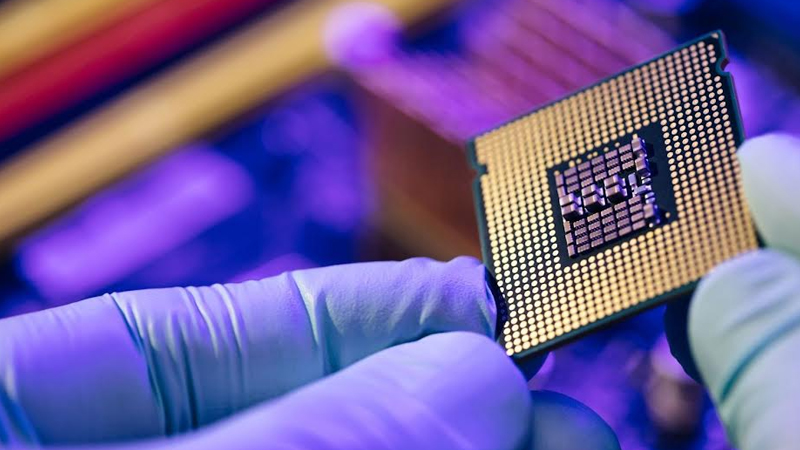
India’s digital future is being shaped by a range of industries, with the semiconductor sector playing a crucial role in driving technological advancements. As the backbone of the digital economy, semiconductor chips are at the heart of all modern electronic devices, from smartphones to computers, IoT devices, and automobiles. Semiconductor stocks have become a major focus for investors, offering both growth opportunities and stability, particularly in the context of India’s rapidly expanding tech landscape.
The Growing Role of Semiconductor Stocks
Semiconductors are integral to the digital infrastructure of any nation. In India, semiconductor stocks are poised to benefit from the accelerating demand for technology in both the public and private sectors. From 5G networks to AI, data centres, and smart manufacturing, the reliance on semiconductors is expected to soar in the coming years. As India becomes a global technology hub, the demand for semiconductor chips is expected to grow exponentially, driving growth in semiconductor stocks.

The Indian government’s push towards becoming a global manufacturing leader has made semiconductor manufacturing and development a priority. In December 2021, the Indian government approved a ₹76,000 crore ($10 billion) incentive package to boost domestic semiconductor production. This package aims to establish semiconductor fabs (fabrication plants) and display manufacturing units in the country, ensuring that India can meet its own demand for chips and reduce reliance on imports.
The semiconductor market in India is expected to be worth $100 billion by 2025, up from $27 billion in 2022. With such rapid growth projected, semiconductor stocks are attracting attention from investors looking to capitalise on the sector’s potential. Several companies in the semiconductor space, such as India’s own Sutlej Textiles & Industries and Bharat Electronics, as well as multinational players with operations in India, stand to benefit from the demand surge.
How Semiconductor Stocks Are Driving India’s Digital Future
1. 5G Network Expansion India’s 5G rollout is a game changer in terms of digital transformation. The technology promises to revolutionise industries, including healthcare, education, and entertainment, by enabling faster internet speeds and more efficient data transmission. Semiconductor chips are critical to powering 5G infrastructure, from base stations to consumer devices. Companies like Qualcomm and MediaTek have established a significant presence in India, supplying chips crucial for 5G devices and infrastructure.
As 5G adoption accelerates, the demand for semiconductors in both telecom and consumer devices is expected to skyrocket. This boost in demand provides semiconductor stocks with a significant growth opportunity, which will contribute to India’s digital future. For investors, this means increased interest in semiconductor companies that supply the necessary technology to build and support 5G networks.
2. Smart Manufacturing and Industry 4.0 The Indian manufacturing sector is also undergoing a digital transformation. With the advent of Industry 4.0, India is embracing smart factories, automation, robotics, and AI-driven production systems. Semiconductor chips are the lifeblood of this transformation. Whether it’s the sensors used in automation or the processors that power robotics and AI systems, semiconductor stocks are seeing a surge in demand.
India’s push towards making the country a manufacturing powerhouse means that the role of semiconductors in driving productivity improvements is becoming more important. Companies in India involved in the semiconductor ecosystem are now integral to the future of smart manufacturing, giving semiconductor stocks a significant role in shaping the future of the Indian economy.
3. The Rise of Electric Vehicles (EVs) Another area where semiconductor stocks are expected to play a pivotal role is in the rapidly growing electric vehicle (EV) sector. India is aiming to become a major player in the EV market, with companies like Tata Motors and Mahindra Electric leading the way. EVs rely on a wide range of semiconductor components for power management, battery systems, and motor control.
As the Indian government continues to push for greener transportation and stricter emission norms, the demand for electric vehicles will continue to grow. This, in turn, will drive demand for the semiconductors that power these vehicles. Semiconductor stocks tied to the EV supply chain are poised to benefit from this transition.
4. Internet of Things (IoT) and Smart Devices India’s growing middle class and increasing internet penetration have fueled the adoption of IoT devices and smart home technologies. From wearable health devices to smart refrigerators, thermostats, and security systems, semiconductors are at the heart of these innovations. Semiconductor stocks of companies that manufacture chips for IoT devices are thus well-positioned for growth in India’s expanding digital landscape.
As more industries, from agriculture to healthcare, begin to integrate IoT solutions, semiconductor companies will continue to see rising demand. This trend further cements the role of semiconductor stocks in driving India’s digital future.
Defensive Stocks: A Key Component of Investment Strategy
While semiconductor stocks are viewed as high-growth investments due to their association with cutting-edge technology, they also come with a level of risk. However, some investors view semiconductor stocks as defensive stocks due to the essential nature of semiconductors in various industries. A defensive stock is typically one that is expected to perform well even during economic downturns, as the products or services it provides are always in demand.
Semiconductors, as a critical component of modern technology, fall into this category. Regardless of economic cycles, the need for semiconductors in everything from smartphones to healthcare devices and electric vehicles remains high. For this reason, semiconductor stocks can act as a stabiliser in an investment portfolio, offering steady returns even in times of uncertainty. With India’s increasing focus on technology, the semiconductor industry has been recognised as a strategic sector, making semiconductor stocks a long-term investment opportunity.
Conclusion
Semiconductor stocks are undeniably one of the driving forces behind India’s digital future. From powering 5G networks and smart manufacturing to fuelling the growth of electric vehicles and IoT devices, semiconductors are the foundation of modern technological progress. As India continues to embrace the digital revolution, semiconductor stocks will remain central to the nation’s economic growth and digital ambitions. Investors who align their portfolios with this growing sector stand to benefit from both the current and future potential of semiconductor stocks, making them a wise choice for those looking to tap into the digital future of India.
In conclusion, semiconductor stocks are not just a key component of India’s digital transformation but also a stable and essential part of the global technology ecosystem. With continued investment and technological advancements, these stocks will help propel India into the future, offering growth and security for both the economy and investors.
Disclaimer: This article does not have journalistic/ editorial involvement of indiantelevision.com. indiantelevision.com group or its websites does not endorse/ subscribe to the contents of the article/advertisement and/or views expressed herein.
The reader is further advised that Online Casino, Betting, Online Gaming , Crypto products, Financial Investments/Engagement , NFTs, Products associated with health, wellness, and food are unregulated and can be highly risky. There may be no regulatory recourse for any loss from such transactions or risk associated with health conditions.
Indiantelevision.com group shall not in any manner, be responsible and/or liable in any manner whatsoever for all that is stated in the article and/or also with regard to the views, opinions, announcements, declarations, affirmations etc., stated/featured in the same. The decision to read hereinafter is purely a matter of choice and shall be construed as an express undertaking/guarantee in favour of indiantelevision.com (indiantelevision.com group) of being absolved from any/ all potential legal action, or enforceable claims. The content may be for information and awareness purposes and does not constitute financial advice.







MAM
JioStar unveils ‘The Winning Edge’ playbook for live cricket advertisers
Data-led guide shows multi-screen, sponsorship strategies drive higher impact

MUMBAI: JioStar has launched ‘The Winning Edge’, a data-backed advertising playbook aimed at helping brands maximise impact on live cricket, positioning the sport as one of the most powerful marketing platforms in India.
Built using billions of impression-level data points across marquee cricket properties and validated through studies by Kantar, the playbook offers practical insights into how brands can drive measurable outcomes such as awareness, recall and purchase intent.
The findings make a strong case for live cricket as a growth engine for both new and established brands. According to the report, new advertisers on live cricket campaigns saw up to 6.9 times higher brand awareness and up to 10.8 times higher purchase intent compared to industry benchmarks. Established brands also recorded gains, with up to four times higher awareness and nearly five times higher purchase intent.
Speaking about the initiative, JioStar head of sales sports Anup Govindan said, “The Winning Edge, developed in partnership with Kantar, is built on rigorous, data-backed analysis of how real brands have performed on our platform across categories, objectives, budgets, formats and tournament phases. The study reaffirms that when it comes to driving real outcomes such as awareness, consideration and purchase intent, nothing matches the intensity, scale and impact of live cricket. The depth of attention and emotional engagement during live moments creates a multiplier effect that non-live environments simply cannot replicate.”
One of the standout insights is the advantage of multi-screen strategies. Campaigns that ran simultaneously across linear TV, connected TV and mobile delivered up to seven times higher purchase intent than single-platform campaigns, with minimal audience overlap ensuring incremental reach.
The playbook also highlights the impact of combining formats. Brands using both video and display formats saw up to 7.4 times higher brand awareness compared to those relying on video alone.
Sponsorships emerged as another key lever. Brands with formal sponsorship deals recorded up to nine times higher purchase intent and up to eight times higher ad awareness than those opting only for standard inventory buys. Adding pre and post live studio programming further boosted aided awareness by up to 2.1 times.
Crucially, the report identifies high-impact in-match moments such as Super 4s, Super 6s, DRS and fall of wickets as prime opportunities for brands. Campaigns aligned with these moments delivered uplifts of up to 10 times in awareness and up to seven times in recall, reinforcing the value of contextual advertising.
Echoing these findings, Kantar managing director and chief client & solutions officer Soumya Mohanty said, “Numerous Kantar Brand Lift Studies have demonstrated the incremental impact of live cricket advertising, with results consistently ranking at the top end of Kantar’s Brand Lift database. This playbook distils those insights into actionable media planning and creative recommendations to help advertisers drive stronger outcomes in live cricket environments.”
With live cricket continuing to draw massive, highly engaged audiences, JioStar is positioning ‘The Winning Edge’ as a blueprint for brands looking to move beyond visibility and towards measurable impact.
As the competition for consumer attention intensifies, the message is clear. In the world of sports marketing, playing smart may matter just as much as showing up.









