MAM
Hitachi hits the Venu button to drive India vision with digital force

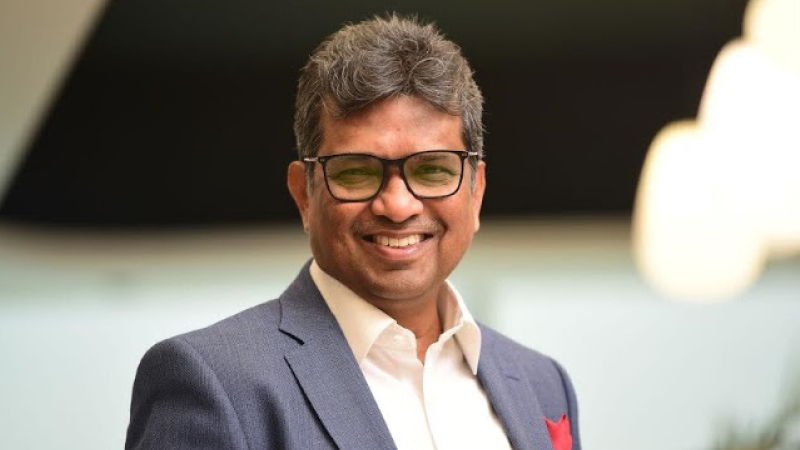
MUMBAI: From steam engines to smart cities, Hitachi’s journey in India has always had power at its core and now, it has a new driver at the wheel. The Japanese tech and infrastructure giant has appointed N Venu as the managing director of Hitachi India, tasking him with steering the conglomerate’s ambitious Inspire 2027 strategy, which aims to turn Hitachi into a digital-first powerhouse.
With nearly four decades of experience, Venu has helmed Hitachi Energy in India since 2019, leading it through a period of rapid expansion. As the new MD, his focus will be on unlocking synergies across 28 Hitachi group companies in India, and scaling up the Lumada business, the company’s data-driven digital solutions arm by combining cutting-edge IT with Hitachi’s legacy in Operational Technology (OT).
The appointment signals a clear intent: to transform India into a global delivery hub for Hitachi, a strategy the company dubs “India for India and India for the World.” With 39,322 employees across its Indian operations (as of Q1 FY24), Hitachi’s footprint spans everything from rail, digital, energy, and e-healthcare to financial inclusion and e-education.

“India is a key market for Hitachi Energy globally and, through One Hitachi, is set to be a cornerstone of the company’s future worldwide growth,” said Venu, reflecting on his new role.
This move also aligns with the company’s long-term commitment to social innovation, blending technology, sustainability, and economic empowerment. Through Lumada, Hitachi is integrating data, digital systems, and domain expertise to solve real-world challenges from decarbonising power to modernising mobility.
Speaking on the appointment Hitachi Asia Ltd. chairman Kojin Nakakita noted Venu’s “deep understanding of the Indian market” as a key asset. Echoing this, Bharat Kaushal, executive chairman of Hitachi India, hailed the move as a reaffirmation of Hitachi’s plan to make India one of its “most lucrative business hubs.”
Venu’s leadership at Hitachi Energy has already helped the firm become one of India’s most vital players in electrification, a sector where over three billion people globally rely on its technologies. In India, Hitachi Energy operates as Hitachi Energy India Ltd. (Powerindia) and is listed on both the NSE and BSE.
Founded on a relationship that began in the 1930s with the sale of table fans and steam engines, Hitachi’s Indian story has evolved into one of cutting-edge innovation. With FY24 global revenues of 9,783.3 billion yen, 280,000 employees, and operations across four major sectors digital systems & services, energy, mobility, and connective Industries Hitachi is now betting on India to be the digital heartbeat of its next chapter.
With Venu at the helm, the company isn’t just charting a digital roadmap, it’s shifting into high gear.







Brands
KKR sixes to power EV charger rollout under VIDA campaign
Cricket meets clean mobility as big hits spark India’s charging growth
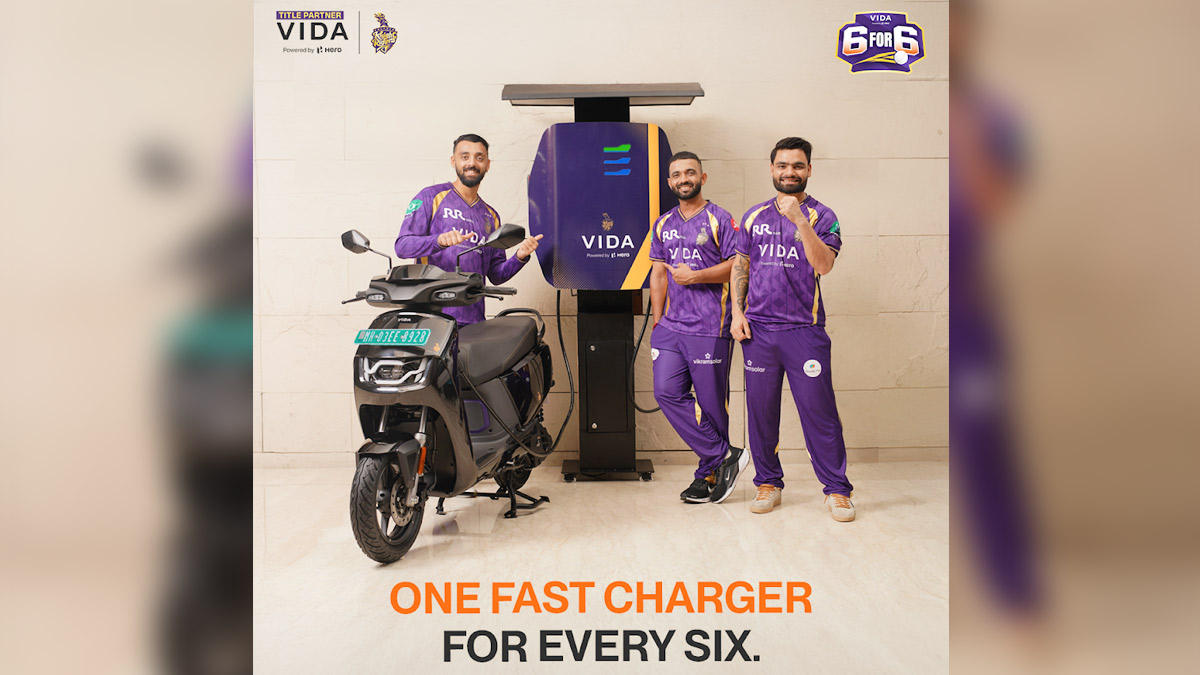
NEW DELHI: VIDA, the electric mobility arm of Hero MotoCorp, has teamed up with Kolkata Knight Riders to launch a campaign that turns cricketing flair into real-world impact.
Titled ‘6 for 6’, the initiative promises to install a 6kW fast EV charger for every six hit by KKR during the ongoing Indian Premier League season. The idea is simple but powerful, as each big hit on the field contributes directly to expanding India’s fast-charging infrastructure.
The campaign builds on VIDA’s growing network, which already spans over 5,300 fast-charging points across more than 430 cities. With EV adoption gaining pace, the brand is using cricket’s mass appeal to accelerate both awareness and infrastructure growth.
Explaining the thinking behind the move, Hero MotoCorp emerging mobility business unit chief business officer Kausalya Nandakumar said, “Cricket has an incredible ability to unite and inspire millions across the country. With the ‘6 for 6’ campaign, we are turning every big hit on the field into a step towards a cleaner and a more accessible mobility future.”
She added that VIDA’s expanding fast-charging network and removable battery technology are designed to make EV ownership more convenient and practical for everyday users.
From the franchise’s side, the campaign is also about giving on-field moments a larger purpose. Kolkata Knight Riders chief executive officer Venky Mysore said, “The ‘6 for 6’ campaign exemplifies the potential of sport as a platform for meaningful, real-world impact. By linking every six to the expansion of EV charging infrastructure, this partnership transforms fan excitement into tangible progress.”
As part of the rollout, VIDA has introduced co-branded charging stations in KKR’s signature colours, with a flagship installation unveiled alongside team players. The chargers are designed for quick top-ups, powering VIDA scooters from zero to 80 percent in about an hour, while also being positioned along key highways to support longer journeys.
The initiative also taps into VIDA’s removable battery system, which allows users to charge using standard household plug points, adding flexibility to the charging ecosystem.
By blending the thrill of cricket with the urgency of clean mobility, VIDA and KKR have found a neat way to make every six count twice, once on the scoreboard and again on India’s road to an electric future.








