Brands
Hisense renews FIFA World Cup tie-up, flaunts RGB-MiniLED might at IFA 2025

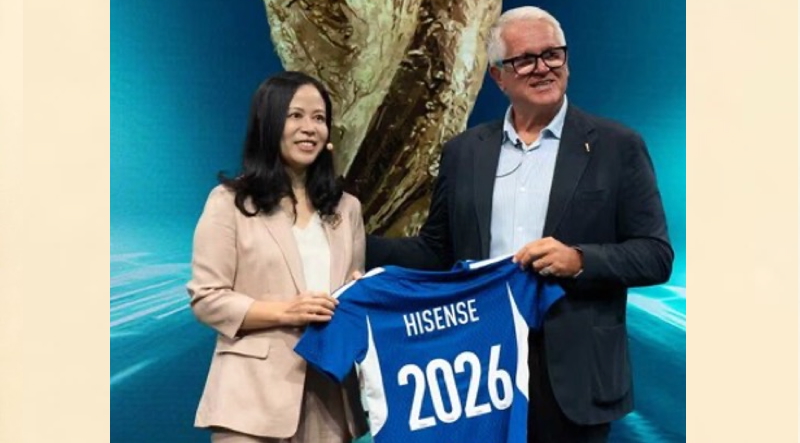
BERLIN: Hisense, the Chinese consumer electronics and appliances giant, has confirmed it will continue as an official sponsor of the FIFA World Cup, extending a partnership first struck in 2018. The announcement came at IFA 2025 in Berlin, where the company also unveiled a raft of television and smart-home innovations designed to cement its position as a leader in next-generation display technology.
For Hisense, football has become a stage for technology theatre. It began with logo visibility at Russia 2018, grew into content collaboration on FIFA+ in 2022, stretched to technology integration in VAR systems at the FIFA Club World Cup earlier this year, and will now culminate in sponsorship of the 2026 World Cup, the first to feature 48 teams across three host nations. Each milestone, the firm insists, has tightened its grip on global brand recognition.
Hisense Group vice-president Catherine Fang said the strategy was rooted in four principles: being technology driven, user oriented, culturally grounded and smart-service focused. “Every unforgettable moment starts with the right experience,” she told the Berlin audience. “Our role is to help fans own that moment.”

At the heart of Hisense’s display push is RGB-MiniLed — a technology it claims to have invented and now positioned as a rival to OLED. The firm has already paraded the world’s largest RGB-MiniLED set, a 116-inch television, and at IFA it showed refinements that deliver purer colours, sharper contrast and brightness levels beyond those of QD-Oled. The screens, it boasts, can achieve 100 per cent of the BT.2020 colour gamut, promising images that replicate reality.
FIFA is sold on the promise. Romy Gai, the governing body’s chief business officer, called Hisense’s technology a way to bring “billions of fans” closer to the World Cup in 2026. For Hisense, the ambition is bolder still: to transform living rooms into front-row seats, ensuring households in Lagos, Lahore and London feel the same drama as fans in Los Angeles or Mexico City.
IFA 2025 itself has become a proving ground. Under the banner “Own the Moment”, Hisense is staging a media showcase at City Cube Berlin and a larger product exhibition at Hall 23a, with television walls, AI-driven appliances and connected living systems all on display. The message is simple: Hisense wants to set the benchmark not just for picture quality but for how households interact with technology.
Founded in 1969 in Qingdao, Hisense now operates in more than 160 countries and, according to Omdia, leads the world in sales of 100-inch and larger televisions in the first half of 2025. Its continued sponsorship of the World Cup suggests that, in the battle for consumer attention, football remains the ultimate shop window. For Hisense, the combination of sports spectacle and cutting-edge screens is designed to make sure that when fans cheer, they do so in front of a Hisense.





Brands
ITC Sunfeast Farmlite launches Sugar Free Cookies range
New variants offer guilt-free indulgence for health-conscious snackers.
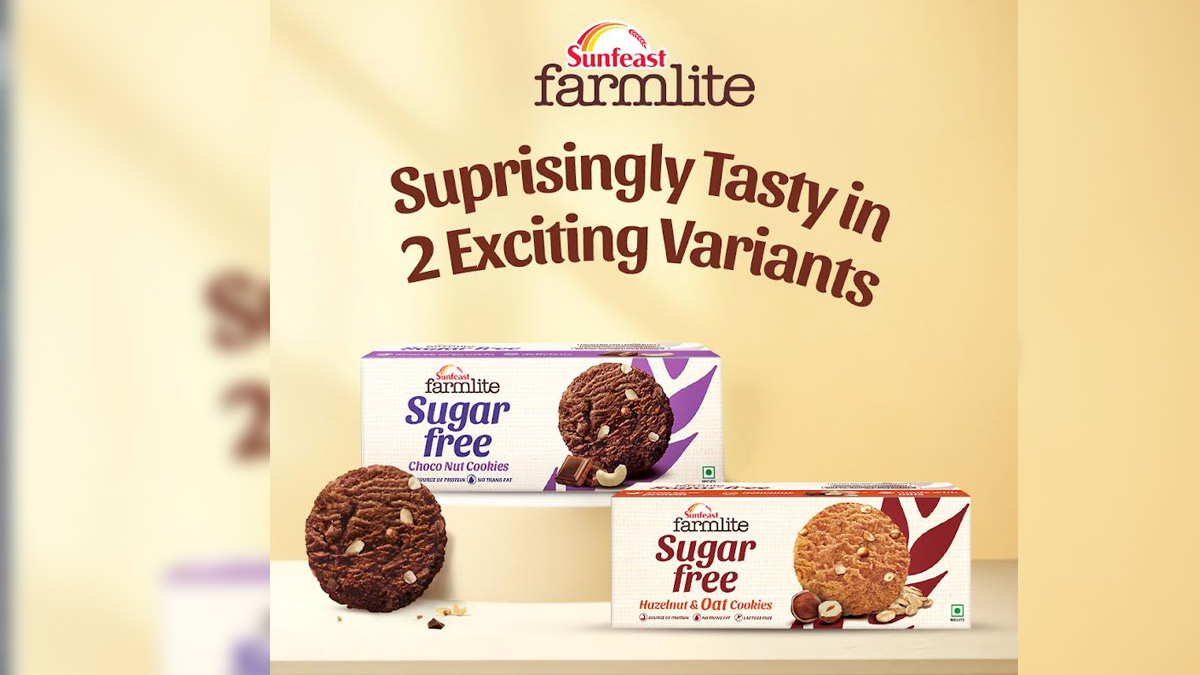
MUMBAI: ITC Sunfeast Farmlite is sweetening the deal for biscuit lovers who want to have their cookie and eat it too without the sugar. The better-for-you biscuits range from ITC Foods has expanded its portfolio with the launch of an all-new Sugar Free Cookies line, aligning with the company’s vision of ‘Help India Eat Better’. The range is designed for consumers who are rethinking sugar in their daily snacking but refuse to compromise on taste and indulgence.
The collection debuts with two tempting variants: Choco Nut Cookies and Hazelnut & Oats Cookies. Both are a source of protein and contain no trans-fat, while the Hazelnut & Oats variant is also lactose-free.
ITC Ltd. vice president (marketing), biscuits, foods division, Suraj Kathuria said, “At Sunfeast Farmlite, we believe mindful snacking should never come at the cost of indulgence. With this launch, we are catering to the growing need for guilt-free snacking while delivering a rich, satisfying cookie experience.”
ITC Ltd. vice president & head of food sciences for foods division Dr Shantanu Das added, “We have applied robust food science to develop cookies that are sugar-free while preserving the taste and texture consumers love.”
Each cookie comes in convenient single-serve packs to maintain texture and freshness. Both variants are available in 100g packs priced at ₹100 and can be found on quick-commerce platforms including Blinkit, Swiggy Instamart, and Zepto.
In a market increasingly leaning towards healthier choices, ITC Sunfeast Farmlite’s new Sugar Free Cookies prove that cutting sugar doesn’t mean cutting joy. For the health-conscious yet indulgent snacker, this could be the perfect bite-sized solution.






