MAM
Havas media bagged the integrated media mandate for BlueStone.com


MUMBAI: Havas media group has won the integrated media mandate of BlueStone.com, one of the leading online store for jewellery and accessories. The business of BlueStone.com is estimated at over INR 35 crore.
“We are aggressively scaling up BlueStone. Havas media has the attitude, agility and skill to partner with us in this growth. We are glad to have them on board and see them as long term partners,” asserted BlueStone.com CEO Gaurav Kushwaha.

BlueStone.com CMO Pushkar Jain said, “The Digital at Core philosophy of Havas Media is in line with our thinking. Their integrated media strengths further gave us the confidence that they know how to in navigate this territory.”
“We were impressed with Havas Media’s passion and commitment towards BlueStone.com. We look forward to this association,” continued BlueStone.com VP marketing Ahshul Khandelwal.
Speaking on the win, Havas media group-India and South Asia CEO Anita Nayyar asserted, “We are delighted at this win. Havas media has been growing at three times the market only because of our aggressive new business acquisitions. BlueStone adds another feather to our cap. We look forward to working with the very enterprising BlueStone team.”
Havas media group-India managing director Mohit Joshi voiced, “Havas Media’s unique proposition focused on meaningful brands has given us an edge in acquiring new businesses. This win strengthens our new age client (dotcom) portfolio and further boosts our Bangalore operations.”
BlueStone has received funding form Accel Partners, Kalaari Capital and Saama Capital, IvyCap Ventures, Dragoneer and Ratan Tata.





Brands
KITKAT India teams up with One Piece for anime-led campaign push
On-pack characters and digital film tap into India’s fast-growing anime wave
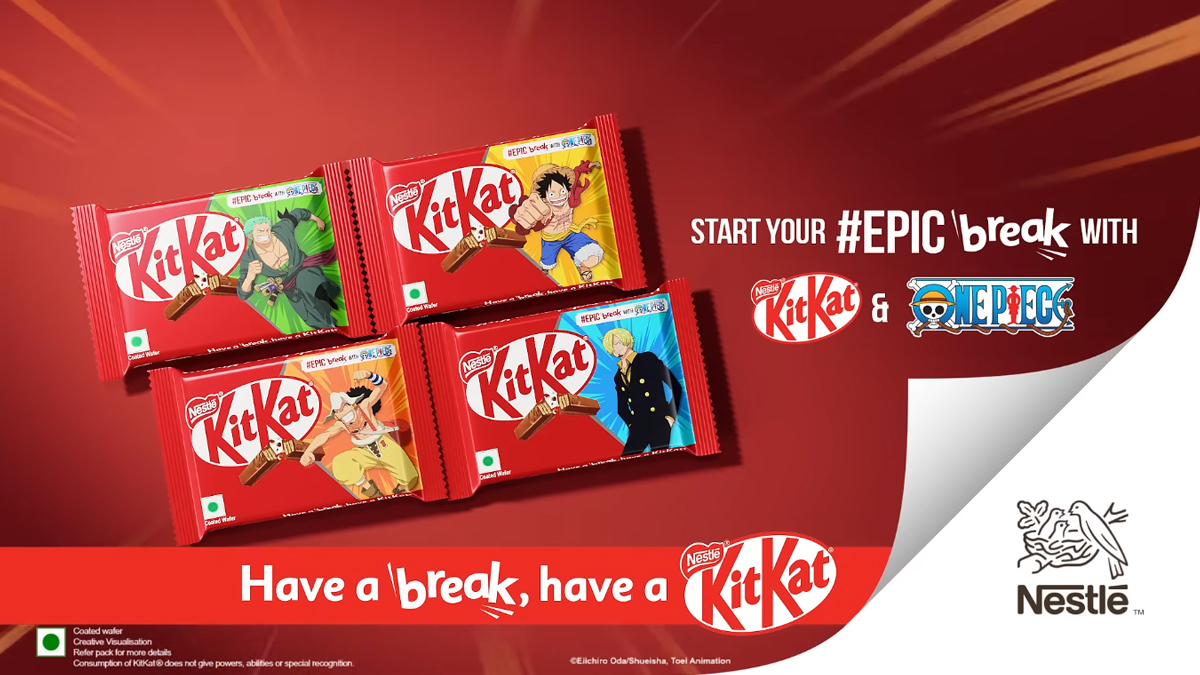
MUMBAI: KITKAT India has joined forces with the globally popular anime One Piece, rolling out a new campaign that brings fan-favourite characters onto its packaging in a bid to connect with India’s rapidly expanding anime audience.
The collaboration sees iconic characters from the series featured on KITKAT packs, adding a playful twist to the brand’s long-standing “take a break” proposition. By blending pop culture with confectionery, the campaign aims to make everyday breaks feel a little more adventurous.
The launch is anchored by a digital-first film released across YouTube and Meta platforms, supported by a broader push spanning outdoor media and interactive social content. The multi-platform rollout reflects a clear attempt to meet younger audiences where they already spend their time.
Nestlé India head confectionery business Gopichandar Jagatheesan said, “Anime is a rapidly growing genre in India, and we are excited to collaborate with one of the most popular shows, One Piece. Having championed breaks for decades, KITKAT now takes them to the next level, making every break more epic with the world of One Piece.”
The move comes at a time when anime is shifting from niche interest to mainstream entertainment in India, with brands increasingly tapping into its cultural currency to stay relevant with younger consumers.
By pairing a globally loved anime with an equally recognisable chocolate brand, KITKAT’s latest outing signals a simple idea with strong appeal. In a crowded market, even a small break can turn into a big moment when it comes with a side of fandom.






