Brands
GUEST COLUMN: How brands can leverage metaverse for connecting with consumers


MUMBAI : Through the years, what has been constant is how brands evolve with new tools and modes of communication to best connect with their customers and fulfill their wants. In fact, with the steady rise of mobile web and social media back in the 2010s, the way brands engage with consumers has undergone a massive transformation – witnessing brands building a community with their consumers. And the customers, in turn, enjoy these novel ways to connect with their brands.
However, in 2022, we now stand at the precipice of an exciting new form of communication and experience – the metaverse. And perhaps the biggest challenge is understanding the metaverse and realising one crucial key point – “The Metaverse is Now.”
Ascent of the Metaverse

Blurring the lines between physical and digital, the metaverse is fast emerging as a new space for people to shop, be entertained and participate in virtual experiences. With the metaverse giving rise to this new ecosystem of virtual life, a resultant paradigm shift is underway. One is that the metaverse is revolutionising how brands and consumers engage – with both scrambling for tools to best connect in this unprecedented virtual space.
But why should you become a metaverse brand to connect with its audience?
The truth is, the metaverse has opened the floodgates to a variety of burgeoning benefits and connection opportunities for brands and consumers alike –
1) Minimising geographical distance
From our online presence on platforms like online games (esports), social media and even simple communication on messaging apps, the experiences and connections we value most often take place in a digital world over the physical world. For instance, unlike before, a significant number of people we daily communicate with live outside of a 15 km radius from our home or office.
However, the metaverse allows you to build meaning around experiences even though people we value spending time with are out of our physical grasp. In fact, it can essentially replicate the real world – goods and experiences from your offline existence can now be imitated for people anywhere in the world. Want to go on a date with the person you just met in Hyderabad while based in Delhi? Want to meet and greet your favourite Bollywood Celebrity when you’re in Lucknow? You can do this and much more in the metaverse. A lot of restaurants too, have stepped into the metaverse so going on dates with a significant other just got easier.
The barrier of geographical distance is eliminated, and brands can now capture a global consumer base by bringing their products immediately into the home of every person in the world.
2) Metaverse & its commercial appeal
The metaverse lets customers try out digital items and see them within a fully 3D world. Several brands are already utilising this capability today. Moreover, blockchain technology, cryptocurrency, and NFTs (building blocks of the Metaverse) are also empowering brands and consumers to interact in ways unlike before.
For instance, Adidas’ claim to fame as one of the most crucial metaverse brands comes from NFTs (Non-fungible tokens). When people think of an NFT, it’s usually related to online images. However, it’s essential to understand that metaverse models also use digital artwork. As such, metaverse items can also be NFTs. Adidas uses that technique to sell wearables in the physical world and metaverse.
Adidas Originals created an NFT campaign, “Into the metaverse.” For this, it partnered with three of the most renowned NFT brands – Bored Ape Yacht Club, PUNKS Comic and Gmoney for exclusive wearable digital items that can be used on various blockchain-based gaming platforms. The collaborative project launched in December 2021, when a limited amount of 30,000 NFTs were sold saw the company earn more than $22 million from the sales in a few hours! Buying an NFT gave owners access to special, physical goods, like a hoodie and tracksuit worn by the Bored Ape that Adidas owns and other upcoming digital experiences.
Some companies benefit by tying their online and offline market together. Other companies can leverage it by creating a whole new type of store. These are digitally exclusive offerings. And all of this can be tied together with digital wallets within the metaverse, making it easy to buy and sell goods. It’s easy to see the metaverse’s commercial appeal.
On the consumer products front, Coca-Cola launched an NFT collection that fetched $575,000 in an online auction. It relied on the power of its brand to push forward its collection and raise over $500.000 for charity within 72 hours!
While the metaverse’s full potential reach will definitely increase & at a much faster pace in the near future years, it is clearly on its way to the very fabric binding people across the globe and connecting them. And with this tool at our fingertips, it is absolutely critical for brands to venture into this exciting virtual space that presents disruptive new ways to build deeper and more meaningful relationships with their audience.
The author is Caleb Franklin CEO and Founder of HeyHey






Brands
Parle-G celebrates Bihu with music-led campaign rooted in culture
Two-part films blend nostalgia and storytelling to capture Assam’s festive soul
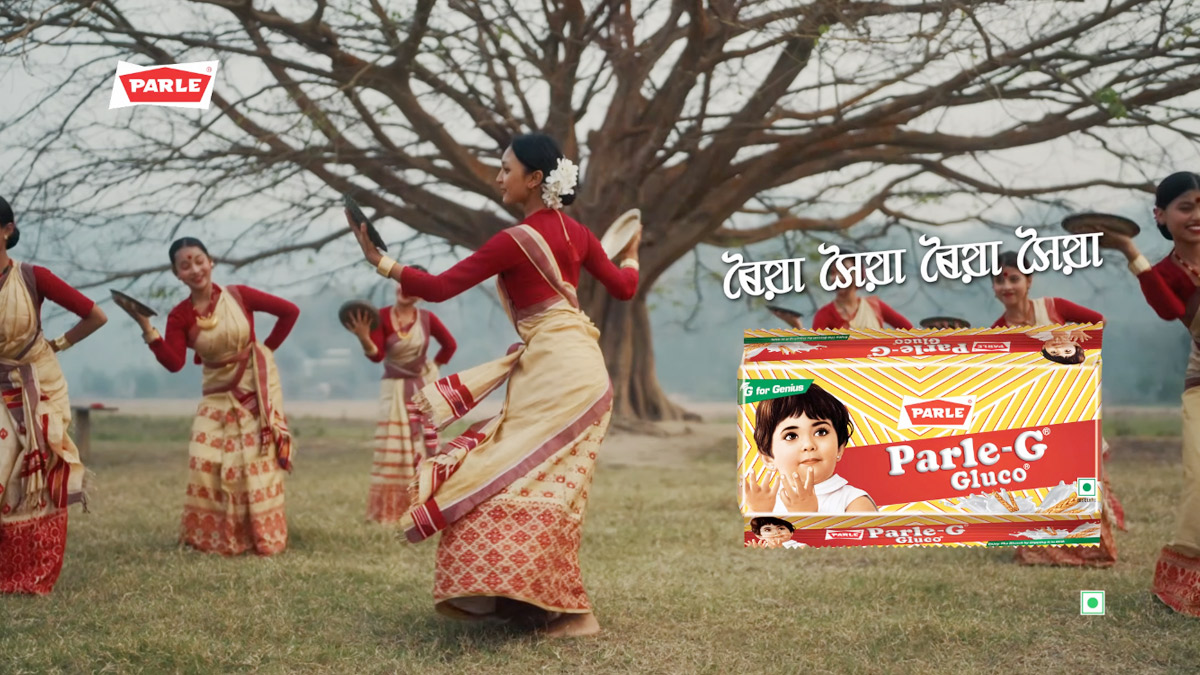
MUMBAI: Parle-G has turned to music, memory and meaning in its latest campaign celebrating Bihu, offering a culturally rooted tribute that goes beyond typical festive advertising.
Created by Thought Blurb Communications, the two-part campaign builds on the brand’s long-standing thought of finding joy in others’ happiness. It begins with a music-led prequel and culminates in a narrative-driven film that explores the emotional essence of the festival.
The campaign opened with a two-and-a-half-minute Bihu music video featuring Partha Hazarika, with music composed by Nilotpal Bora and vocals by Dikshu. Rather than positioning itself as a conventional brand piece, the video leaned into authenticity, capturing the vibrancy and rhythm of Bihu. Viewers also drew emotional parallels to Zubeen Garg, whose absence lent the film a nostalgic undertone. The response was swift, with over 12 million combined views across YouTube and Instagram within a week.
Building on this momentum, the main film tells the story of Ahir, a musician struggling to compose a Bihu song within the confines of a studio. His journey takes him into the open landscapes of Assam and eventually to the banks of the Brahmaputra, where a boatman helps him rediscover the true spirit of Bihu. The narrative underscores a simple idea that the festival cannot be manufactured in isolation, it must be experienced in nature, community and shared joy.
Speaking about the campaign, Parle Products vice president Mayank Shah said the initiative aims to celebrate not just the festival but the emotion behind it. He noted that Bihu reflects the idea that joy multiplies when shared, a theme that sits at the heart of the story.
From the agency side, Thought Blurb Communications chief creative officer Vinod Kunj said the team sought to tap into Assam’s cultural pulse, acknowledging the emotional void left by the absence of Zubeen Garg while celebrating the enduring spirit of the festival.
Adding to this, Thought Blurb Communications national creative director Renu Somani Karwa said the campaign draws from deeply human stories, where small acts of generosity become powerful expressions of connection.
Meanwhile, Thought Blurb Communications executive creative director Auryndom Bose highlighted the importance of nature in shaping Bihu’s identity, noting that the film attempts to capture how music and movement emerge organically from the landscape itself.
With this campaign, Parle-G leans into cultural storytelling with a lighter brand footprint and a stronger emotional core. By placing music and community at the centre, it offers a reminder that some stories are best told not in studios, but in the shared rhythms of real life









