MAM
GUEST ARTICLE: Myths vs Reality: Are consumers really getting more discounts during the holiday season’s online sales?


Mumbai: Are you ready to go on a shopping spree, or already done with one? Exhilarating discounts are unleashing the shopaholic personalities residing within each one of us. On the contrary, there is a possibility that non-shoppers have succumbed to the marketing blitzkrieg as well.
Let us take a moment to look closely at the entire “festive season sale” hoo-ha from the standpoint of brands and consumers.
With the culmination of the first round of holiday and festive e-commerce sales, online platforms recorded a nearly 5.4X spike in daily sales overall. A 3X boost in e-commerce shipment volumes was also witnessed during the sale period compared to days when business as usual prevailed.

Do brands really indulge in deeper discounting during the festive season, or is it just another hoax? An Ace Turtle report suggests the average selling price of products on e-commerce websites drops by a mere 17 per cent during the sale period compared to the non-festive season.
Grant Thornton Bharat national sector leader of consumer and retail Naveen Malpani said that e-commerce portals have witnessed sale amounts nearing three billion dollars (Rs 24,500 crore) in the initial four days of the festive sale, accounting for about 60 per cent of the anticipated GMV (gross merchandise value, a measure of total sales) for the first festive sale and pushing the overall daily GMV to about 5.4X.
The consumer perspective
While consumers get a chance to obtain hands-on products from top brands and the latest fashion at a lower price, many e-commerce apps offer a bundled package to avail such discounts, so consumers end up spending more than their budget.
Moreover, multiple offers have time constraints attached to them, which means you might get a discount of 20 per cent in the daytime, but the same product can be bought for 50 per cent during late hours. This is nothing short of an opportunity lost. It’s imperative to know the discount percentage pre and post the sales start. You might be buying products at the same discount even in sales too.
For instance, a report by Ace Turtle suggests that the average discount on normal days is 47 per cent, which marginally increases to 50 per cent during the sale period. Thus, it might be a myth that brands engage in hefty discounting during festivities or holiday sales compared to non-sale periods.
Several e-commerce platforms launch sales events at the same time. Comparison among these apps is the key to clinching the best offer in a world where the customer is always spoilt for choice.
What’s in for brands/e-comm companies?
It helps e-commerce companies build an emotional connection with existing and potential consumers as the sales are now aligned with big festivals or events like Diwali, Holi, Christmas, or New Year.
Brands can structure their narratives bearing in mind consumer behaviour during festivals. Also, brands should reach out to consumers well in advance before the festive season and not when it is at its peak.
Demographic-based marketing during specific festivals can help with new customer acquisitions, primarily from tier-II and III towns and cities. E-comm companies bridge the gaps between existing and newly launched brands and these consumers. Customised offerings and personalisation help gain loyal customers and retain them for a longer time. Moreover, holiday sales help in clearing their old stocks and generating a substantial-top line with slightly lower margins.
Conclusion
The holiday/festival season can benefit consumers, provided they act smart and do proper research before making a final purchase.
It’s a win-win situation for both the brands and e-commerce sites as it helps in clearing their stocks while acquiring new users from remote areas, thanks to the deeper internet penetration in tier-III towns. A report by India’s retail and e-commerce trends highlighted that India’s e-commerce growth in FY22 was driven by consumers from tier-II and tier-III cities. Moreover, the growth was majorly attributable to the D2C (direct-to-consumer) segment.
The author of this article is AdCounty Media global mobile business head Kumar Saurav.





MAM
BLR Airport Launches ‘Connections’ Service to Ease Transit Travel
New initiative targets smoother transfers as Bengaluru hub traffic rises 30 per cent.
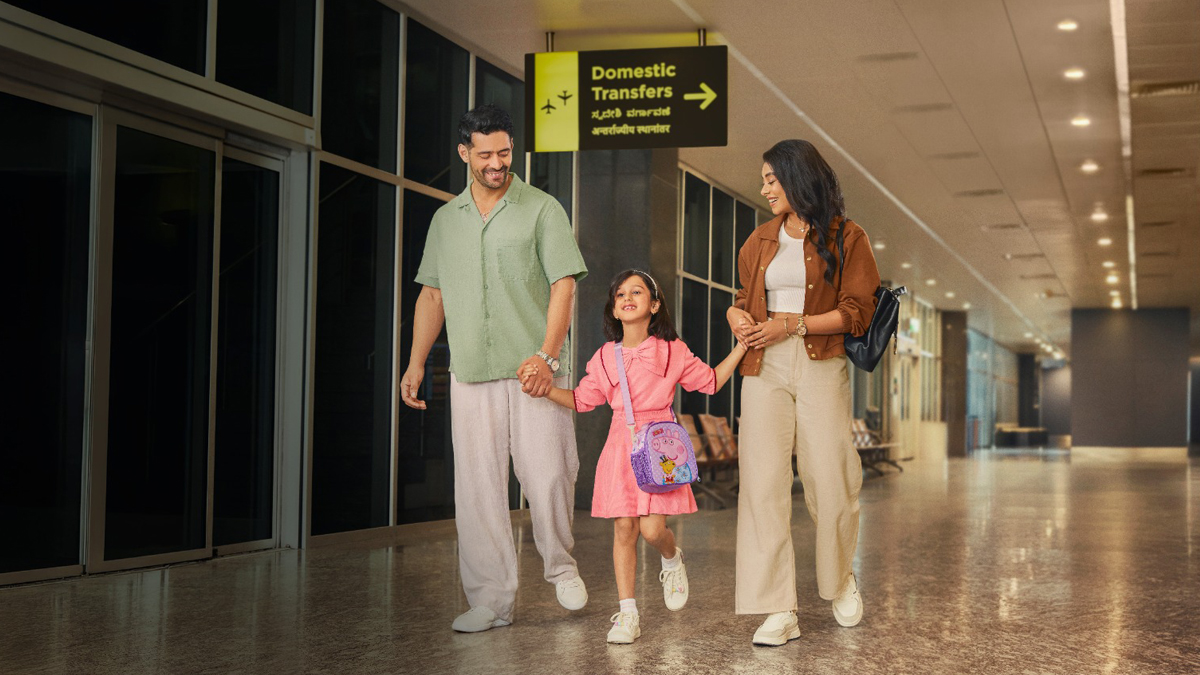
MUMBAI: Missed connections may be a traveller’s nightmare but Bengaluru is trying to make them a thing of the past. Kempegowda International Airport Bengaluru (BLR Airport) has rolled out ‘Connections by BLR’, a new transfer programme designed to take the friction out of connecting journeys. Built around three pillars ease, efficiency and experience,the initiative aims to simplify what is often the most stressful leg of air travel.
The move comes as transfer traffic at BLR Airport climbs sharply, up more than 30 per cent year-on-year. Transfers currently account for around 15 per cent of total passenger traffic and are projected to touch 20 per cent by 2026, signalling a clear shift in how the airport is positioning itself within airline networks.
At its core, the programme focuses on making navigation intuitive and downtime more comfortable. Dedicated transfer desks have been set up across terminals, supported by colour-coded wayfinding blue and yellow signage designed for quick recognition. Inter-terminal movement is being streamlined through complimentary shuttle services with predictable wait times, while designated transfer zones aim to reduce passenger confusion.
Beyond logistics, the airport is leaning into experience. Travellers in transit now have access to a wider choice of lounges, curated retail and food and beverage options, as well as sleeping pods for short stays. For longer layovers, transit hotels in both Terminal 1 and Terminal 2 offer boutique in-terminal accommodation, an increasingly sought-after feature as global travel patterns evolve.
The timing is strategic. BLR Airport now connects to 114 passenger destinations 80 domestic and 34 international with key routes spanning Delhi, Mumbai, Kolkata, Hyderabad and Pune domestically, and Singapore, London Heathrow, Dubai, Abu Dhabi and Kuala Lumpur internationally. Recent additions such as Hindon, Bidar and Silchar within India, alongside Dammam, Hanoi and Riyadh overseas, are further expanding its reach.
Infrastructure is also catching up with ambition. Developments including the West Cross Taxiway, Terminal 1 refurbishment and Terminal 2 expansion are laying the groundwork for higher capacity and smoother operations critical for any airport aiming to become a serious transfer hub.
Bangalore International Airport Limited chief operating officer Girish Nair framed the initiative as both a response to demand and a forward-looking play. He pointed to the growing depth of the airport’s network and the opportunity to build a more reliable transfer ecosystem that benefits both passengers and airline partners.
In an era where travel is as much about transitions as destinations, BLR Airport is betting that a seamless connection might just be the journey’s most important upgrade.







