MAM
Growth of influencer marketing in the events industry

The Indian events industry is currently among the fastest growing sectors in the country. In fact, it is predicted to cross the 10,000 Cr mark by 2020-21. The tremendous growth seen in this lucrative industry can be attributed to several factors, such as digital activation, sports leagues, rural expansion, and Government initiatives followed by IPs, personal events, product launches, expansion of mini-metros, and below the line spend.
The underlying outcome of digital activation has been the growing trend of using influencer marketing as a primary form of promotion, carried out by the event organisers.
For event organisers, influencers can be broadly categorised into 3 types –

· Mega-Influencers: These are celebrities and popular personalities, who have a huge number of followers. They charge high fees to be associated with the events, and are not necessarily industry experts.
· Macro-Influencers: These influencers have a high following as well, and are industry experts, who collaborate with various event organisers, on a regular base.
· Micro-Influencers: These consist of the average person who has a high level of engagement, and hence, are prime influencers who are tapped during events.
Influencer marketing, in a nutshell, can be described as a partnership formed by event organisers and influential industry experts, to increase the event exposure, both online and offline. This new phenomena is a type of marketing which enables organisers to reach out to the targeted niche community, through a research and insight-driven strategy for creating authentic content using the voice of an influencer.
Influencer marketing helps event organisers and the brand in numerous ways, such as:
· Create Brand Awareness: Influencer marketing is the best tactic to be used, in order to create a buzz around the event, and therefore, reach out to new consumers. Event organisers apply various strategies to create awareness, while the influencers carry out multiple shout-outs about the event which is to take place. They also host giveaway tickets for the events, creating an engagement with the consumer, which is better explained below.
· Brand Engagement: This goes hand-in-hand with creating brand awareness. The most effective way of understanding whether the influencer marketing has a positive impact involves analysing social media likes, comments, and the use of hashtags. Influencers build a community and engage with old and new consumers, by doing a takeover on pre-event and event days. This helps them become a brand ambassador of the event on the particular day, and offer consumers behind-the-scene glimpses of the event.
· Consumer Retention: A well-constructed influencer marketing campaign helps an event tap into new consumers. It is extremely important to integrate them into the brand’s consumer-base. Since a large number of events take place every year, consumer retention is of top priority for a brand. Thus, with the help of influencers, it can successfully maintain that link with the consumer base.
The above is a clear indication that influencer marketing is here to stay, and will only move from strength to strength, in the coming years. With event companies pumping in more and more money into marketing, influencer marketing, one of the most sought after marketing tools today, will play a key role for events and brands alike, in the years to come.
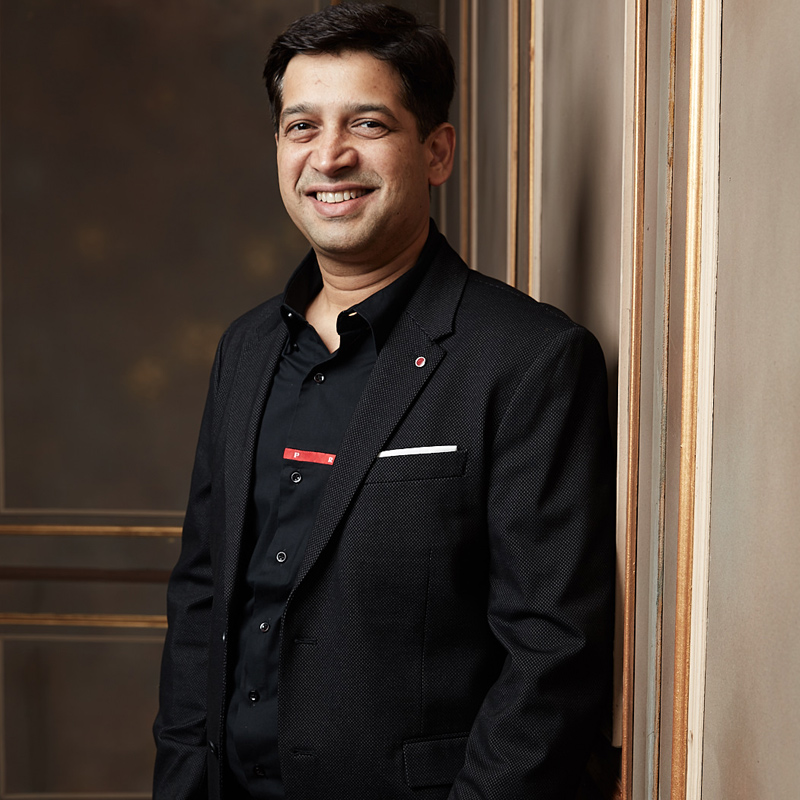
(The author is managing director, Dome Entertainment. The views expressed are his own and Indiantelevision.com may not subscribe to them.)



MAM
Lego brings Messi, Ronaldo, Mbappé, Vinicius together
Campaign clocks 314 million views ahead of FIFA World Cup 2026 buzz.
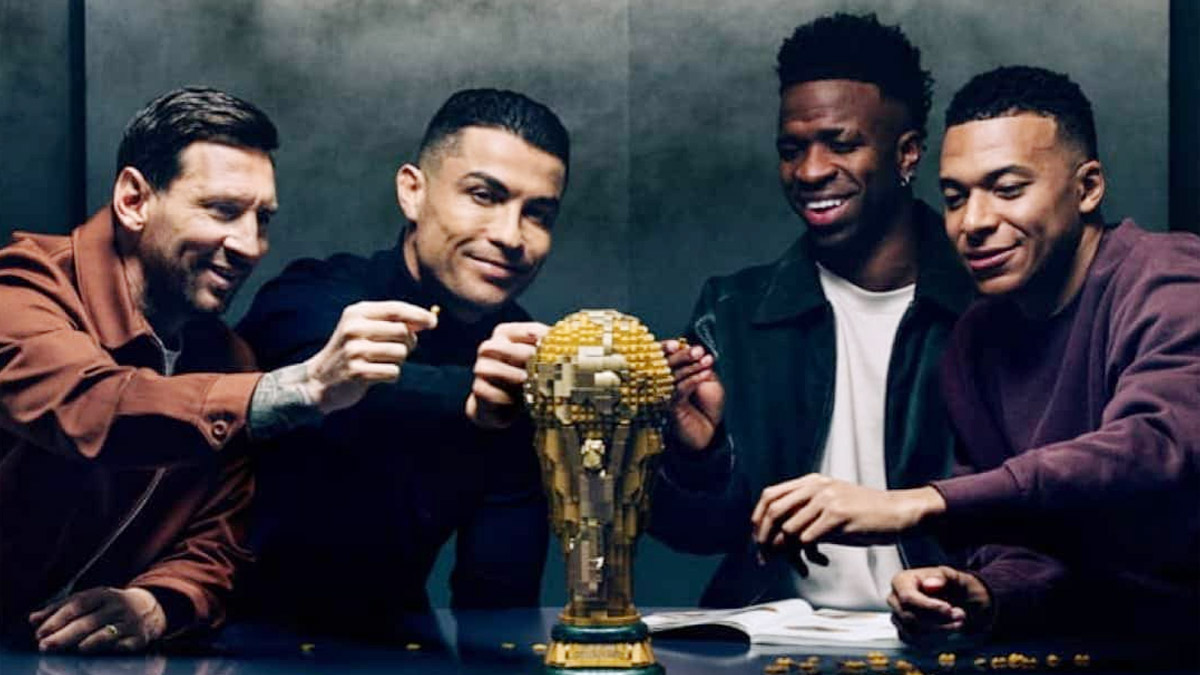
MUMBAI: Four legends, one frame and not a single tackle in sight. Lego has pulled off a crossover few thought possible, uniting Lionel Messi, Cristiano Ronaldo, Kylian Mbappé and Vinícius Júnior in a single campaign ahead of the FIFA World Cup 2026 only this time, they’re building dreams brick by brick.
Titled “Everyone wants a piece”, the campaign features the quartet assembling a Lego version of the World Cup trophy, before placing miniature versions of themselves atop it, a playful nod to football’s ultimate prize. Shared widely across social media, the ad carries a pointed disclaimer: it is not AI-generated, a subtle but telling signal in an era where even reality is often questioned.
The numbers tell their own story. The campaign has already crossed 314 million views on Instagram across the players’ accounts, with fans hailing it as a rare, almost nostalgic moment particularly for the reunion of Messi and Ronaldo, whose last shared campaign ahead of the 2022 World Cup became one of the platform’s most-liked posts.
Beyond the film, Lego is extending the play with exclusive, player-themed sets tied to each of the four stars, part of a broader football-led programme designed to ride the global momentum building towards 2026. The idea, as echoed by the players themselves, leans into the parallels between football and play experimentation, creativity, failure, and triumph.
Messi described the sets as a way to bring on-pitch moments into an imaginative, hands-on world, while Ronaldo called the transformation into a Lego figure a rare honour, blending sport with storytelling. Vinícius, meanwhile, struck a more personal note, recalling childhood moments of building with Lego and framing creativity as a universal language that transcends borders.
The timing is no accident. With the 2026 World Cup set to run from June 11 to July 19 across the United States, Canada and Mexico, and featuring an expanded 48-team format, global anticipation is already building. Argentina, led by Messi, will enter as defending champions, adding another layer of intrigue.
For Lego, the campaign does more than celebrate football, it taps into its mythology. Because when icons become figurines and rivalries turn into play, the beautiful game finds a new kind of pitch. one built, quite literally, by hand.






