MAM
GroupM launches South cinema audience behaviour report

Mumbai: GroupM, WPP’s media investment group, has launched the South Cinema audience behaviour report. This report sheds light on the movie-going habits of the South Cinema audience and provides valuable insights to advertisers and marketers.
According to the report, ‘watching a movie at a theatre’ has the highest monthly average frequency of all outdoor leisure activities among South cinema audiences – with an average of 1.8 visits per month, translating to 22 visits annually. The report also reveals that 8 out of 10 South Cinema audience visit a theatre at least once a month, which is twice the national average.
Commenting on the report, GroupM India MD – cinema and OOH Ajay Mehta said, “Our report is a game-changing tool for marketers and advertisers looking to engage with South Cinema audience. By shedding light on the unique preferences and behaviours of this audience, we can now tailor our campaigns to resonate with them on a deeper level. A noteworthy example is the exceptional success of ‘Jailer,’ starring Rajinikanth, which has become the top-grossing Tamil film in India. Impressively, ‘Jailer’ ranks as the second fastest Tamil film to amass an astonishing Rs 550 crore worldwide at the box office. The fact that a heavy cross-section of South Cinema audience is watching 32 movies in a year highlights the immense potential of this market. With the South cinema audience behaviour report, we are equipped with the insights needed to tap into this potential and drive real business results.”

The report further highlights that ‘heavy’ South moviegoers visit the cinema on an average of 32 times annually, which is 20 visits more than the national average. Further, the heavy cross-section of South Cinema audience from Andhra Pradesh & Telangana and, Kerala watches 36 movies in a year.
The report also throws a light on language preferences among the South Cinema audience.
In Karnataka, Telugu is the second most preferred language among those preferring Kannada, while in Kerala, Tamil is the second most preferred language for those preferring Malayalam. The report also suggests that horror/thriller is the top genre for visiting a cinema in Andhra Pradesh & Telangana and, Kerala.
Andhra Pradesh & Telangana cine-goers prefer to watch a movie on the first day with a preference of 66 per cent for any show on the first day. Apparently, all South cinema audience consider nearby theatres.
The South Cinema Audience Behaviour Report provides marketers and advertisers with valuable insights into the preferences and behaviors of Southern states regular cine-goers.
The data and insights from this report will enable advertisers to create more effective marketing campaigns and better connect with the South Indian audience.
References:
* All India average cinema visits are for the year 2017 and quoted from a study conducted in 2017.





MAM
One Hand Clap acquires Agenseed to enter distribution space
Creative agency expands into full-stack services with strategic buyout.
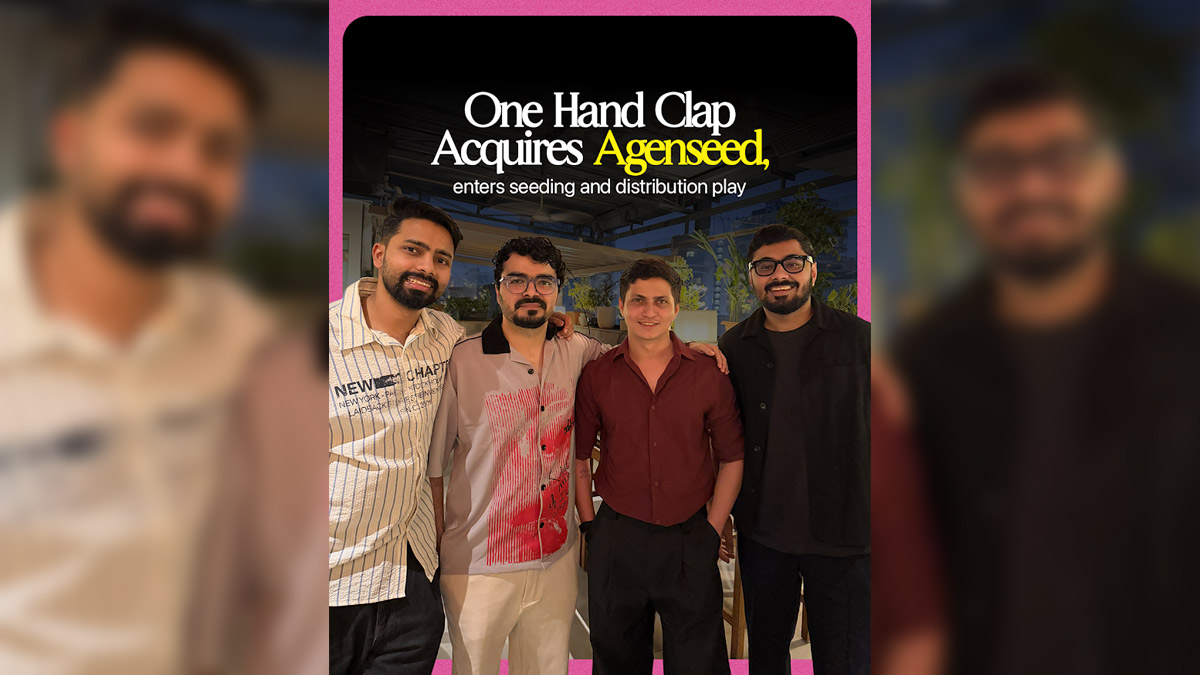
MUMBAI: One Hand Clap has decided to stop just clapping for great ideas now it wants to make sure they actually travel. The leading new-age creative agency and production house has acquired Agenseed, a seeding and distribution firm, marking its formal entry into the distribution segment. The move is aimed at expanding its role across the entire marketing value chain and unlocking new growth opportunities.
One Hand Clap expects the new distribution vertical to contribute up to 15 per cent of its overall revenues over the next 12–18 months, signalling a clear strategic shift beyond pure creative services.
Agenseed, founded by Monish Hardasani and Akram Malik, will function as the agency’s dedicated distribution arm. This acquisition strengthens One Hand Clap’s position as it aims to become a full-stack creative and distribution company in India’s rapidly growing digital advertising market.
With over 90 million posts shared daily on Instagram and brands allocating 25–35 per cent of their digital budgets to distribution and creator-led reach, amplification has become critical to campaign success. By integrating distribution early into the creative process, the agency hopes to help campaigns gain stronger cultural traction and momentum.
One Hand Clap founder Aakash Shah said, “The future of advertising is not just about executing great ideas, but about placing them intelligently. By owning both storytelling and distribution, we can drive greater impact for brands while opening up new revenue streams.”
Agenseed co-founder Monish Hardasani added, “The future belongs to ideas designed to travel. This partnership allows us to integrate distribution thinking at the source.”
Founded in 2019 by former AIB leaders Aakash Shah and Naveed Manakkodan, One Hand Clap has worked with major brands including Swiggy, Google, Netflix India, Crocs, Duolingo, CRED, Bumble, BGMI and Chetak. The agency also secured investment from Zerodha co-founder Nikhil Kamath last year.
In an increasingly fragmented attention economy, this acquisition reflects a broader industry shift where agencies are building end-to-end capabilities to stay competitive. One Hand Clap is clearly clapping louder and ensuring its ideas now reach much further.






