MAM
GroupM crowned ‘The Dream Company to Work For’


MUMBAI: GroupM India, the country’s largest media investment conglomerate, was honored with the ‘The Dream CompanyTo Work’Award for in the Media and Entertainment sector. GroupM is also in the overall list of ‘Dream Employer of the Year’in India. The awards have been conferred by the World HRD Congress 2014 in Mumbai.
The ‘Dream Companies To Work’ is an annual event organized by the World HRD Congress to reward and recognize People and Talent initiatives of organizations across various sectors. Over 100 companies participate at the World HRD Congress 2014event including Accenture, Angel Broking, Citibank, HDFC, Infosys, Samsung, SBI, Cavin Care,Reliance, Novartis,TCS and many more.This was the first time that GroupM participated at the ‘Dream Companies to Work For’ Awards.
CVL Srinivas, CEO, GroupM South Asia said, “GroupM is extremely proud to receive the awards from the World HRD Congress. The awards reaffirm that investing in our people is the best way to ensure cutting edge product quality and superlative customer delight. Talent management remains a critical focus area for us at GroupM South Asia.”

Added Gaurav Hirey, Chief Talent Officer, GroupMSouth Asia, “GroupMand its agencies have pioneered some of the best Talent practices in the South Asia markets. We are investors in people and in the last year, we have aggressively pursued a people transformation agenda. We have worked on various capability-building initiatives like the Youth Executive Committee (YCo), The New ME Initiative for digital orientation and looked at getting in fresh ideas and talent through an engaging Campus Connect effort. This allows us to provide huge value to all our stakeholders, especially our clients and our employees.”
Over the last 11 plus years, GroupMIndia has cemented its position as an innovator and thought leader in the media industry. GroupM also has a distinction of having invested in a full fledged talent management team the only one in the media and entertainment industry. Over the last year, GroupM has made a paradigm shift in the way it operates in South Asia, keeping in mind the ever changing media landscape. With digital at the heart of their processes and planning, it has resulted in the conglomerate winning over 82 new businesses across its agencies and specialist units.




MAM
GUEST COLUMN: How data and adtech are driving OOH growth in India
Data and technology are reshaping OOH and boosting advertiser confidence.
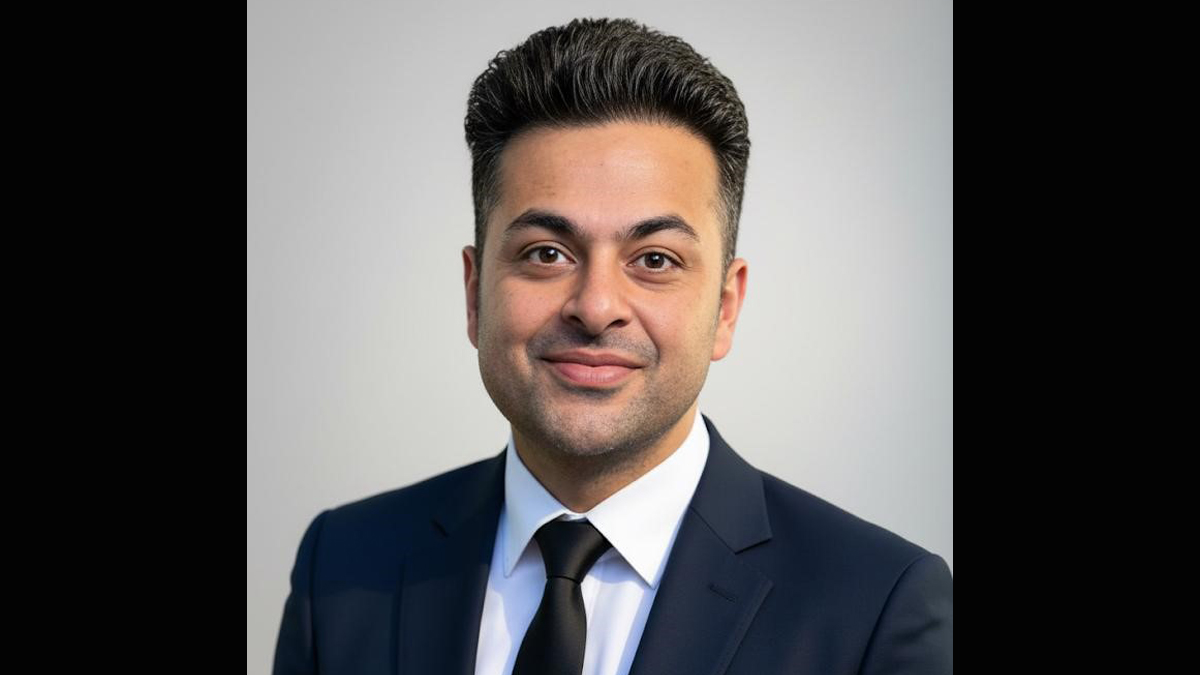
MUMBAI: Out-of-Home (OOH) advertising is evolving from a traditional, location-driven medium into a data-informed channel that blends physical presence with digital intelligence. For Nipun Arora, co-founder of Osmo, this transformation is redefining how advertisers plan, execute, and measure campaigns in India. In this piece, Arora explores how traffic, mobility, and AI-powered data are enhancing site and audience insights, why DOOH is accelerating precision planning, and how authenticity, creativity, and repeat exposure are driving renewed advertiser confidence in OOH.
For years, Out-of-Home (OOH) advertising operated with minimal reliance on data. Site selection was largely driven by visibility, location, and a planner’s understanding of traffic patterns.
That is now changing rapidly.
The first shift came with traffic data, offering basic estimates of vehicular movement. This evolved into mobility data powered by GPS signals, enabling deeper insights into audience movement and behavior. Point-of-interest data further refined this by helping advertisers understand who is likely to be present around a location.
Today, artificial intelligence and computer vision are unlocking an entirely new layer of site and audience intelligence. Together, these data streams are transforming OOH from a real estate-led medium into a data-backed one.
The rise of Digital Out-of-Home (DOOH) is accelerating this shift. Campaigns can now be planned, scheduled, and optimized with increasing precision bringing OOH closer to an adtech model. That said, as a physical medium, OOH still operates within real-world constraints, making this transition gradual rather than absolute.
At the same time, advertisers are returning to OOH with renewed interest.
One of the biggest drivers is authenticity. Unlike digital platforms, OOH offers real-world visibility free from bots, fraudulent impressions, or ad blockers. What you see is what exists.
There’s also growing digital fatigue. Consumers are overwhelmed by constant online advertising, often choosing to skip or ignore it. OOH, by contrast, engages audiences naturally within their environment, without interruption.
Mobility further strengthens its impact. As people move through cities daily, OOH benefits from repeated exposure building recall over time in a way few channels can match.
Add to this the power of creativity. Large formats and contextual executions don’t just capture attention, they often extend beyond the physical space, finding life on social media.
Finally, the increasing availability of data at the planning stage is boosting advertiser confidence. Better insights mean better decisions and more accountability.
As cities grow and movement increases, OOH is uniquely positioned at the intersection of physical presence and data intelligence. Its evolution from billboards to big data isn’t just a technological shift, it’s a redefinition of the medium itself.
Note: The views expressed in this article are solely the author’s and do not necessarily reflect our own.








