MAM
Govt comes up tops in trust among all institutions; 69% Indians trust govt with personal data: World Economic Forum-Ipsos Global Citizen & Data Privacy Survey


MUMBAI: Indians trust the Govt most with their personal data, among all institutions. 69 per cent of Indians polled claim they trust the Union govt with their personal data and are confident that it will be put to the right use and not misused.
How about the other institutions?
Majority of Indians trust Health Providers (67%), Financial Services Companies (67%), Shipping & Delivery Services (61%), Local and Regional authorities (61%), Telecommunication Companies (56%), Retailers Selling Goods & Services (55%), Search & Social Media Sites (53%); Media Companies and Foreign governments are relatively lower in trust at 46% and 48%, respectively, among Indians.

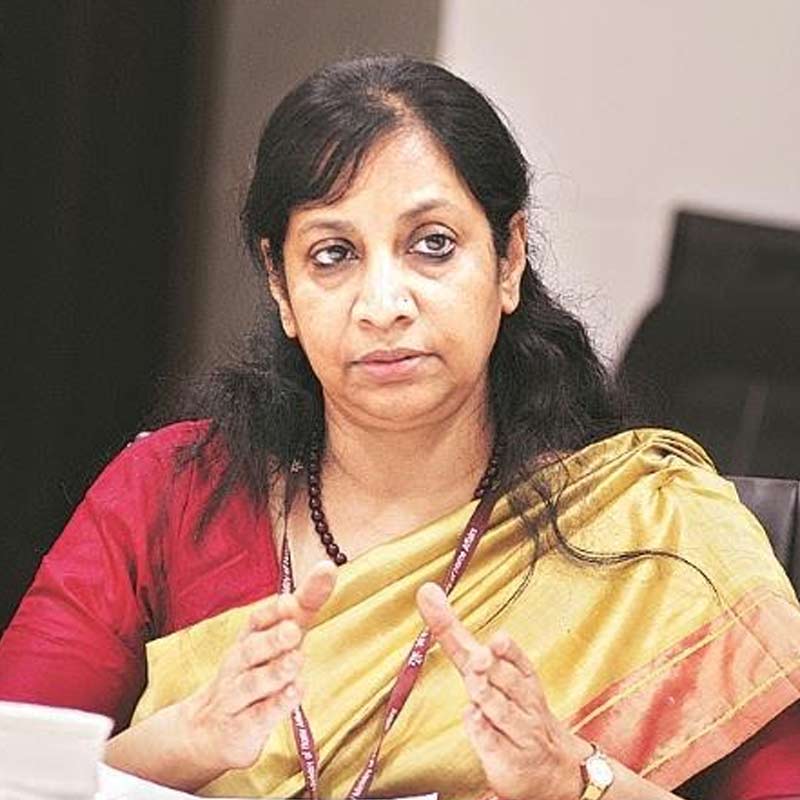
“Government’s several initiatives hold personal information about a citizen. The common man trusting the government most with Data Privacy and personal information underscores people’s trust that Government will protect it from all kinds of misuse and abuse. It is a big responsibility for the Government and everybody expects it to live up to that.” says Parijat Chakraborty, Head of Ipsos Public Affairs.
Interestingly, 47% Indians claim to be aware of the broad contours of the personal data being held by companies and for what purposes it is being used.
On the other hand, 45% Indians claim to be aware of the identity of national and local authorities, that have access to their personal data.
The survey christened Global Citizens & Data Privacy Survey unveiled at the annual meeting in Davos by World Economic Forum (WEF) in partnership with Ipsos was conducted in October and November 2018 among 18,813 adults from 26 countries using the Ipsos Global Advisor online platform. Full waves of the global tracking study will be conducted and reported twice a year.
Personal data and data privacy – how do Indians view it?
56% Indians strongly believe that they should be allowed to refuse companies from using their personal data – advocating complete refusal from providing personal information; 55% Indians want companies to reward or incentivize them for accessing their personal information; 58% Indians see merit in companies accessing personal data as they believe that the feedback is used constructively for improving products, services and information; 62% Indians feel that they have access to relevant products, services and information; 55% Indians feel they save time this way as companies have their personal information in their repository;50% Indians feel they will save money in terms of benefits; and 36% Indians feel they have no qualms about data privacy – it is in safe environs.
Personal Information – Dos and Don’ts
68% Indians want companies not to misuse their personal information by sharing or selling to other parties; 63% Indians are comfortable sharing information with companies they have dealt with in the past; 60% Indians want to share personal information only with companies with a squeaky clean image, that have never been involved in any breach, leak or fraudulent usage of data; for59% Indians, compensation for their personal information in terms of discounts or rewards, is key; and55% Indians want companies to be transparent to them about what they plan to do with the personal information gathered from them.
“The findings suggest that organizations can address fears from consumers by being transparent about what they do with their personal data, by offering guarantees of confidentiality, having a clean security record, or offering financial compensation. Years of intrusive and unsolicited communication from brands and the absolute dysfunctional DND ecosystem have contributed to this mistrust. It is high time the good brands take a note of it and walk-the-talk in respecting privacy rights.” Chakraborty added.
Want access to personal information? Indians want it their way!
55% Indians say they will provide personal information only to those companies that have products and services that cater to them – it should be complementing; 48% Indians want to be forewarned of the risks involved in providing personal information; 34% will be comfortable sharing personal information only if their information is put to good use and benefits them in customization; 32% want access to personal information to reflect in staff attentiveness and service; 27% expect access to personal information to reflect in more efficient navigation and functioning of website and app; 7% were undecided.
Methodology
These are the findings of an Ipsos Global Advisor survey on attitudes toward data privacy in partnership with the World Economic Forum. In total, 18,813 interviews were conducted October 26 – November 9, 2018 among adults aged 18-64 in the US and Canada, and adults aged 16-64 in all other countries.
The survey was conducted in 26 countries around the world via the Ipsos Online Panel system. The countries reporting herein are Argentina, Australia, Belgium, Brazil, Canada, Chile, China, France, Germany, Great Britain, Hungary, India, Italy, Japan, Malaysia, Mexico, Peru, Poland, Saudi Arabia, South Africa, South Korea, Russia, Spain, Sweden, Turkey and the United States of America. Note that some of the questions were not asked in all 26 countries.
Between 500 and 1000+ individuals participated on a country by country basis via the Ipsos Online Panel. The sample size is 1000+ in Australia, Brazil, Canada, France, Germany, Great Britain, Italy, Japan, Spain and the United Stated of America. In all other countries the sample size is 500+. The precision of Ipsos online polls is calculated using a credibility interval with a poll of 1,000 accurate to +/- 3.5 percentage points and of 500 accurate to +/- 5.0 percentage points. For more information on Ipsos’ use of credibility intervals, please visit the Ipsos website.
In countries where internet penetration is approximately 60% or higher the data output generally reflects the overall population. Of the 26 countries surveyed online, 16 yield results that are balanced to reflect the general population: Argentina, Australia, Belgium, Canada, France, Germany, Hungary, Italy, Japan, Poland, South Korea, Spain, Sweden, Great Britain and the United States. The 9 remaining countries surveyed – Brazil, Chile, China, India, Malaysia, Mexico, Peru, Russia, Saudi Arabia, South Africa and Turkey – have lower levels of internet connectivity and reflect online populations that tend to be more urban and have higher education/income than the general population.
Where results do not sum to 100, this may be due to computer rounding, multiple responses or the exclusion of don't knows or not stated responses.
Data are weighted to match the profile of the population.



MAM
Lego brings Messi, Ronaldo, Mbappé, Vinicius together
Campaign clocks 314 million views ahead of FIFA World Cup 2026 buzz.

MUMBAI: Four legends, one frame and not a single tackle in sight. Lego has pulled off a crossover few thought possible, uniting Lionel Messi, Cristiano Ronaldo, Kylian Mbappé and Vinícius Júnior in a single campaign ahead of the FIFA World Cup 2026 only this time, they’re building dreams brick by brick.
Titled “Everyone wants a piece”, the campaign features the quartet assembling a Lego version of the World Cup trophy, before placing miniature versions of themselves atop it, a playful nod to football’s ultimate prize. Shared widely across social media, the ad carries a pointed disclaimer: it is not AI-generated, a subtle but telling signal in an era where even reality is often questioned.
The numbers tell their own story. The campaign has already crossed 314 million views on Instagram across the players’ accounts, with fans hailing it as a rare, almost nostalgic moment particularly for the reunion of Messi and Ronaldo, whose last shared campaign ahead of the 2022 World Cup became one of the platform’s most-liked posts.
Beyond the film, Lego is extending the play with exclusive, player-themed sets tied to each of the four stars, part of a broader football-led programme designed to ride the global momentum building towards 2026. The idea, as echoed by the players themselves, leans into the parallels between football and play experimentation, creativity, failure, and triumph.
Messi described the sets as a way to bring on-pitch moments into an imaginative, hands-on world, while Ronaldo called the transformation into a Lego figure a rare honour, blending sport with storytelling. Vinícius, meanwhile, struck a more personal note, recalling childhood moments of building with Lego and framing creativity as a universal language that transcends borders.
The timing is no accident. With the 2026 World Cup set to run from June 11 to July 19 across the United States, Canada and Mexico, and featuring an expanded 48-team format, global anticipation is already building. Argentina, led by Messi, will enter as defending champions, adding another layer of intrigue.
For Lego, the campaign does more than celebrate football, it taps into its mythology. Because when icons become figurines and rivalries turn into play, the beautiful game finds a new kind of pitch. one built, quite literally, by hand.






