MAM
Goafest 2017 gets bigger and better

GOA: Goafest 2017 is back, and even though the venue, Grand Hyatt Goa, is the same, the energy, enthusiasm and attendance broke all its past records.
True to its tradition, the day started with the lighting of the inaugural lamp by AAAI India president Nakul Chopra, Times Network MD and CEO M K Anand, the Advertising Club president Raj Nayak, Awards Governing Council chairman Ramesh Narayan, Goafest Organising Committee chairman Ashish Bhasin, Zee Entertainment India new initiatives CEO chairman Piyush Sharma, Discovery Networks Asia Pacific SVP and GM Karan Bajaj, and Goafest Organising Committee co-chairman Nagesh Alai.
Ashish Bhasin kicked it off by saying, “On behalf of AAAI and Ad Club, I can say that it’s our absolute privilege to host Goafest 2017 for such an esteemed audience. This year we promise to be different from all the other years. Of course, there will be the staple Sam Balsara in his classic shorts and the sight of seeing people run helter-skelter at the sight of Nakul Chopra, but there will be lots of new things.” He ended with a laugh.

Nayak called out Goafest as the world’s largest advertising festival brought together by two industry bodies. “We are the only national awards that are not for profit, and we intend to keep making it better. Every professional in the country who has made a name for him/herself is made of Abbys.”, he declared.
True that! No wonder Goa fest promises to be different this year, starting Day 1.
A Digital World #GOAFEST2017:
From Knowledge Seminars by Facebook to Digital Awards, to 200,000 digital interactions across social platforms, Goafest is going truly digital this year.
A Greener World:
From delegate badges made of recycled paper to efforts encouraging carpooling, to making people conscious about water wastage with strategically placed tanks to empty water bottles in; Goafest 2017 took a big leap towards being greener as well (in partnership with Nat Geo).
Bajaj kicked off “Discovery Channel presents Industry Conclave” on the topic ‘Role of brands in changing India’. He put a spin on the topic by making it the ‘role of brands changing India’, with words that couldn’t have summarized the sessions to follow better. “The brands that we experience in this room have a deeper impact on our lives than we realise. I’m happy to be in a roomful of people who are impacting people and lives,” he said.
The energy levels were up from the first session itself, when MobiKwik co-founder Upasana Taku, came on stage to talk about demonetization, the growth of digital payments and powering 55 million users and 1.4 million retailers in India. “Brands have played a role in transforming India. Consumer choice drives brands, and brands have the power to transform an entire country. 86% of India’s spending is cash. It’s a massive amount of money that moves in an unaccounted manner. I truly believe it’s the era of mobile wallets, and won’t deny that demonetization has sped up the journey,” she explained.
While she spoke about how increasing digital transactions collectively provides a large opportunity in the fintech sectors, ITC Food Business divisional chairman Hemant Malik, also spoke about e-commerce and digitization, while acknowledging the evolution of Goafest. “We are the only carbon positive company in the world.” He also spoke about the shift from hierarchical collectivist culture to individualistic.
He also acknowledged another brand- Patanjali, which he said to a roomful of laughter ‘had eaten into everybody’s business’. What else could have a better introduction to the next speaker, Patanjali CEO and MD Acharya Balkrishna. In his dhoti, kurta style his session started and ended with resounding applause, laughter and standing ovation. “If you learn to applaud yourself sometimes, the world will learn to applaud you.” True that!
He ended with the message that truly summarized the ethos of day 1. “The nation is ours, the children are ours, the life is ours. We must take care of it ourselves. Always remember, for the world India is just a market place; for us it’s our home.”
It was a great day for Make In India, and a greater day for Goafest. After a power-packed, standing ovation leading to the end of day 1 in a full house, Goafest day 1 proved that the number of delegates keeps increasing exponentially every year, and this year is no different.
If day 1 was anything to go by, day 2 promises to be an even bigger blockbuster.





Brands
Boeing appoints Barun as head of FP&A for global engineering function
Seasoned finance leader to steer budgets and strategy across global centres
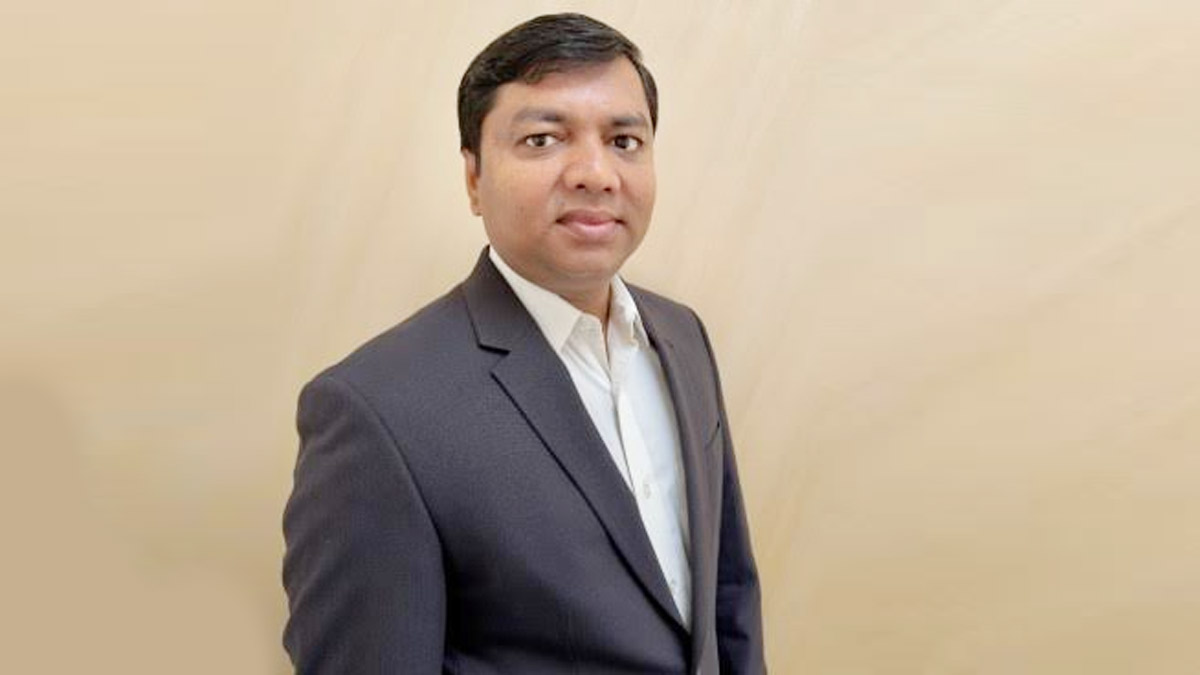
BENGALURU: Boeing’s finance cockpit has a new pilot, and he is no stranger to turbulence or transformation. Boeing has appointed Barun as head of FP&A for global engineering, placing him at the centre of financial strategy for its worldwide engineering and technology operations.
Based in Bengaluru, Barun steps into a role that is as expansive as it is critical. He will serve as the primary finance lead for Boeing’s Engineering and Technology Centers globally, working closely with executive leadership to shape financial decisions, manage complex budgets, and design scalable finance processes that support the company’s growing engineering footprint.
In a note announcing his move Barun said, “I’m excited to share that I’ve joined Boeing Global Engineering. This opportunity is incredibly meaningful to me not just from a professional standpoint, but also for what Boeing represents globally.” He added that he looks forward to contributing to an organisation that continues to shape the future of aerospace and innovation.
Barun’s mandate spans strategic financial leadership, operational oversight, and stakeholder engagement. From directing large-scale budgets and schedules to influencing long-term organisational goals, the role blends financial discipline with business foresight. He will also lead cross-functional teams and partner with finance colleagues worldwide to support engineering programmes across geographies, including India.
The appointment caps a long stint at Juniper Networks, where Barun spent over a decade, most recently as finance senior manager. There, he led FP&A for global product business units and G&A functions, driving budgeting, forecasting, and long-range planning. He also played a key role in enterprise-wide transformation, including spearheading an Oracle to SAP ERP migration and building advanced analytics capabilities using tools such as Tableau and SAP Analytics Cloud.
His earlier career includes finance leadership roles at Sony India Software Centre, Cognizant Technology Solutions, and Mphasis, where he focused on financial planning, governance frameworks, and operational efficiency across global delivery centres.
A chartered accountant from the Institute of Chartered Accountants of India, Barun brings nearly two decades of experience across financial planning, digital transformation, and analytics-led decision making.
His appointment comes at a time when global engineering operations are becoming increasingly complex and distributed, requiring sharper financial oversight and agile planning. With Barun at the helm of FP&A for engineering, Boeing appears to be tightening its financial playbook as it looks to scale innovation with discipline.






