MAM
Generative AI SaaS startup Onetab expands India operations


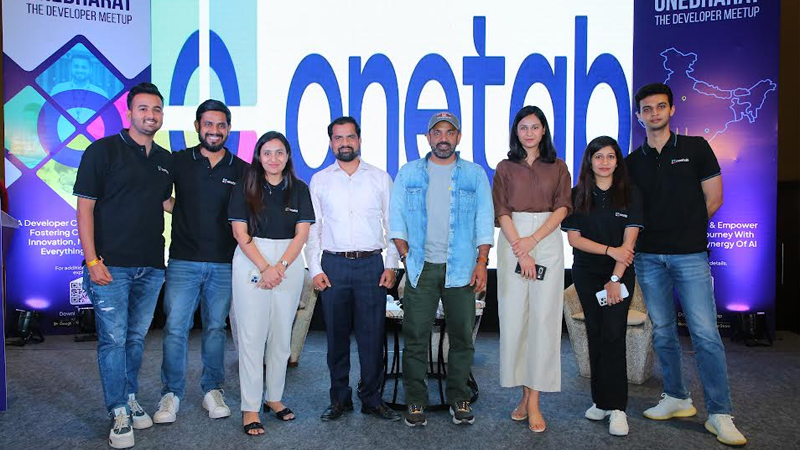
Mumbai: Onetab, the generative AI SaaS startup kick-started by Saket Dandotia and Alok Patil has appointed three new senior members to strengthen its India operations. Harish Chouhan joins as Sr team lead, Pratish Gopinath comes on board as VP – corporate development and Ankita Phanse joins as head HR – strategy & planning of Onetab starting this financial year.
This team expansion comes as a step towards Onetab’s long-term growth strategy across India and global markets.
Harish Chouhan comes with over 17 plus years of industry expertise which spans across multiple domains. He holds strong leadership acumen that motivates cross-functional teams to deliver high-quality results leveraging his familiarity with agile tools like Jira and Trello. Prior to Onetab, he was with Panamax Infotech, Linkites Pvt Ltd, and InfoBeans Systems India Pvt Ltd. At Onetab he will be collaborating closely with the leadership team where he will contribute to strategic planning and execution along with fostering innovation, promoting excellence, and staying abreast of market trends and customer needs. He will play a key part in propelling Onetab toward its growth objectives and solidifying its position as an industry leader.

Pratish Gopinath will be based out of Bangalore where he will be spearheading the Bangalore office opening and hiring process. He will also look into identifying and executing strategic partnerships, investor and VC relations and hosting Onetab’s latest initiative One Bharat across multiple cities across India.
Ankita Phanse comes with over seven years of comprehensive experience in and around the scope of HR operations and generalist HR affairs. She holds an MBA with dual specialization in HR and finance, and her key role at Onetab is to leverage her expertise to develop and implement HR policies/processes and programs fostering a positive work culture at OneTab.
Speaking on the new appointments, Onetab founder Saket Dandotia said, “I am excited for Onetab as we welcome Harish, Pratish and Ankita onboard. At Onetab we are currently on a growing spree, and we need a strong team with matches our long-term vision. With our new property, OneBharat, now activated and other activities in the pipeline, this step of hiring senior team members comes in sync with our future goals.”
Onetab aims to provide seamless communication and collaboration with its proprietary custom LLM model, designed to revolutionize the way teams interact and work together. This feature of the start-up sets it apart from the current competition in the market.

MAM
Lego brings Messi, Ronaldo, Mbappé, Vinicius together
Campaign clocks 314 million views ahead of FIFA World Cup 2026 buzz.
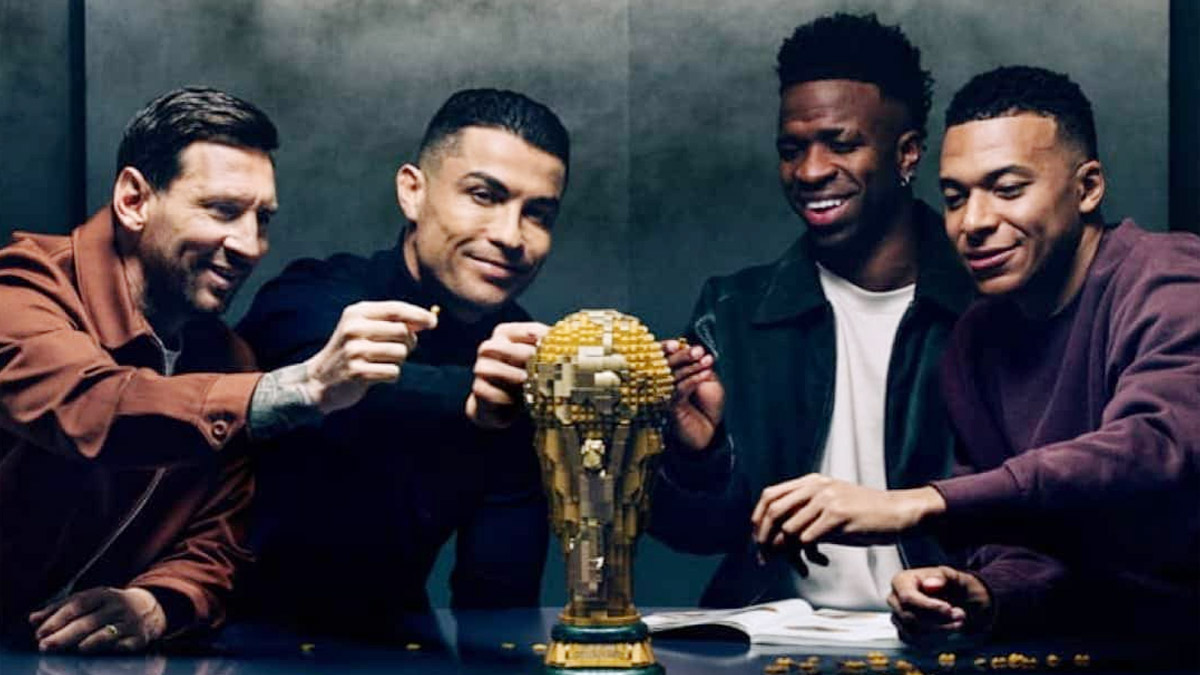
MUMBAI: Four legends, one frame and not a single tackle in sight. Lego has pulled off a crossover few thought possible, uniting Lionel Messi, Cristiano Ronaldo, Kylian Mbappé and Vinícius Júnior in a single campaign ahead of the FIFA World Cup 2026 only this time, they’re building dreams brick by brick.
Titled “Everyone wants a piece”, the campaign features the quartet assembling a Lego version of the World Cup trophy, before placing miniature versions of themselves atop it, a playful nod to football’s ultimate prize. Shared widely across social media, the ad carries a pointed disclaimer: it is not AI-generated, a subtle but telling signal in an era where even reality is often questioned.
The numbers tell their own story. The campaign has already crossed 314 million views on Instagram across the players’ accounts, with fans hailing it as a rare, almost nostalgic moment particularly for the reunion of Messi and Ronaldo, whose last shared campaign ahead of the 2022 World Cup became one of the platform’s most-liked posts.
Beyond the film, Lego is extending the play with exclusive, player-themed sets tied to each of the four stars, part of a broader football-led programme designed to ride the global momentum building towards 2026. The idea, as echoed by the players themselves, leans into the parallels between football and play experimentation, creativity, failure, and triumph.
Messi described the sets as a way to bring on-pitch moments into an imaginative, hands-on world, while Ronaldo called the transformation into a Lego figure a rare honour, blending sport with storytelling. Vinícius, meanwhile, struck a more personal note, recalling childhood moments of building with Lego and framing creativity as a universal language that transcends borders.
The timing is no accident. With the 2026 World Cup set to run from June 11 to July 19 across the United States, Canada and Mexico, and featuring an expanded 48-team format, global anticipation is already building. Argentina, led by Messi, will enter as defending champions, adding another layer of intrigue.
For Lego, the campaign does more than celebrate football, it taps into its mythology. Because when icons become figurines and rivalries turn into play, the beautiful game finds a new kind of pitch. one built, quite literally, by hand.






